
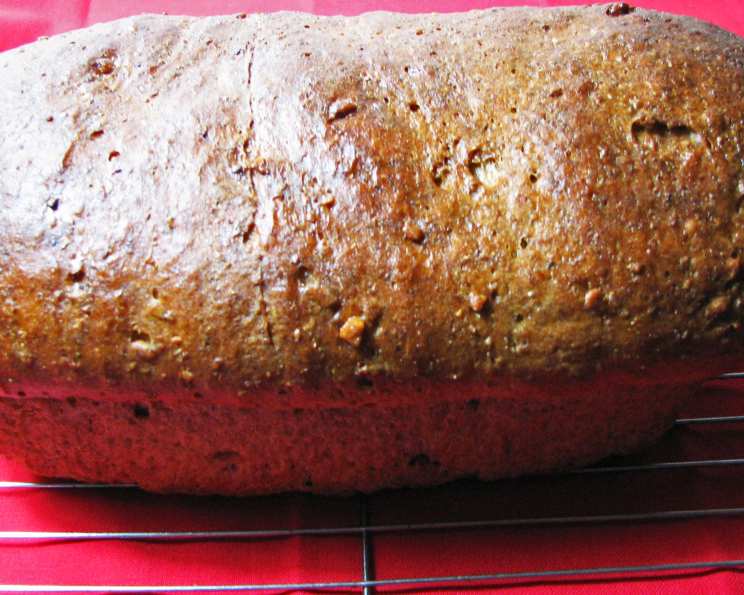
Walnut Rye Bread: A Taste of Home
The aroma of freshly baked bread, particularly one with the earthy notes of rye and the comforting crunch of walnuts, always transports me back to my grandmother’s kitchen. I remember watching her deft hands knead the dough, the scent of yeast filling the air, a promise of warmth and deliciousness to come. This Walnut Rye Bread is my attempt to recreate that feeling, to capture the simple magic of homemade bread and share it with you.
Recipe Overview
- Prep Time: 15 minutes
- Cook Time: 3 hours 5 minutes (includes bread machine cycles)
- Total Time: 3 hours 20 minutes
- Yield: 1 loaf
- Servings: 6-8
- Dietary Type: Vegetarian (easily adaptable to vegan by using vegan butter)
Ingredients
- 1 1⁄3 cups warm water
- 2 tablespoons butter, softened (or vegan butter substitute)
- 1⁄4 cup dark brown sugar, packed
- 1 1⁄4 teaspoons cardamom
- 1 1⁄2 teaspoons salt
- 2 1⁄2 cups bread flour
- 1 1⁄2 cups rye flour
- 3 teaspoons yeast
- 3⁄4 cup crushed walnuts
Equipment Needed
- Bread machine
- Cooling rack
Instructions
-
Begin by adding all the ingredients to your bread machine, EXCEPT for the crushed walnuts. Follow this specific order: warm water, softened butter, packed dark brown sugar, cardamom, salt, bread flour, rye flour, and finally, yeast. The order is important to ensure proper activation of the yeast.
-
Select your bread machine settings. Set the loaf size, choose your desired crust color (light, medium, or dark), and select the “whole wheat” or “fruit/nut” cycle. These cycles are designed for heavier doughs and the addition of nuts.
-
After approximately 5 minutes of the bread machine kneading, carefully observe the dough’s consistency. It should form a cohesive, smooth ball. If the dough appears too dry, add water one teaspoon at a time until it reaches the desired consistency. Conversely, if the dough is too wet or sticky, add bread flour one teaspoon at a time. Don’t overdo it; a slightly tacky dough is better than a dry one.
-
Listen for the bread machine’s signal indicating it’s time to add the crushed walnuts. This usually occurs near the end of the kneading cycle. If your machine doesn’t have an automatic nut dispenser, add the walnuts manually at the end of the kneading cycle, ensuring they are evenly distributed throughout the dough.
-
Allow the bread machine to complete its cycle, which includes the rising, kneading, and baking phases. This typically takes around 3 hours, but refer to your bread machine’s manual for specific cycle times.
-
Once the baking cycle is complete, carefully remove the loaf from the bread machine pan. Be cautious, as the pan and the loaf will be hot. Use oven mitts or pot holders to protect your hands.
-
Immediately transfer the freshly baked Walnut Rye Bread to a cooling rack. Allow the bread to cool completely before slicing. This is crucial for preventing a gummy texture and ensuring clean slices. Resist the urge to cut into it while it’s still warm!
Expert Tips & Tricks
- Bloom the Yeast: For extra assurance, especially if you’re unsure about your yeast’s freshness, “bloom” it first. Dissolve the yeast in 1/4 cup of the warm water with a teaspoon of sugar. Let it stand for 5-10 minutes until foamy. Then proceed with the recipe, subtracting that water from the total amount.
- The Right Rye Flour: Different rye flours have different protein contents. If you’re using a dark rye flour, you might need a touch more water, as it tends to absorb more liquid.
- Nuts and Flavor: Toasting the walnuts before crushing them will intensify their nutty flavor and add another layer of complexity to the bread. Spread the walnuts on a baking sheet and toast them in a 350°F (175°C) oven for 5-7 minutes, or until fragrant. Be careful not to burn them!
- Checking for Doneness: While the bread machine largely takes care of baking, a quick check can ensure it’s fully cooked. The internal temperature should reach around 200-210°F (93-99°C).
- Adjusting Sweetness: If you prefer a less sweet bread, reduce the amount of brown sugar slightly. Conversely, for a sweeter bread, you can add a tablespoon of honey or maple syrup.
Serving & Storage Suggestions
This Walnut Rye Bread is incredibly versatile and pairs well with a variety of dishes. Serve it warm with a smear of softened butter or cream cheese. It’s also fantastic with soups, stews, and salads. For a truly delightful experience, try it toasted with smoked salmon and a dollop of dill cream cheese.
To store the bread, wrap it tightly in plastic wrap or place it in an airtight container at room temperature. It will stay fresh for 2-3 days. For longer storage, you can freeze the bread for up to 2 months. Slice the bread before freezing for easy access to individual portions. Thaw the bread at room temperature or in the microwave before serving. Reheat slices in a toaster or under the broiler for a crispy crust.
Nutritional Information
(Estimated values per serving, based on 8 servings per loaf)
| Nutrient | Amount per Serving | % Daily Value |
|---|---|---|
| Calories | 451 | – |
| Total Fat | 14.5g | 22% |
| Saturated Fat | 3.5g | 17% |
| Cholesterol | 10.2mg | 3% |
| Sodium | 616.4mg | 25% |
| Total Carbohydrate | 71.5g | 23% |
| Dietary Fiber | 6.7g | 26% |
| Sugars | 9.6g | – |
| Protein | 10.8g | 21% |
Variations & Substitutions
- Vegan Walnut Rye Bread: Substitute the butter with a vegan butter substitute of your choice. Ensure the brand you choose is suitable for baking and has a similar fat content to butter.
- Gluten-Free Option: While a true rye bread relies on rye flour for its signature flavor, you can experiment with gluten-free bread flour blends and add a small amount of rye flour for flavor (if tolerated). Be aware that the texture will be different.
- Seed Sensations: Add other seeds like sunflower seeds, pumpkin seeds, or flax seeds for added texture and nutritional value.
- Spice it Up: Experiment with other spices like caraway seeds, fennel seeds, or anise seeds to customize the flavor profile.
- Sweet Additions: Incorporate dried fruits like raisins, cranberries, or chopped dates for a touch of sweetness and chewiness.
FAQs (Frequently Asked Questions)
Q: Can I make this bread without a bread machine?
A: Yes, you can! You’ll need to knead the dough by hand or with a stand mixer and bake it in a conventional oven at 375°F (190°C) for about 30-40 minutes, or until golden brown and the internal temperature reaches 200-210°F (93-99°C).
Q: Why is my rye bread so dense?
A: Rye flour has less gluten than wheat flour, which can result in a denser loaf. Using bread flour in combination with rye flour helps improve the structure. Also, avoid over-kneading the dough.
Q: Can I use a different type of sugar?
A: Yes, you can substitute the dark brown sugar with granulated sugar, honey, or maple syrup. However, dark brown sugar adds a richer flavor and moisture to the bread.
Q: My bread is sinking in the middle. What happened?
A: This could be due to several factors, including using too much yeast, over-proofing the dough, or baking at too low a temperature. Make sure to follow the recipe carefully and use fresh yeast.
Q: How can I make the crust crispier?
A: For a crispier crust, brush the loaf with an egg wash or milk before baking. You can also try increasing the oven temperature slightly during the last 10 minutes of baking.
Final Thoughts
I hope this Walnut Rye Bread recipe brings as much joy to your kitchen as it has to mine. The aroma alone is enough to warm the soul, and the taste is a testament to the simple pleasures of homemade bread. Don’t be afraid to experiment with variations and make it your own. Whether you’re enjoying a slice with your morning coffee or sharing it with loved ones, this bread is sure to be a crowd-pleaser. I’d love to hear about your baking adventures and any creative twists you add to the recipe! Enjoy!