
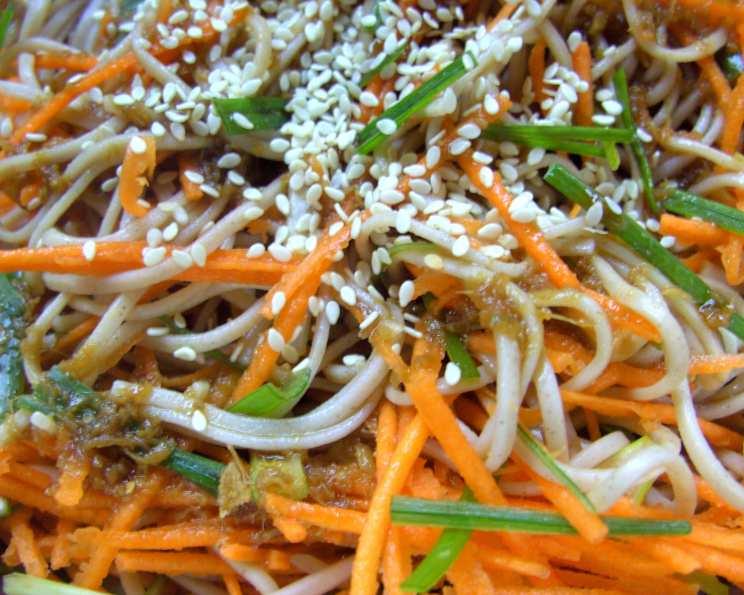
Wasabi Asian Noodles: A Symphony of Flavors
I remember the first time I tasted wasabi. I was a young culinary student, eager to explore the vibrant world of Japanese cuisine. A tiny dab on a piece of nigiri sent a jolt through my sinuses, a thrilling heat that quickly subsided, leaving a clean, refreshing aftertaste. It was an awakening, a culinary revelation that opened my eyes to the power of simple, high-quality ingredients. This Wasabi Asian Noodles recipe captures that same spirit – a harmonious blend of fiery wasabi, savory soy sauce, and delicate noodles that will tantalize your taste buds.
Recipe Overview
- Prep Time: 10 minutes
- Cook Time: 5 minutes
- Total Time: 15 minutes
- Servings: 6-8
- Dietary Type: Vegetarian
Ingredients
- ½ lb egg noodles, cooked
- 1 tablespoon sesame oil
- 1 carrot, julienned
- 1 green onion, chopped
- 1 teaspoon sesame seeds
Sauce:
- 1 garlic clove, minced
- 2 tablespoons mirin
- 2 tablespoons soy sauce
- 1 teaspoon ground ginger
- 1 tablespoon wasabi paste
Equipment Needed
- Large pot
- Colander
- Large mixing bowl
- Small bowl for sauce
Instructions
- First, cook the egg noodles according to the package directions. Be careful not to overcook them; they should be al dente.
- Once the noodles are cooked, drain them immediately in a colander. This prevents them from becoming mushy.
- While the noodles are still warm, toss them with the sesame oil. This crucial step prevents the noodles from sticking together as they cool. Ensure all noodles are evenly coated.
- Chill the noodles in the refrigerator while you prepare the sauce. This allows the flavors to meld and creates a more refreshing salad.
- In a small bowl, combine the minced garlic, mirin, soy sauce, ground ginger, and wasabi paste. Whisk the ingredients thoroughly until the sauce is smooth and emulsified.
- Chill the sauce alongside the noodles to further enhance the flavors.
- When ready to serve, combine the chilled noodles, julienned carrot, and chopped green onion in a large mixing bowl.
- Pour the chilled sauce over the noodle mixture.
- Toss gently until the noodles, carrots, and green onions are evenly coated with the wasabi sauce. Be careful not to break the noodles.
- Serve immediately, topped with a sprinkle of sesame seeds for added flavor and visual appeal.
Expert Tips & Tricks
- Adjust the Wasabi: The amount of wasabi paste can be adjusted to your preference. Start with 1 tablespoon and add more to taste if you desire a spicier kick. Remember that wasabi’s heat intensifies over time, so err on the side of caution initially.
- Noodle Choice: While egg noodles are traditional, feel free to experiment with other types of Asian noodles, such as soba or udon. Just be sure to adjust the cooking time accordingly.
- Vegetable Variations: Get creative with your vegetable additions! Consider adding shredded red cabbage, bean sprouts, sliced cucumber, or even edamame for added texture and flavor.
- Make-Ahead Tip: The noodles and sauce can be prepared ahead of time and stored separately in the refrigerator. Combine them just before serving to prevent the noodles from becoming soggy.
Serving & Storage Suggestions
Serve this Wasabi Asian Noodle salad chilled as a refreshing side dish or light lunch. It pairs perfectly with grilled fish, chicken, or tofu. For a more substantial meal, add some protein directly to the noodles, such as grilled shrimp or sliced avocado.
Leftovers can be stored in an airtight container in the refrigerator for up to 2 days. Keep in mind that the noodles may absorb some of the sauce over time, so you may want to add a splash of soy sauce or sesame oil before serving. This salad is best enjoyed cold and is not recommended for freezing.
Nutritional Information
| Nutrient | Amount per Serving | % Daily Value |
|---|---|---|
| Calories | 181.6 kcal | N/A |
| Calories from Fat | N/A | 21% |
| Total Fat | 4.3 g | 6% |
| Saturated Fat | 0.8 g | 4% |
| Cholesterol | 31.9 mg | 10% |
| Sodium | 381.5 mg | 15% |
| Total Carbohydrate | 29.4 g | 9% |
| Dietary Fiber | 1.8 g | 7% |
| Sugars | 1.4 g | N/A |
| Protein | 6.3 g | 12% |
Note: Nutritional information is an estimate and may vary based on specific ingredients and portion sizes.
Variations & Substitutions
- Vegan Option: Replace the egg noodles with rice noodles or soba noodles to make this dish vegan.
- Gluten-Free Option: Use gluten-free tamari instead of soy sauce and choose gluten-free rice noodles.
- Spicy Kick: Add a pinch of red pepper flakes to the sauce for an extra layer of heat.
- Citrus Twist: Zest a lime into the sauce for a bright, citrusy flavor.
- Protein Boost: Add grilled chicken, shrimp, tofu, or edamame for a more substantial meal.
FAQs (Frequently Asked Questions)
Q: Can I use fresh ginger instead of ground ginger?
A: Absolutely! Freshly grated ginger will provide a more vibrant and intense flavor. Use about 1 teaspoon of grated fresh ginger in place of the ground ginger.
Q: Can I make this dish ahead of time?
A: Yes, you can prepare the noodles and sauce separately ahead of time and store them in the refrigerator. Combine them just before serving to prevent the noodles from becoming soggy.
Q: How long will the leftovers last in the refrigerator?
A: Leftovers can be stored in an airtight container in the refrigerator for up to 2 days. The noodles may absorb some of the sauce over time.
Q: Can I use a different type of noodle?
A: Yes, feel free to experiment with other types of Asian noodles, such as soba or udon. Just be sure to adjust the cooking time accordingly.
Q: What if I don’t like wasabi?
A: If you don’t like wasabi, you can substitute it with a milder horseradish paste or omit it altogether. The sauce will still be flavorful with the other ingredients.
Final Thoughts
This Wasabi Asian Noodles recipe is a delightful combination of flavors and textures that is sure to impress. It’s easy to make, customizable to your preferences, and perfect for a quick lunch or a flavorful side dish. So, gather your ingredients, unleash your inner chef, and prepare to experience a culinary adventure that will leave you craving more. Don’t be afraid to experiment with different vegetables and protein additions to create your own unique version of this Asian-inspired delight. Enjoy, and please share your creations and feedback with me – I’d love to hear how it turns out!