
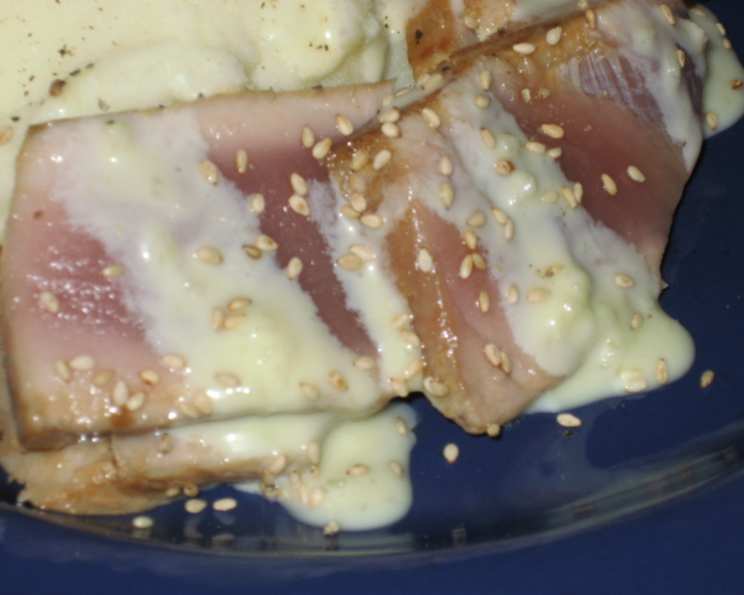
Wasabi Grilled Tuna: A Symphony of Flavors
The first time I tasted wasabi grilled tuna was at a small, unassuming sushi bar in Tokyo. The chef, a man of few words but immense skill, presented a glistening, ruby-red steak of tuna, seared to perfection and laced with a subtle, yet unforgettable, heat. That initial bite was an explosion of contrasting sensations: the richness of the tuna, the smoky char from the grill, and the exhilarating zing of wasabi, all harmonizing in a way that transported me. It was a culinary revelation, and I’ve been chasing that perfect balance of flavors ever since. This recipe is my humble attempt to recreate that magic, bringing a taste of Tokyo to your own backyard grill.
Recipe Overview
- Prep Time: 15 minutes
- Cook Time: 8 minutes
- Total Time: 23 minutes
- Servings: 2
- Dietary Type: Gluten-Free (with gluten-free soy sauce), Pescatarian
Ingredients
For the Wasabi Sauce:
- 1 teaspoon wasabi powder (or 1 teaspoon dry hot mustard)
- 1 teaspoon water
- 1 tablespoon rice vinegar
- 2 tablespoons mayonnaise (Japanese mayo like Kewpie is recommended for extra richness)
- 1 garlic clove, crushed
For the Tuna:
- 1 tablespoon soy sauce (use tamari for gluten-free)
- 1 tablespoon vegetable oil (or avocado oil)
- ½ teaspoon wasabi powder (or ½ teaspoon dry hot mustard)
- 2 fresh tuna steaks (1 ½ lbs total, 1 ½ inch thick) – sushi-grade recommended
Equipment Needed
- Small bowl
- Whisk or fork
- Measuring spoons and cups
- Grill
- Cup or small bowl for marinade
- Pastry brush
- Cutting board
- Sharp knife
Instructions
- Prepare the Wasabi Paste: In a small bowl, combine the 1 teaspoon of wasabi powder (or dry hot mustard) with the 1 teaspoon of water. Mix well to form a smooth paste.
- Let the Wasabi Bloom: Allow the wasabi paste to stand for 10 minutes. This allows the flavors to fully develop and bloom. This step is critical for that signature wasabi kick.
- Create the Wasabi Sauce: To the wasabi paste, stir in the 1 tablespoon of rice vinegar, the 2 tablespoons of mayonnaise, and the 1 crushed garlic clove. Mix thoroughly until all ingredients are well combined, creating a creamy, pale green sauce. Set aside.
- Prepare the Grill: Preheat your grill to medium-high heat. Ensure the grates are clean and lightly oiled to prevent the tuna from sticking. You want a hot surface for that beautiful sear.
- Make the Tuna Marinade: In a cup, whisk together the 1 tablespoon of soy sauce, the 1 tablespoon of vegetable oil, and the ½ teaspoon of wasabi powder (or dry hot mustard). This simple marinade adds depth and a subtle heat to the tuna.
- Marinate the Tuna: Brush the soy sauce mixture generously over both sides of the tuna steaks. Ensure the entire surface is coated. The marinade helps to tenderize the tuna and infuse it with flavor.
- Grill the Tuna: Place the marinated tuna steaks on the preheated grill. Grill for 3-4 minutes per side for rare tuna. Adjust cooking time based on your desired level of doneness. For medium-rare, aim for 4-5 minutes per side. For well-done (though not recommended for tuna steaks), cook for longer.
- Check for Doneness: Use a fork to gently flake the tuna near the center. If it flakes easily and is still slightly pink inside, it’s perfectly rare. The internal temperature should reach around 125-130°F for rare, 130-135°F for medium-rare. Be careful not to overcook, as tuna can become dry.
- Rest and Slice: Remove the grilled tuna steaks from the grill and let them rest for a few minutes before slicing. This allows the juices to redistribute, resulting in a more tender and flavorful steak.
- Serve: Thinly slice the tuna steaks against the grain. Serve immediately with the prepared wasabi sauce.
Expert Tips & Tricks
- Sushi-Grade is Key: For the best and safest experience, use sushi-grade tuna steaks. This indicates the tuna has been handled and stored in a way that makes it safe to eat raw or rare.
- Don’t Overcook: Tuna is best served rare to medium-rare. Overcooking will make it dry and tough. Keep a close eye on it while grilling and adjust the cooking time accordingly.
- Spice Level Adjustment: Adjust the amount of wasabi powder to your preference. Start with less and add more to the sauce or marinade if you prefer a spicier kick.
- Sear Marks: For beautiful grill marks, avoid moving the tuna steaks around too much while they are grilling. Allow them to sear properly before flipping.
- Marinade Time: While a quick brush of the marinade is sufficient, letting the tuna marinate for up to 30 minutes in the refrigerator (before grilling) will enhance the flavor even further.
- Garlic Power: For a milder garlic flavor, roast the garlic clove before crushing it and adding it to the wasabi sauce.
Serving & Storage Suggestions
Serve the wasabi grilled tuna immediately after grilling. It’s delicious as a main course with a side of steamed rice and stir-fried vegetables, or as part of a sophisticated appetizer platter. Garnish with sesame seeds, thinly sliced scallions, or a sprinkle of seaweed flakes for added visual appeal and flavor.
Leftovers can be stored in an airtight container in the refrigerator for up to 24 hours. Reheat gently in a skillet over low heat, being careful not to overcook the tuna. However, grilling just what you plan to eat is recommended for optimal freshness. Due to the mayo, it’s best to not leave this dish at room temperature for longer than 2 hours. Freezing is not recommended, as it can affect the texture of the tuna.
Nutritional Information
| Nutrient | Amount per Serving | % Daily Value |
|---|---|---|
| Calories | 450 kcal | 23% |
| Total Fat | 25g | 38% |
| Saturated Fat | 5g | 25% |
| Cholesterol | 90mg | 30% |
| Sodium | 500mg | 22% |
| Total Carbohydrate | 5g | 2% |
| Dietary Fiber | 0g | 0% |
| Sugars | 2g | – |
| Protein | 40g | 80% |
Note: Nutritional information is an estimate and may vary based on specific ingredients and portion sizes.
Variations & Substitutions
- Spicy Mayo: For an extra kick, add a dash of sriracha or chili garlic sauce to the wasabi mayonnaise.
- Citrus Zing: Add a squeeze of fresh lime or lemon juice to the marinade for a brighter flavor.
- Sesame Crust: Before grilling, coat the tuna steaks in sesame seeds for a nutty crunch.
- Gluten-Free: Use tamari or gluten-free soy sauce to make this recipe gluten-free.
- Vegan Option: While you can’t replace the tuna (obviously!), you can use the wasabi sauce on grilled eggplant or portobello mushrooms for a similar flavor profile.
- Winter Adaptation: If grilling isn’t an option, sear the tuna in a hot skillet on the stovetop.
FAQs (Frequently Asked Questions)
Q: Can I use dried mustard instead of wasabi powder?
A: Yes, dry hot mustard is a good substitute. The recipe uses the same amount, but keep in mind that the flavor profile will be slightly different, with a less sharp heat than wasabi.
Q: How do I know when the tuna is cooked to the right temperature?
A: Use a meat thermometer to check the internal temperature. Rare is 125-130°F, medium-rare is 130-135°F. You can also gently flake the tuna with a fork; if it flakes easily and is still slightly pink inside, it’s ready.
Q: Can I prepare the wasabi sauce in advance?
A: Absolutely! The wasabi sauce can be made a day ahead and stored in an airtight container in the refrigerator. This actually allows the flavors to meld together even more.
Q: What sides go well with wasabi grilled tuna?
A: Steamed rice, stir-fried vegetables, seaweed salad, and edamame are all excellent choices. A simple green salad with a light vinaigrette also complements the richness of the tuna.
Q: Is it safe to eat rare tuna?
A: As long as you are using sushi-grade tuna from a reputable source, it is generally safe to eat rare tuna. However, pregnant women, young children, and individuals with compromised immune systems should consult with their doctor before consuming raw or undercooked fish.
Final Thoughts
Wasabi Grilled Tuna is more than just a recipe; it’s an experience. It’s about embracing bold flavors, mastering simple techniques, and creating a dish that’s both elegant and satisfying. I encourage you to try this recipe, experiment with the variations, and make it your own. Don’t be afraid to adjust the spice level, try different side dishes, and share your creations with friends and family. Pair it with a crisp, dry sake or a chilled glass of Sauvignon Blanc for the perfect culinary experience. Enjoy the journey and let your taste buds be your guide!