
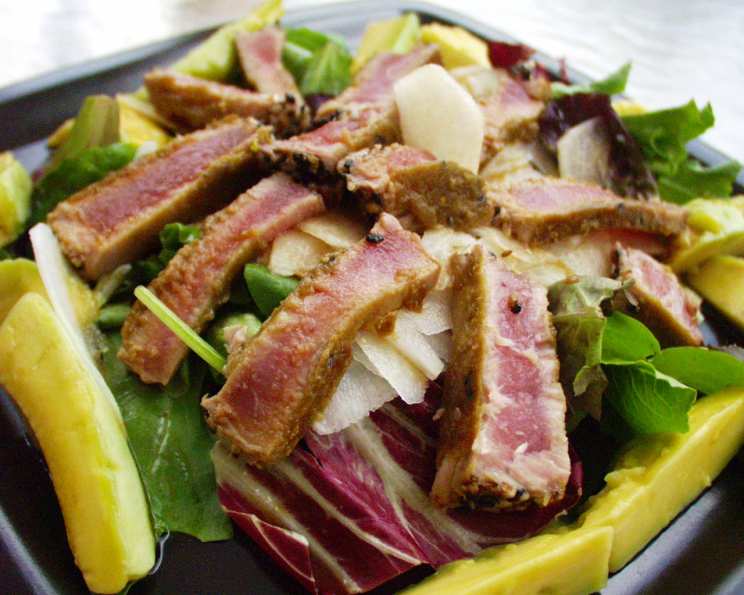
Wasabi Seared Tuna Salad: A Culinary Symphony
The first time I tasted truly fresh tuna, seared to perfection with a hint of wasabi, was at a tiny seaside restaurant in Japan. The simplicity of the dish, the vibrant flavors, and the sheer quality of the ingredients left an indelible mark. Back home, I yearned to recreate that experience, and this Wasabi Seared Tuna Salad is my humble attempt to capture the essence of that unforgettable meal. It’s more than just a salad; it’s a celebration of fresh, clean flavors and a nod to the artistry of Japanese cuisine.
Recipe Overview
- Prep Time: 10 minutes
- Cook Time: 2 minutes
- Total Time: 12 minutes
- Servings: 2
- Dietary Type: Dairy-Free
Ingredients
- 8 ounces fresh sushi-grade tuna steaks
- 1 tablespoon wasabi powder
- 2 tablespoons vegetable oil, divided
- 1 tablespoon soy sauce, divided
- 1 avocado, sliced
- ½ cup shredded daikon radish
- 2 cups salad greens
- 1 tablespoon rice wine vinegar
- Pickled ginger, for garnish
Equipment Needed
- Nonstick skillet
Instructions
-
In a small bowl, combine the wasabi powder with just enough soy sauce to form a thick paste. You want a consistency similar to mustard.
-
Generously rub the wasabi paste onto both sides of the tuna steaks, ensuring an even coating. This will create a beautiful crust and infuse the tuna with that characteristic wasabi heat.
-
Heat 1 tablespoon of vegetable oil in a nonstick skillet over medium-high heat. Ensure the pan is hot before adding the tuna to achieve a good sear.
-
Carefully place the tuna steaks in the hot skillet and sear for about 30-45 seconds on each side, or just enough to create a crust. The center should remain rare. The goal is a quick sear to lock in the moisture and create a delightful contrast between the cooked exterior and the raw interior.
-
Remove the tuna steaks from the skillet and immediately slice them thinly against the grain. This will ensure tenderness.
-
Arrange the salad greens on a plate or in a bowl. Top with the sliced tuna, avocado, pickled ginger, and shredded daikon radish.
-
In a small bowl or jar, whisk together the remaining soy sauce, vegetable oil, and rice wine vinegar. If you have some of the pickled ginger juice, adding a small splash of that will give your dressing an extra zing!
-
Drizzle the dressing over the salad. Season with salt and pepper to taste, keeping in mind that the soy sauce and wasabi already contribute some saltiness and spice.
-
Serve immediately.
Expert Tips & Tricks
- Sourcing Tuna: The most crucial aspect of this recipe is the quality of the tuna. Always opt for sushi-grade tuna from a reputable fishmonger. The fish should be firm, bright in color, and have a fresh, sea-like smell.
- Wasabi Paste Perfection: The key to a good wasabi paste is to use good-quality wasabi powder and add the soy sauce gradually. Too much soy sauce will make it too runny.
- Searing Technique: Achieving a perfect sear requires a hot pan and quick cooking time. Overcooking the tuna will result in a dry, rubbery texture. Don’t be afraid to peek underneath to check for browning.
- Avocado Savvy: To prevent your sliced avocado from browning, brush it lightly with lemon or lime juice.
- Daikon Delight: If you can’t find daikon radish, you can substitute it with shredded carrots or jicama.
- Experiment with adding toasted sesame seeds for an extra crunch and nutty flavor. A sprinkle of furikake also complements the dish well.
- For a spicier kick, add a pinch of red pepper flakes to the dressing.
- To save time, the salad greens, daikon radish, and dressing can be prepared in advance. However, sear the tuna and slice the avocado just before serving to maintain optimal freshness.
Serving & Storage Suggestions
This Wasabi Seared Tuna Salad is best served immediately after preparation to ensure the tuna remains perfectly seared and the avocado stays fresh. It pairs beautifully with a warm bowl of miso soup and a small portion of sticky rice, creating a complete and satisfying meal.
Leftovers can be stored in an airtight container in the refrigerator for up to 24 hours. However, the tuna and avocado may lose some of their quality. It’s best to store the dressing separately and add it just before serving. I do not recommend freezing this salad.
Nutritional Information
| Nutrient | Amount per Serving | % Daily Value |
|---|---|---|
| Calories | 450 kcal | 23% |
| Total Fat | 30g | 46% |
| Saturated Fat | 5g | 25% |
| Cholesterol | 45mg | 15% |
| Sodium | 600mg | 26% |
| Total Carbohydrate | 12g | 4% |
| Dietary Fiber | 8g | 32% |
| Sugars | 2g | 4% |
| Protein | 35g | 70% |
Note: Nutritional information is an estimate and may vary based on specific ingredients and portion sizes.
Variations & Substitutions
- Spicy Tuna: For a spicier version, add a dash of sriracha or chili oil to the wasabi paste or dressing.
- Citrus Boost: Add segments of oranges or grapefruits to the salad for a refreshing citrus twist.
- Different Greens: Experiment with different types of salad greens, such as spinach, arugula, or mixed greens.
- Sesame Oil Infusion: Substitute some of the vegetable oil with sesame oil for a richer, nuttier flavor.
- Gluten-Free Option: Ensure the soy sauce is gluten-free (tamari) to make the entire salad gluten-free.
- Mango Salsa: Add a vibrant mango salsa for a sweet and spicy complement to the tuna. Simply dice fresh mango, red onion, jalapeno, cilantro, and lime juice.
- Noodle Salad: Add soba noodles or rice noodles to make a heartier salad.
FAQs (Frequently Asked Questions)
Q: Can I use frozen tuna for this recipe?
A: While fresh sushi-grade tuna is highly recommended for the best flavor and texture, you can use frozen tuna that has been properly thawed. Ensure it is sushi-grade and thawed completely before searing.
Q: How do I know when the tuna is cooked properly?
A: The tuna should be seared on the outside and still rare in the center. Aim for a quick sear of about 30-45 seconds per side. The internal temperature should not exceed 115°F (46°C).
Q: Can I make this salad ahead of time?
A: While you can prepare some components ahead of time, such as the dressing and salad greens, it’s best to sear the tuna and slice the avocado just before serving for optimal freshness.
Q: What if I don’t like wasabi?
A: You can reduce the amount of wasabi powder used or substitute it with a different spice, such as ginger or garlic powder. You can also omit it entirely.
Q: Can I grill the tuna instead of searing it?
A: Yes, you can grill the tuna over medium-high heat for about 2-3 minutes per side, or until seared to your liking. Be sure to oil the grill grates to prevent sticking.
Final Thoughts
This Wasabi Seared Tuna Salad is a culinary adventure that brings the vibrant flavors of Japan to your kitchen. It’s quick, easy to make, and incredibly satisfying. I encourage you to try this recipe and experiment with different variations to find your perfect combination. Don’t hesitate to share your feedback and any creative twists you’ve added. Pair it with a chilled glass of sake or a crisp Sauvignon Blanc for a truly delightful dining experience.