
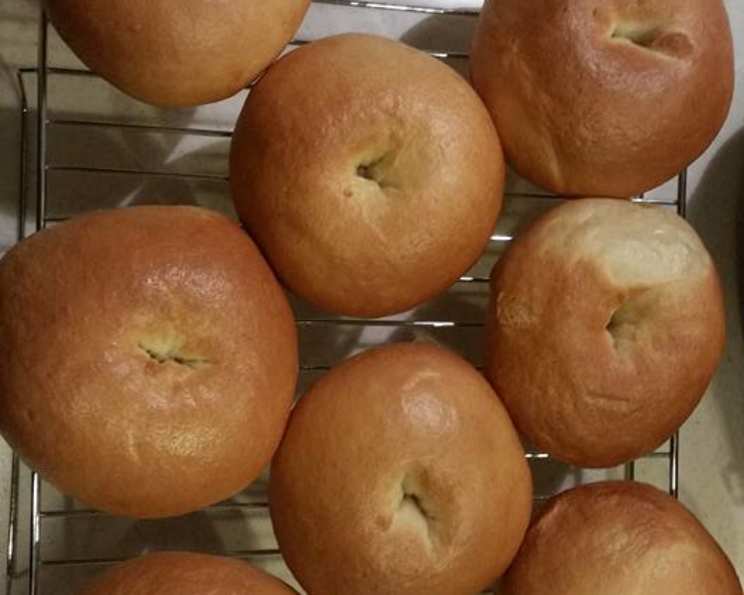
The Quintessential Water Bagel: A New York Classic
The scent of baking bagels is, for me, inextricably linked with Saturday mornings spent with my grandfather. Every week, without fail, we’d walk to his favorite bakery, a small, unassuming place tucked away on a side street. He always ordered a plain water bagel, still warm from the oven, and I remember marveling at the way the simple dough transformed into something so chewy and satisfying. He’d spread it generously with cream cheese, and we’d sit together, enjoying the quiet start to the day and the perfect simplicity of that humble bagel. It’s a memory I cherish, and a flavor I’ve strived to recreate ever since.
Recipe Overview
- Prep Time: 1 hour 10 minutes
- Cook Time: 30 minutes
- Total Time: 1 hour 40 minutes
- Servings: 12
- Yield: 12 Bagels
- Dietary Type: Vegetarian
Ingredients
- 4 – 5 cups all-purpose flour
- 3 tablespoons sugar
- 1 tablespoon salt
- 1 package active dry yeast
- 1 1/2 cups very warm tap water (120°-130°F)
- 1 egg white
- 1 tablespoon cold water
Equipment Needed
- Large Bowl
- Electric Mixer
- Lightly floured board
- Ungreased bowl
- Rolling pin
- Baking sheets
- Large shallow pan
- Wire rack
Instructions
- In a large bowl, thoroughly mix 1 1/2 cups flour, sugar, salt, and undissolved yeast.
- Gradually add the very warm tap water (120°-130°F) to the dry ingredients. Beat with an electric mixer at medium speed for 2 minutes, scraping the bowl occasionally. This initial mixing is crucial for activating the yeast and developing the gluten.
- Add 1/2 cup flour to the mixture.
- Beat at high speed for 2 minutes, scraping the bowl occasionally. This step further develops the gluten, which is essential for the bagel’s signature chew.
- Stir in enough additional flour (about 2 to 2 1/2 cups) to make a soft dough. The dough should be slightly sticky but manageable.
- Turn the dough onto a lightly floured board and knead until smooth and elastic (about 10 minutes). Proper kneading is vital! The dough should feel springy and resist tearing. If the dough is too sticky, add a little flour at a time until it reaches the right consistency.
- Place the dough in an ungreased bowl, cover, and let it rise in a warm, draft-free place for 20 minutes. Note that the dough will NOT double in bulk during this short rise. This is different from typical bread recipes.
- Punch the dough down to release any accumulated air and turn it out onto a lightly floured board.
- Roll the dough into a rectangle, 12 x 10 inches. Use a rolling pin to ensure even thickness.
- Cut the dough into 12 equal strips, 1 x 10 inches each. A pizza cutter or sharp knife works well for this.
- Pinch the ends of each strip together to form a circle, ensuring a tight seal. This prevents the bagel from unraveling during boiling.
- Place the shaped bagels on ungreased baking sheets, leaving some space between each.
- Cover and let rise in a warm, draft-free place for 20 minutes. Again, the dough will NOT double in bulk.
- In a large, shallow pan, bring water to a boil with a 1 3/4 inch depth of water. Make sure the pan is wide enough to accommodate several bagels at once without overcrowding.
- Lower the heat to a simmer and carefully add a few bagels at a time. Avoid overcrowding the pan.
- Simmer the bagels for 7 minutes, flipping them halfway through (3 1/2 minutes on each side). This boiling process is what gives water bagels their distinctive chewy texture and shiny crust.
- Remove the bagels from the water and place them on a towel to cool briefly. This allows excess water to drain off before baking.
- Cool the bagels for 5 minutes, then place them back on the ungreased baking sheets.
- Bake the bagels at 375°F (190°C) for 10 minutes.
- In a small bowl, beat the egg white with cold water to create an egg wash.
- Remove the bagels from the oven and brush them with the egg white/water mixture. This will give them a beautiful golden-brown sheen.
- Return the bagels to the oven and bake for about 20 minutes longer, or until they are golden brown and cooked through. The internal temperature should reach around 200-210°F (93-99°C).
- Remove the bagels from the baking sheets and cool them on a wire rack. This allows air to circulate and prevents them from becoming soggy.
Expert Tips & Tricks
- The water you use makes a difference! As the original recipe suggests, the mineral content of your local tap water can impact the final product. If possible, use filtered water or experiment with different brands of bottled water to find what works best for you.
- For a more intense flavor, try adding a tablespoon of malt syrup to the boiling water.
- Don’t over-knead the dough. Over-kneading can result in a tough bagel. Aim for a smooth, elastic dough, but stop before it becomes too firm.
- If you want to add toppings like sesame seeds, poppy seeds, or everything bagel seasoning, sprinkle them on the bagels immediately after brushing them with the egg wash.
- For a chewier bagel, you can cold-proof the dough overnight in the refrigerator after shaping. This allows the gluten to develop further.
Serving & Storage Suggestions
Serve your freshly baked water bagels warm with your favorite toppings. Cream cheese is a classic choice, but they’re also delicious with lox, sliced tomatoes, avocado, or even just a simple smear of butter.
Store leftover bagels in an airtight container at room temperature for up to 2 days. For longer storage, freeze them in a freezer-safe bag or container for up to 3 months. To reheat, thaw the bagels at room temperature or in the microwave, then toast them until warm and crispy. You can also slice them in half before freezing for easier toasting.
Nutritional Information
| Nutrient | Amount per Serving | % Daily Value |
|---|---|---|
| Calories | 167.2 kcal | N/A |
| Calories from Fat | 4 g | 2% |
| Total Fat | 0.5 g | 0% |
| Saturated Fat | 0.1 g | 0% |
| Cholesterol | 0 mg | 0% |
| Sodium | 588 mg | 24% |
| Total Carbohydrate | 35.2 g | 11% |
| Dietary Fiber | 1.3 g | 5% |
| Sugars | 3.3 g | N/A |
| Protein | 4.8 g | 9% |
Note: Nutritional information is an estimate and may vary based on specific ingredients and preparation methods.
Variations & Substitutions
- Whole Wheat Bagels: Substitute up to half of the all-purpose flour with whole wheat flour for a nuttier flavor and added fiber.
- Gluten-Free Bagels: While achieving the exact same texture is challenging, you can experiment with gluten-free flour blends designed for bread baking. Be sure to add a binder like xanthan gum to help with structure.
- Sweet Bagels: Add a touch of honey or maple syrup to the dough for a subtle sweetness. Consider adding cinnamon or other spices as well.
- Everything Bagels: Before baking, sprinkle the bagels with a generous coating of everything bagel seasoning, which typically includes sesame seeds, poppy seeds, dried garlic, dried onion, and salt.
FAQs (Frequently Asked Questions)
Q: Why do I need to boil the bagels before baking?
A: Boiling gelatinizes the starches on the surface of the bagel, creating a chewy interior and a shiny crust. It’s a crucial step in achieving the signature texture of a water bagel.
Q: Can I use bread flour instead of all-purpose flour?
A: Yes, bread flour can be used and will result in a slightly chewier bagel due to its higher protein content.
Q: Why isn’t my dough doubling in size during the rising periods?
A: This recipe uses a short rising time, and the dough is not expected to double. The primary rise occurs during the second proofing after shaping.
Q: My bagels are sinking during the boiling process. What am I doing wrong?
A: This could be due to over-proofing the dough. Try shortening the rising times slightly. Also, ensure the water is at a gentle simmer, not a rolling boil.
Q: How do I prevent the bagels from sticking to the baking sheet?
A: While the recipe calls for ungreased baking sheets, you can also line them with parchment paper for extra insurance against sticking.
Final Thoughts
Making your own water bagels might seem daunting, but trust me, the result is well worth the effort. There’s something incredibly satisfying about biting into a warm, chewy bagel that you’ve created from scratch. Don’t be afraid to experiment with different toppings and flavors to make them your own. And most importantly, don’t forget to share your creations with friends and family. After all, the best bagels are those enjoyed with good company. Now, go forth and bake some bagel magic!