
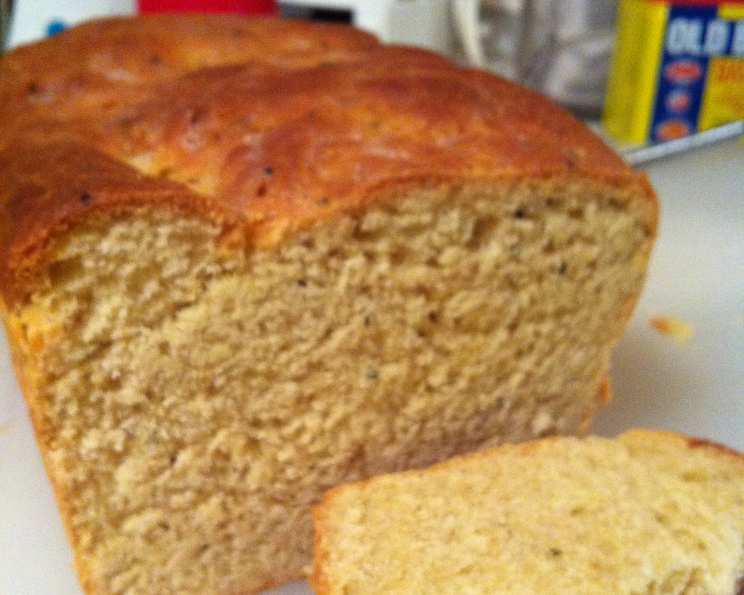
Welsh Rarebit Bread: A Savory Delight
The scent of baking bread has always held a special place in my heart, transporting me back to my grandmother’s kitchen. But it wasn’t just any bread – it was her incredibly unique Welsh Rarebit Bread that truly captivated my senses. I remember her pulling a warm loaf from the oven, the aroma of sharp cheddar mingling with the yeasty goodness, a scent that promised pure comfort. Years later, I’ve recreated this favorite, finding that a slice of it, toasted and slathered with a bit of butter, is still the perfect antidote to a chilly day.
Recipe Overview
- Prep Time: 20 minutes
- Cook Time: 30-35 minutes
- Total Time: 1 hour 20 minutes (including rising time)
- Yields: 1 loaf
- Serves: 5-10
- Dietary Type: Vegetarian
Ingredients
- 1 cup milk
- 2 teaspoons Worcestershire sauce
- 1 cup shredded sharp cheddar cheese
- 2 teaspoons margarine, butter, or cooking oil
- 3 cups bread flour
- 1 teaspoon sugar
- 3⁄4 teaspoon salt
- 3⁄4 teaspoon dry mustard
- 1⁄8 teaspoon ground red pepper
- 1 teaspoon active dry yeast or 1 teaspoon bread machine yeast
Equipment Needed
- Bread machine
- 9×5 inch loaf pan (if using the dough cycle and baking in a conventional oven)
Instructions
- Begin by preparing your bread machine. Select the appropriate loaf size setting, as indicated by your machine’s manufacturer.
- Carefully add all the ingredients to the bread machine pan, strictly adhering to the order recommended by your bread machine’s instructions. Typically, liquids go in first, followed by dry ingredients, with the yeast added last, nestled on top and away from the liquids.
- Select the basic white bread cycle on your bread machine. This cycle will handle the kneading, rising, and baking of the bread.
- Alternatively, if you prefer to bake the bread in a conventional oven, select the dough cycle only. Once the dough cycle is complete, remove the dough from the bread machine pan.
- Gently shape the dough into a loaf and place it in a greased 9×5 inch loaf pan.
- Cover the loaf pan with a clean kitchen towel and let the dough rise in a warm place for about 30-45 minutes, or until it has doubled in size.
- Preheat your oven to 350°F (175°C).
- Bake the loaf in the preheated oven for 30-35 minutes, or until it is golden brown and sounds hollow when tapped on the bottom.
- Remove the loaf from the oven and let it cool in the pan for 10 minutes before transferring it to a wire rack to cool completely.
Expert Tips & Tricks
- For a richer flavor, use a high-quality, extra-sharp cheddar cheese. The stronger the cheese, the more pronounced the Welsh rarebit flavor will be in the bread.
- If you’re using the dough cycle and baking in a conventional oven, a light egg wash before baking will give the crust a beautiful shine and deeper color. Simply whisk an egg with a tablespoon of water and brush it over the top of the loaf before placing it in the oven.
- Don’t be afraid to experiment with different types of milk. Whole milk will yield a slightly richer bread, while skim milk will result in a slightly lighter texture. You can also try using buttermilk for a tangy flavor.
- To prevent the crust from becoming too dark during baking, you can tent the loaf with aluminum foil during the last 10-15 minutes of baking.
- If you find that your bread is rising too quickly, try using colder milk. Conversely, if it’s rising too slowly, use slightly warmer milk.
Serving & Storage Suggestions
This Welsh Rarebit Bread is absolutely delicious served warm with a smear of butter or cream cheese. It also makes a fantastic base for grilled cheese sandwiches or as an accompaniment to soups and stews. Try it toasted with a poached egg on top for a truly decadent breakfast.
To store the bread, wrap it tightly in plastic wrap or place it in an airtight container. It will keep at room temperature for 2-3 days, in the refrigerator for up to a week, or in the freezer for up to 2 months.
To reheat, you can toast individual slices or warm the entire loaf in a preheated oven at 300°F (150°C) for 10-15 minutes, or until heated through.
Nutritional Information
| Nutrient | Amount per Serving | % Daily Value |
|---|---|---|
| Calories | 418.1 kcal | N/A |
| Calories from Fat | 105 g | 25% |
| Total Fat | 11.7 g | 18% |
| Saturated Fat | 6.3 g | 31% |
| Cholesterol | 30.6 mg | 10% |
| Sodium | 555 mg | 23% |
| Total Carbohydrate | 61.5 g | 20% |
| Dietary Fiber | 2.3 g | 9% |
| Sugars | 1.4 g | N/A |
| Protein | 15.4 g | 30% |
Note: Nutritional information is an estimate and may vary based on specific ingredients and portion sizes.
Variations & Substitutions
- For a spicier kick, add a pinch of cayenne pepper or a dash of hot sauce to the dough.
- Experiment with different types of cheese. Gruyere, Gouda, or even a smoked cheddar would all be delicious additions.
- If you don’t have Worcestershire sauce on hand, you can substitute it with a mixture of soy sauce, tamarind paste, and vinegar.
- To make a garlic version, add 1-2 cloves of minced garlic to the dough along with the other ingredients. You can also use garlic-infused oil instead of plain oil.
- For a vegetarian twist, use a vegetarian Worcestershire sauce, as some brands contain anchovies.
- If you want a slightly sweeter bread, add an extra teaspoon of sugar to the dough.
FAQs (Frequently Asked Questions)
Q: Can I make this bread without a bread machine?
A: Yes, you can! Simply combine all the ingredients in a large bowl, knead the dough for 8-10 minutes until smooth and elastic, and then let it rise in a warm place for 1-1.5 hours before shaping and baking.
Q: What if I don’t have bread flour?
A: Bread flour is recommended for its higher gluten content, which helps create a chewier texture. However, you can substitute it with all-purpose flour.
Q: Can I use instant yeast instead of active dry yeast?
A: Yes, you can. You don’t need to proof instant yeast before adding it to the other ingredients.
Q: How do I know when the bread is done baking?
A: The bread is done when it’s golden brown and sounds hollow when tapped on the bottom. You can also use a thermometer to check the internal temperature, which should be around 200-210°F (93-99°C).
Q: Can I freeze the dough before baking?
A: Yes, you can freeze the dough after it has risen. Wrap it tightly in plastic wrap and freeze for up to 2 months. Thaw the dough in the refrigerator overnight before shaping and baking.
Final Thoughts
This Welsh Rarebit Bread is more than just a recipe; it’s a slice of comfort, a connection to cherished memories, and a celebration of simple, savory flavors. I encourage you to try baking this delightful bread yourself, experiment with your favorite cheese combinations, and share it with the people you love. Whether you enjoy it as a simple snack or as part of a hearty meal, I hope this bread brings you as much joy as it has brought me over the years. Don’t hesitate to leave a comment below and let me know how your loaf turns out! It pairs wonderfully with a creamy tomato soup or a crisp, dry white wine. Happy baking!