
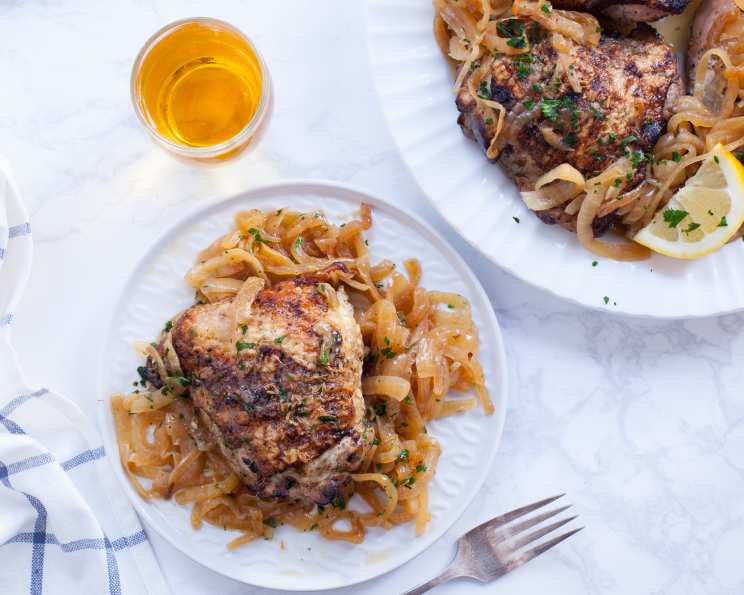
West African Chicken Yassa: A Culinary Journey to Senegal
The first time I tasted Chicken Yassa, I was volunteering at a small community kitchen in Brooklyn, run by a vibrant Senegalese woman named Awa. The air crackled with the energy of a dozen volunteers chopping vegetables and the warm, inviting aroma of citrus, onions, and spices filled the space. Awa, with her booming laugh and gentle hands, explained that Yassa was more than just a dish; it was a celebration, a taste of home, and a symbol of community. As I savored the succulent chicken, infused with the tangy lemon marinade and the sweet caramelized onions, I understood. It was a revelation – a dish that spoke of sunshine, vibrant markets, and the warmth of human connection.
Recipe Overview
- Prep Time: 1 hour 20 minutes (includes marinating)
- Cook Time: 25 minutes
- Total Time: 1 hour 45 minutes
- Servings: 4
- Dietary Type: Potentially Gluten-Free, Dairy-Free (ensure chicken stock is gluten-free)
Ingredients
- 4 chicken breasts, skin on
- 2 garlic cloves, finely chopped
- 1 fresh chili pepper, mild, chopped
- 2 tablespoons vegetable oil
- 2 large vidalia onions
- ½ teaspoon thyme, chopped
- 3 lemons
- 12 ½ fluid ounces chicken stock
- Salt & freshly ground black pepper
Equipment Needed
- Bowl
- Refrigerator
- Barbecue, grill, griddle, or dry frying pan
- Deep frying pan
- Warm plate
Instructions
-
In a medium bowl, place the chicken breasts. Squeeze the juice of 1 ½ lemons over the chicken, ensuring each piece is well-coated.
-
Add the finely chopped garlic and chili pepper to the bowl.
-
Thoroughly mix the ingredients, ensuring the chicken is evenly coated with the lemon juice, garlic, and chili. Cover the bowl and let it marinate in the refrigerator for at least 1 hour. This allows the flavors to penetrate the chicken, resulting in a more flavorful and tender dish.
-
Preheat your chosen cooking appliance. This could be a hot barbecue, grill, griddle, or even a dry frying pan on the stovetop. Make sure it’s nice and hot before you start cooking the chicken.
-
Remove the chicken from the marinade. Discard the marinade. Brush the chicken with vegetable oil to prevent sticking and promote even browning.
-
Place the chicken, skin-side down towards the heat source, on the preheated barbecue, under the grill, on the griddle, or in the frying pan. Cook for approximately 4-5 minutes on each side, until the chicken is beautifully colored and cooked through. Exercise caution to prevent the chicken from drying out. The skin should be crispy and golden brown. An internal temperature of 165°F (74°C) ensures it’s fully cooked.
-
While the chicken is cooking, prepare the onions. Cut the vidalia onions into medium-thin slices. Vidalia onions are preferred for their sweetness, which complements the acidity of the lemon. However, yellow onions can be used as a substitute.
-
Heat a few drops of vegetable oil in a deep frying pan over medium heat. Add the sliced onions and chopped thyme to the pan.
-
Fry the onions with the thyme for approximately 5-8 minutes, stirring occasionally, until they turn a nice, rich brown color. This process caramelizes the onions, drawing out their natural sweetness and creating a depth of flavor. Keep a close eye on them to prevent burning.
-
Remove the caramelized onions from the pan and set them aside on a warm plate to maintain their temperature.
-
Pour the juice of the remaining 1 lemon and the chicken stock into the same pan used to cook the onions.
-
Bring the mixture to a boil over medium-high heat. Season with salt and freshly ground black pepper to taste.
-
Allow the sauce to reduce slightly, stirring and scraping the bottom of the pan to deglaze it, lifting all the flavorful browned bits (fond) that have accumulated during cooking. This intensifies the flavor of the sauce.
-
To assemble the dish, arrange the cooked chicken on a serving plate. Top the chicken generously with the caramelized onions.
-
Pour the flavorful lemon sauce over the chicken and onions.
-
Garnish with the remaining lemon half, cut into wedges, for an extra touch of citrusy freshness. Serve immediately and enjoy!
Expert Tips & Tricks
- For an even deeper flavor, marinate the chicken overnight in the refrigerator. This allows the lemon, garlic, and chili to fully penetrate the meat.
- If you don’t have Vidalia onions, yellow onions will work as a substitute, but consider adding a pinch of sugar to enhance their sweetness.
- To prevent the chicken from drying out while cooking, baste it occasionally with the pan juices or a little extra vegetable oil.
- Don’t overcrowd the pan when cooking the onions. If necessary, cook them in batches to ensure they caramelize evenly.
- If the sauce becomes too thick during reduction, add a splash more chicken stock to thin it out.
Serving & Storage Suggestions
Chicken Yassa is best served immediately while the chicken is still moist and the onions are warm and caramelized. It pairs wonderfully with white rice, couscous, or even crusty bread to soak up the flavorful sauce.
Leftovers can be stored in an airtight container in the refrigerator for up to 3 days. Reheat gently in a saucepan over low heat, adding a splash of chicken stock if needed to prevent drying. While freezing is possible, it can slightly alter the texture of the chicken and onions. Reheat thoroughly before serving.
Nutritional Information
| Nutrient | Amount per Serving | % Daily Value |
|---|---|---|
| Calories | 392.7 kcal | N/A |
| Calories from Fat | 194 g | 50% |
| Total Fat | 21.6 g | 33% |
| Saturated Fat | 5.1 g | 25% |
| Cholesterol | 95.6 mg | 31% |
| Sodium | 230.5 mg | 9% |
| Total Carbohydrate | 15.9 g | 5% |
| Dietary Fiber | 2.7 g | 10% |
| Sugars | 6.4 g | N/A |
| Protein | 34.2 g | 68% |
Note: Nutritional information is an estimate and may vary based on specific ingredients and cooking methods.
Variations & Substitutions
- Spicy Yassa: Increase the amount of chili pepper or add a pinch of cayenne pepper for a spicier kick.
- Vegetarian Yassa: Substitute the chicken with firm tofu or hearty vegetables like eggplant and bell peppers.
- Coconut Milk Yassa: Replace the chicken stock with coconut milk for a richer, creamier sauce.
- Lime Yassa: Use lime juice instead of lemon juice for a slightly different citrusy flavor.
FAQs (Frequently Asked Questions)
Q: Can I use chicken thighs instead of chicken breasts?
A: Absolutely! Chicken thighs are a great alternative, as they tend to be more forgiving and remain moist during cooking. You may need to adjust the cooking time slightly.
Q: How do I prevent the onions from burning while caramelizing?
A: Cook the onions over medium heat, stirring frequently. If they start to brown too quickly, reduce the heat further and add a splash of water or chicken stock to the pan.
Q: Can I make this dish ahead of time?
A: Yes, you can marinate the chicken and caramelize the onions in advance. Store them separately in the refrigerator until ready to cook and assemble the dish.
Q: Is Chicken Yassa gluten-free?
A: It can be! Ensure your chicken stock is certified gluten-free, as some brands may contain gluten-based thickeners.
Q: What should I serve with Chicken Yassa?
A: Chicken Yassa is traditionally served with white rice, but it also pairs well with couscous, quinoa, or even roasted vegetables.
Final Thoughts
Chicken Yassa is more than just a recipe; it’s an invitation to explore the vibrant flavors of West Africa. The combination of tangy lemon, sweet onions, and tender chicken is simply irresistible. Don’t be afraid to experiment with variations and make this dish your own. I encourage you to try this recipe and share the joy of Senegalese cuisine with your family and friends. Pair it with a crisp white wine or a refreshing bissap (hibiscus) juice for an authentic and unforgettable culinary experience. Bon appétit!