
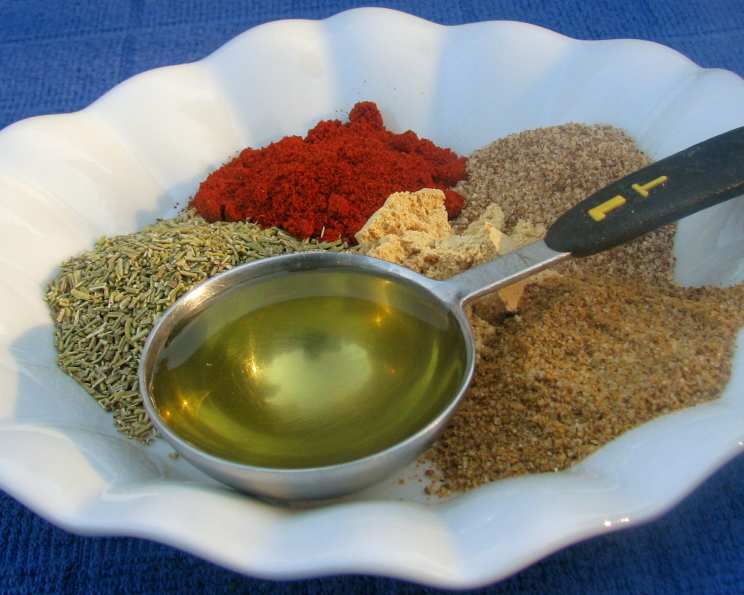
The Secret to Irresistible Roast Chicken: My Go-To Wet Rub
My grandmother, bless her heart, always made the driest roast chicken imaginable. It was an annual Thanksgiving tradition that I secretly dreaded. Then, one year, my Uncle Joe, a retired chef, stepped in. He banished the dry bird to history, introducing us to the magic of a wet rub. The aroma alone was intoxicating – a symphony of herbs and spices promising something extraordinary. That first bite? It was a revelation. Juicy, flavorful, and utterly unforgettable. Now, I use a wet rub on all my poultry. It’s the easiest way to guarantee a perfect, crowd-pleasing roast every time.
Recipe Overview
- Prep Time: 5 minutes
- Cook Time: (Dependent on poultry)
- Total Time: 5 minutes + cooking time
- Yields: Enough for a 6-pound chicken
- Dietary Type: Gluten-Free, Dairy-Free
Ingredients
- 1 tablespoon dried rosemary, crushed
- 2 teaspoons paprika
- 1 1⁄2 teaspoons Old Bay Seasoning
- 1 1⁄2 teaspoons ground ginger
- 1 1⁄2 teaspoons celery salt
- 2 tablespoons olive oil
Equipment Needed
- Small Mixing Bowl
- Spoon or Whisk
- Roasting Pan (appropriate size for your poultry)
- Meat Thermometer
Instructions
- In a small mixing bowl, combine the dried rosemary, paprika, Old Bay Seasoning, ground ginger, and celery salt. Make sure to crush the rosemary well with your fingers as you add it, this helps to release its aromatic oils.
- Add the olive oil to the dry spice mixture.
- Stir or whisk until the mixture forms a thick paste – a fragrant wet rub.
- Prepare your poultry. If using a whole chicken or turkey, remove it from its packaging and pat it dry with paper towels, inside and out. This crucial step ensures the skin crisps up beautifully. For individual pieces like chicken breasts or thighs, simply pat them dry.
- Using your hands, generously spread the wet rub all over the surface of the poultry, ensuring every nook and cranny is covered. Don’t forget to get some under the skin of the breast, if possible, for maximum flavor penetration. For smaller pieces of poultry, like chicken breasts, ensure an even coating.
- Roast the poultry according to your preferred method. For a whole chicken, preheat your oven to 425°F (220°C). Place the chicken in a roasting pan and roast for approximately 1 hour and 15 minutes, or until the internal temperature reaches 165°F (74°C) in the thickest part of the thigh. A meat thermometer is your best friend here! Let the chicken rest for 10-15 minutes before carving. Use the roasting pan drippings to make a delicious gravy. For other cuts of poultry, adjust cooking times accordingly. A good rule of thumb is to always cook to an internal temperature of 165°F (74°C).
Expert Tips & Tricks
- Make-Ahead Magic: You can prepare the wet rub up to 3 days in advance and store it in an airtight container in the refrigerator. This allows the flavors to meld together even more.
- Skin-tastic Crispiness: For extra crispy skin, try salting the poultry the day before applying the rub. This draws out moisture, leading to a beautifully browned and crispy skin.
- Flavor Bomb: For an even more intense flavor, rub the poultry under the skin as well as over the surface. This ensures that the meat itself is infused with the aromatic spices.
- Spice It Up: Feel free to adjust the spice levels to your liking. Add a pinch of cayenne pepper for a touch of heat, or a dash of smoked paprika for a smoky flavor.
- Lemon Zest: Adding the zest of one lemon to the wet rub will brighten the flavors and add a refreshing note.
- Brining is Best: For an even moister bird, consider brining your poultry for a few hours, or overnight, before applying the wet rub. This adds extra moisture and flavor.
Serving & Storage Suggestions
Serve your perfectly roasted poultry hot, straight from the oven. It pairs beautifully with roasted vegetables, mashed potatoes, stuffing, or a fresh salad.
- Leftovers: Store leftover roasted poultry in an airtight container in the refrigerator for up to 3-4 days.
- Reheating: Reheat leftover poultry in the oven at 325°F (160°C) until warmed through, or in the microwave in short bursts. To prevent drying out, add a splash of chicken broth or gravy during reheating. You can also shred leftover chicken and use it in sandwiches, salads, or soups.
- Freezing: Cooked poultry can be frozen for up to 2-3 months. Wrap it tightly in plastic wrap and then in foil to prevent freezer burn. Thaw overnight in the refrigerator before reheating.
Nutritional Information
(Estimated values, will vary based on specific poultry and serving size)
| Nutrient | Amount per Serving (estimate) | % Daily Value (estimate) |
|---|---|---|
| Calories | 150 kcal | 8% |
| Total Fat | 12g | 18% |
| Saturated Fat | 2g | 10% |
| Cholesterol | 0mg | 0% |
| Sodium | 400mg | 17% |
| Total Carbohydrate | 2g | 1% |
| Dietary Fiber | 1g | 4% |
| Sugars | 0g | 0% |
| Protein | 2g | 4% |
Variations & Substitutions
- Herbs de Provence: Substitute the dried rosemary with an equal amount of Herbs de Provence for a classic French flavor.
- Citrus Herb Blend: Add the zest of an orange and some chopped fresh thyme for a bright and aromatic twist.
- Spicy Southwest: Replace the Old Bay Seasoning with chili powder, cumin, and a pinch of cayenne pepper for a Southwestern kick.
- Maple Glazed: Add 2 tablespoons of maple syrup to the wet rub for a touch of sweetness and a beautiful glazed finish.
- Soy-Ginger: Substitute the olive oil with sesame oil and add 1 tablespoon of soy sauce for an Asian-inspired flavor.
- Vegan Version: While this rub is designed for poultry, you can use it on firm tofu or tempeh for a flavorful vegan option.
FAQs (Frequently Asked Questions)
Q: Can I use fresh rosemary instead of dried?
A: Yes, you can! Use about 2 tablespoons of finely chopped fresh rosemary in place of the dried rosemary. Just be sure to crush it well to release its oils.
Q: How long should I let the rub sit on the chicken before roasting?
A: Ideally, you should let the rub sit on the chicken for at least 30 minutes, or even overnight in the refrigerator. This allows the flavors to penetrate the meat.
Q: Can I use this wet rub on other meats besides poultry?
A: While it’s specifically designed for poultry, you can certainly experiment with it on other meats, such as pork tenderloin or lamb chops. Adjust the cooking times accordingly.
Q: What if I don’t have Old Bay Seasoning?
A: If you don’t have Old Bay Seasoning, you can substitute it with a mixture of celery salt, paprika, and a pinch of cayenne pepper.
Q: My rub is too thick. What should I do?
A: If your rub is too thick, simply add a little more olive oil, a teaspoon at a time, until it reaches the desired consistency.
Final Thoughts
This wet rub has become a staple in my kitchen, and I’m confident it will become one in yours too. It’s incredibly simple to make, yet delivers an explosion of flavor that will transform your poultry dishes. Don’t be afraid to experiment with different herbs and spices to create your own signature blend. And most importantly, have fun in the kitchen! Share your culinary creations with friends and family, and let them experience the magic of a perfectly roasted bird, infused with love and flavor. Bon appétit!