
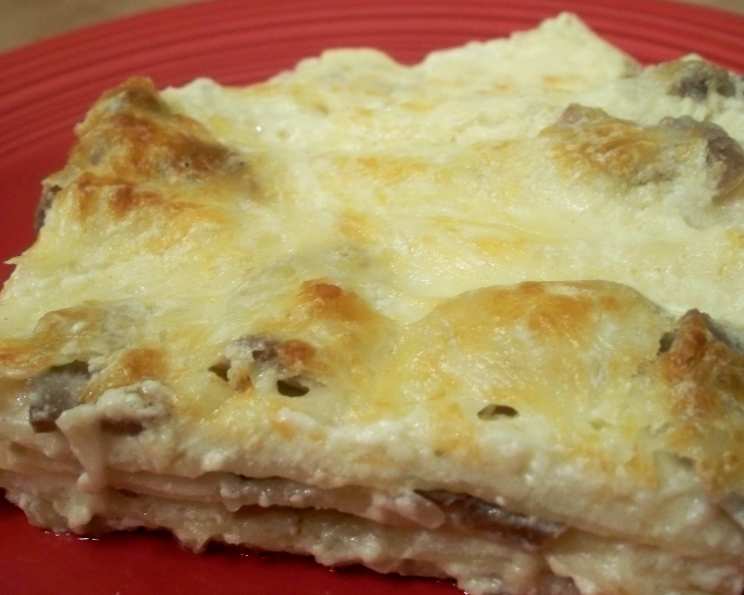
White Lasagne With Parmigiano Besciamella (Lasagne in Bianco)
The aroma of a white lasagne baking fills me with such specific warmth. I remember being a young cook, intimidated by the assertive flavors of traditional tomato-based lasagne, but utterly captivated by the elegance and subtlety of its white counterpart. It felt like discovering a secret, a gentler, more refined way to express the soul of Italian comfort food, and I’ve been experimenting with it ever since. It’s a dish that always manages to impress, whether it’s a casual family meal or a sophisticated dinner party, a reminder that simple ingredients, treated with care, can create extraordinary results.
Recipe Overview
- Prep Time: 25 minutes
- Cook Time: 45-55 minutes
- Total Time: 1 hour 20 minutes
- Servings: 6
- Yield: One 11×8 inch lasagne
- Dietary Type: Not specified (contains dairy, eggs, gluten)
Ingredients
- 3/4 cup minced shallot (about 6)
- 1/2 cup unsalted butter
- 1/2 cup all-purpose flour
- 1/2 teaspoon grated nutmeg
- 3 3/4 cups whole milk
- 1 cup rich chicken broth or 1 cup reduced-sodium chicken broth
- 2 large eggs, lightly beaten
- 1/2 cup dry marsala
- 1/2 teaspoon fine sea salt
- 1/4 lb grated parmigiano-reggiano cheese, divided (1 cup)
- 12 no-boil egg lasagna sheets
Equipment Needed
- Heavy medium saucepan
- Wooden spoon
- Whisk
- 11- by 8-inch baking dish
- Measuring cups and spoons
Instructions
-
Preheat your oven to 350°F (175°C) with the rack in the middle position. Ensure even heating by placing the rack centrally.
-
In a heavy medium saucepan, melt the butter over medium heat. Add the minced shallot and cook, stirring occasionally, until the shallots are tender and translucent, about 4 minutes. It’s crucial to cook the shallots gently to avoid browning, which can impart a bitter flavor.
-
Add the all-purpose flour to the cooked shallots and butter. Cook over low heat, stirring continuously with a wooden spoon, for 3 minutes. This step creates a roux, which will thicken the sauce. Be patient and cook the roux slowly to eliminate any raw flour taste.
-
Add the grated nutmeg to the roux. Then, slowly whisk in the whole milk and chicken broth, ensuring there are no lumps. Whisking constantly is key to a smooth sauce.
-
Bring the mixture to a boil over medium heat, whisking constantly. Once boiling, reduce the heat to a simmer, stirring occasionally, until the sauce lightly coats the back of a spoon, about 1 minute. The sauce should be thick enough to leave a clear trail when a finger is drawn across the back of the spoon.
-
Remove the saucepan from the heat and allow the sauce to cool to warm, stirring occasionally to prevent a skin from forming on the surface.
-
In a separate bowl, lightly beat the eggs. Gradually stir the beaten eggs into the warm sauce. Then, stir in the dry marsala, sea salt, and 1/2 teaspoon black pepper. Finally, stir in 1/2 cup of the grated parmigiano-reggiano cheese. Ensure all ingredients are well combined.
-
Spread about 1 1/4 cups of the Parmigiano besciamella sauce over the bottom of an 11- by 8-inch baking dish. This layer prevents the lasagne sheets from sticking and provides a rich base.
-
Cover the sauce with a layer of 3 no-boil egg lasagne sheets, overlapping slightly if necessary to fit the dish.
-
Repeat the layering process three more times: sauce, lasagne sheets, sauce, lasagne sheets, and so on.
-
Top the final layer of lasagne sheets with the remaining Parmigiano besciamella sauce and the remaining 1/2 cup of grated parmigiano-reggiano cheese. Ensure the entire surface is covered for a beautiful golden-brown crust.
-
Bake the lasagne, uncovered, in the preheated oven for 45 to 55 minutes, or until the top is browned and the sauce is bubbly. The exact baking time may vary depending on your oven, so check for doneness after 45 minutes. A skewer inserted into the center should come out hot to the touch.
-
Remove the lasagne from the oven and let it rest for 10-15 minutes before cutting and serving. This allows the lasagne to set, making it easier to slice.
Expert Tips & Tricks
-
Make-Ahead Magic: The Parmigiano besciamella sauce can be prepared a day in advance and chilled, covered, in the refrigerator. This allows the flavors to meld and saves time on the day of baking. Be sure to bring the sauce back to room temperature before assembling the lasagne.
-
Cheese Choices: While Parmigiano-Reggiano is the classic choice, you can experiment with other hard Italian cheeses like Pecorino Romano or Grana Padano for a slightly different flavor profile.
-
Avoiding Soggy Lasagne: Using no-boil lasagne sheets is key to preventing a soggy lasagne. However, ensure that the sauce is sufficiently liquid to properly hydrate the sheets during baking. If the sauce seems too thick, add a splash more milk or broth.
-
Browning Perfection: If the top of the lasagne is browning too quickly, loosely cover the dish with aluminum foil during the last 15-20 minutes of baking.
Serving & Storage Suggestions
Allow the lasagne to cool slightly before slicing and serving. A sprinkle of fresh parsley or a drizzle of good-quality olive oil can add a final touch of elegance. Leftovers can be stored in an airtight container in the refrigerator for up to 3 days. To reheat, cover with foil and bake in a preheated oven at 350°F (175°C) until heated through, or microwave individual portions. For longer storage, the lasagne can be frozen for up to 2 months. Thaw completely in the refrigerator before reheating.
Nutritional Information
| Nutrient | Amount per Serving | % Daily Value |
|---|---|---|
| Calories | 416.5 kcal | N/A |
| Calories from Fat | N/A | 60% |
| Total Fat | 27.8 g | 42% |
| Saturated Fat | 16.6 g | 83% |
| Cholesterol | 131.5 mg | 43% |
| Sodium | 912 mg | 37% |
| Total Carbohydrate | 20.4 g | 6% |
| Dietary Fiber | 0.3 g | 1% |
| Sugars | 8.5 g | N/A |
| Protein | 17.8 g | 35% |
Note: Nutritional information is an estimate and may vary based on specific ingredients and preparation methods.
Variations & Substitutions
- Vegetarian Delight: Substitute the chicken broth with vegetable broth for a vegetarian version. You could also add layers of sautéed spinach, mushrooms, or zucchini for added flavor and texture.
- Gluten-Free: Use gluten-free lasagne sheets for a gluten-free option. Be sure to check the sauce ingredients as well, as some commercially prepared broths may contain gluten.
- Seafood Lasagne: Incorporate cooked shrimp, scallops, or crabmeat into the layers for a luxurious seafood lasagne.
- Herb Infusion: Add fresh herbs like thyme, rosemary, or sage to the besciamella sauce for a fragrant twist.
FAQs (Frequently Asked Questions)
Q: Can I use regular lasagne noodles instead of no-boil?
A: Yes, but you’ll need to cook them according to package directions before assembling the lasagne. Be sure to drain them well to avoid excess moisture in the finished dish.
Q: Can I freeze the assembled lasagne before baking?
A: Absolutely! Assemble the lasagne as directed, then wrap it tightly in plastic wrap and foil. Freeze for up to 2 months. Thaw completely in the refrigerator before baking.
Q: What can I substitute for Marsala wine?
A: If you don’t have Marsala, you can use a dry sherry or Madeira wine. In a pinch, you can also use chicken broth with a splash of balsamic vinegar for a similar flavor profile.
Q: How can I prevent the lasagne from drying out during baking?
A: Make sure the sauce is sufficiently liquid and covers the lasagne sheets completely. If the top starts to brown too quickly, cover the dish loosely with aluminum foil.
Q: Can I add ricotta cheese to this recipe?
A: While this is a “white” lasagne, you can absolutely add dollops of ricotta cheese between the layers for added richness and texture.
Final Thoughts
This White Lasagne with Parmigiano Besciamella is more than just a recipe; it’s an invitation to experience the comfort and elegance of Italian cuisine. I encourage you to try it, experiment with your favorite variations, and share your creations with loved ones. The beauty of cooking lies in the ability to adapt and create, so don’t be afraid to make this dish your own. Buon appetito!