
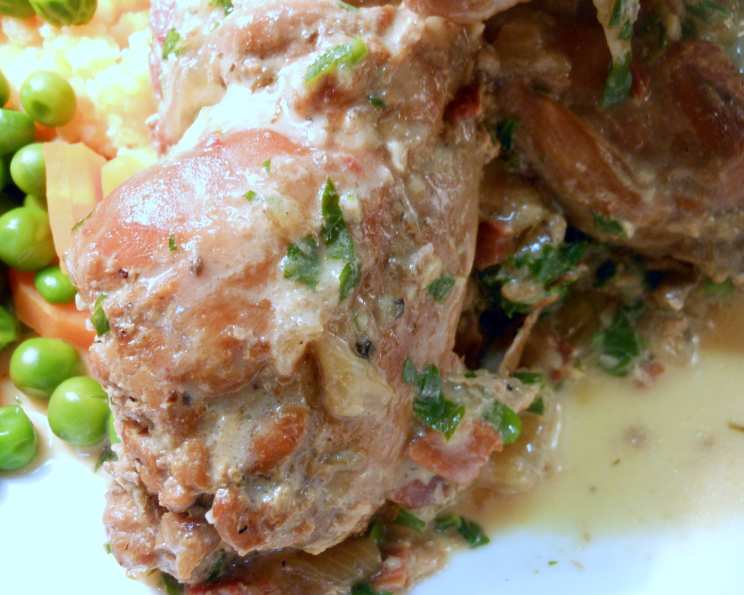
White Rabbit: A Culinary Journey
My grandmother, Nonna Emilia, had a way with rabbit. Not in the Peter Rabbit sense, of course, but in the cucina povera sense, transforming humble ingredients into something truly special. I remember one Easter, the scent of braised rabbit clung to the air, mingling with the aroma of freshly baked bread. It was a dish she reserved for special occasions, and its earthy, comforting flavors remain etched in my memory, a testament to simple ingredients transformed into something extraordinary. While her recipe was deeply traditional, this “White Rabbit” dish offers a delightful twist, a brighter, creamier counterpoint to those rustic flavors.
Recipe Overview
- Prep Time: 20 minutes
- Cook Time: 2 hours 15 minutes
- Total Time: 2 hours 35 minutes
- Servings: 4
- Dietary Type: Dairy
Ingredients
- 1 kg rabbit joint, seasoned with salt and pepper
- 1 tablespoon oil
- 1 onion, finely sliced
- 40 g pancetta, roughly chopped
- 2 garlic cloves, crushed
- ½ cup white wine
- 1 cup chicken stock
- 1 tablespoon Dijon mustard
- 1 teaspoon dried thyme
- 1 bay leaf
- ⅓ cup chopped parsley
- 2 tablespoons light sour cream
Equipment Needed
- Large, heavy lidded pan
- Plate
- Whisk
Instructions
- Heat the oil in a large, heavy lidded pan over medium-high heat. Add the seasoned rabbit, turning to seal on all sides. Sealing the rabbit at this stage helps to lock in the juices and develop a rich, browned flavor. Be sure not to overcrowd the pan; work in batches if necessary to ensure even browning.
- Remove the rabbit from the pan and set aside on a plate.
- Add the finely sliced onion and roughly chopped pancetta to the pan. Cook for a couple of minutes, until the onion is softened and translucent and the pancetta is beginning to render its fat. Don’t rush this step – allowing the onion to soften properly will create a sweeter, more flavorful base for the sauce.
- Add the crushed garlic and cook for a minute or so more, until fragrant. Be careful not to burn the garlic, as this can impart a bitter taste to the dish.
- Pour in the white wine, chicken stock, Dijon mustard, and dried thyme, and add the bay leaf. Stir well to combine, scraping any browned bits from the bottom of the pan. These browned bits, known as fond, are packed with flavor and will add depth and complexity to the sauce. Bring the mixture to a boil.
- Return the rabbit to the pan. Bring the liquid back to a boil, then reduce the heat to a simmer, cover the pan tightly with the lid, and cook over a low heat for around two hours, or until the rabbit is very tender and easily pulls away from the bone. The cooking time may vary depending on the size and age of the rabbit, so check for tenderness periodically.
- Remove the rabbit from the pan and keep warm. You can wrap it loosely in foil to prevent it from drying out while you finish the sauce.
- Increase the heat to medium-high and bring the liquid in the pan to a fast boil. Cook until the sauce has reduced to a sauce consistency, about 10-15 minutes. The sauce should be thick enough to coat the back of a spoon.
- Remove the pan from the heat and whisk in the light sour cream and chopped parsley. The sour cream will add richness and a slight tang to the sauce, while the parsley will provide a fresh, herbaceous note. Stir until well combined.
- To serve, place the cooked rabbit over a bed of creamy mashed potatoes and generously spoon the sauce over the top.
Expert Tips & Tricks
- For an even richer flavor, consider using bone-in rabbit pieces. The bones will release collagen as they cook, adding body and depth to the sauce.
- If you prefer a smoother sauce, you can use an immersion blender to puree it before adding the sour cream.
- To add a hint of sweetness, consider adding a small diced carrot and celery to the pan along with the onion and pancetta.
- If you’re short on time, you can use pre-cut rabbit pieces, but be sure to adjust the cooking time accordingly.
- If you don’t have pancetta, bacon can be substituted.
Serving & Storage Suggestions
Serve the White Rabbit immediately over creamy mashed potatoes or polenta for a comforting and satisfying meal. Garnish with a sprinkle of fresh parsley. Leftovers can be stored in an airtight container in the refrigerator for up to 3 days. To reheat, gently warm the rabbit and sauce in a saucepan over low heat, adding a splash of chicken stock or water if needed to prevent it from drying out. Avoid microwaving, as this can make the rabbit tough. The sauce can also be frozen for up to 2 months. Thaw overnight in the refrigerator before reheating.
Nutritional Information
| Nutrient | Amount per Serving | % Daily Value |
|---|---|---|
| Calories | 445 kcal | 22% |
| Total Fat | 19 g | 29% |
| Saturated Fat | 5.3 g | 27% |
| Cholesterol | 147 mg | 49% |
| Sodium | 242 mg | 10% |
| Total Carbohydrate | 7.2 g | 3% |
| Dietary Fiber | 0.9 g | 4% |
| Sugars | 2.5 g | N/A |
| Protein | 53 g | 106% |
Note: Nutritional information is an estimate and may vary based on specific ingredients and cooking methods.
Variations & Substitutions
- Creamy White Rabbit with Mushrooms: Add sliced mushrooms (such as cremini or shiitake) to the pan along with the onions and pancetta for an earthy, umami-rich variation.
- Spicy White Rabbit: Add a pinch of red pepper flakes or a chopped chili pepper to the pan for a touch of heat.
- White Rabbit with Root Vegetables: Incorporate diced root vegetables, such as carrots, parsnips, or turnips, for a heartier and more colorful dish. Add them to the pan along with the onions and pancetta.
- Dairy-Free White Rabbit: Substitute the sour cream with a dairy-free alternative like cashew cream or coconut cream for a vegan option.
FAQs (Frequently Asked Questions)
Q: Can I use frozen rabbit for this recipe?
A: Yes, you can use frozen rabbit. Be sure to thaw it completely in the refrigerator before cooking. Pat it dry with paper towels before searing to ensure proper browning.
Q: Can I make this dish in a slow cooker?
A: Absolutely! Sear the rabbit as directed, then transfer it to a slow cooker along with the other ingredients. Cook on low for 6-8 hours, or on high for 3-4 hours, or until the rabbit is very tender. Thicken the sauce on the stovetop after removing the rabbit from the slow cooker.
Q: What if I can’t find rabbit?
A: Chicken thighs or pork shoulder can be used as a substitute for rabbit in this recipe. Adjust the cooking time accordingly to ensure the meat is cooked through.
Q: How can I make the sauce thicker?
A: If the sauce is not thick enough after reducing, you can whisk in a slurry of cornstarch and water (1 tablespoon cornstarch mixed with 2 tablespoons cold water) before adding the sour cream.
Q: Can I make this dish ahead of time?
A: Yes, you can prepare the White Rabbit a day or two in advance. Store it in the refrigerator and reheat it gently before serving. The flavors will actually deepen and meld together even more over time.
Final Thoughts
This White Rabbit is a dish that marries rustic comfort with a touch of elegance. It’s a testament to how simple ingredients, treated with care and attention, can transform into something truly special. I encourage you to try this recipe, adapt it to your liking, and share it with loved ones. Perhaps pair it with a crisp white wine like a Vermentino or a Pinot Grigio. And please, don’t be shy – share your creations and experiences. Happy cooking!