
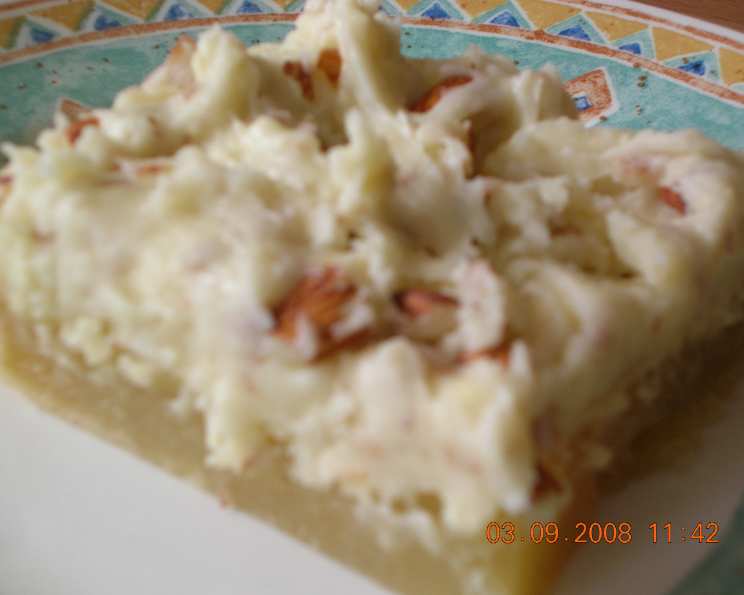
White Texas Sheet Cake: A Sweet Slice of Southern Charm
The aroma still takes me back. It was my grandmother’s kitchen, late summer, the Texas sun blazing outside. Inside, the air was thick with humidity and the sweet, almost intoxicating scent of almond extract. Grandma would always be at the counter, humming softly as she poured warm frosting over a massive, impossibly thin cake. This wasn’t just dessert; it was love baked into every single bite, a memory I cherish to this day. Her White Texas Sheet Cake, a deviation from the classic chocolate version, was always the star.
Recipe Overview
- Prep Time: 15 minutes
- Cook Time: 20 minutes
- Total Time: 35 minutes
- Servings: 20-25
- Yield: 1 sheet cake
- Dietary Type: Not specified (contains dairy, eggs, and gluten)
Ingredients
For the Cake:
- 1 cup butter
- 1 cup water
- 2 cups flour
- 2 cups sugar
- 2 eggs, beaten
- 1/2 cup sour cream
- 1 teaspoon almond extract
- 1 teaspoon salt
For the Frosting:
- 1/2 cup butter
- 1/4 cup milk
- 4 1/2 cups powdered sugar
- 1/2 teaspoon almond extract
- 1 cup nuts, chopped (pecans or walnuts recommended)
Equipment Needed
- Large saucepan
- Mixing bowl
- 10×15 inch cookie sheet pan
- Measuring cups and spoons
- Whisk
- Oven
Instructions
-
Preheat your oven to 375 degrees Fahrenheit (190 degrees Celsius). This temperature is crucial for achieving the cake’s signature thin and tender texture.
-
In a large saucepan, combine 1 cup of butter and 1 cup of water. Place the saucepan over medium heat and bring the mixture to a rolling boil, stirring occasionally to ensure the butter melts evenly.
-
Once the mixture has reached a boil, immediately remove the saucepan from the heat. This step is important because prolonged boiling can evaporate too much liquid, affecting the cake’s final moisture content.
-
In a separate mixing bowl, combine the remaining dry ingredients: 2 cups of flour, 2 cups of sugar, and 1 teaspoon of salt. Whisk these ingredients together thoroughly to ensure even distribution, which will help prevent clumps and ensure a uniform cake texture.
-
Add the dry ingredients to the hot butter and water mixture in the saucepan. Stir continuously until the mixture is smooth and well combined. Don’t worry if the batter seems thin; that’s perfectly normal for a Texas sheet cake.
-
In a separate small bowl, lightly beat 2 eggs. Then, add the beaten eggs, 1/2 cup of sour cream, and 1 teaspoon of almond extract to the batter in the saucepan. Stir until everything is fully incorporated. The sour cream adds a subtle tang and helps to keep the cake moist, while the almond extract provides that distinctive, delightful flavor.
-
Pour the batter evenly into a 10×15 inch cookie sheet pan. Make sure the batter is spread out evenly to ensure the cake bakes uniformly. A slight lip on the cookie sheet is essential to prevent any batter from spilling over during baking.
-
Bake in the preheated oven for 20 minutes, or until the cake is golden brown and a toothpick inserted into the center comes out clean. Keep a close eye on the cake during baking, as oven temperatures can vary. The cake should be firm to the touch but still slightly soft in the center.
-
While the cake is baking, prepare the frosting. In the same saucepan (cleaned, of course!), combine 1/2 cup of butter and 1/4 cup of milk. Bring this mixture to a boil over medium heat, stirring constantly until the butter is melted and the mixture is smooth.
-
Remove the saucepan from the heat. Add 4 1/2 cups of powdered sugar to the hot butter and milk mixture. Stir vigorously until the frosting is smooth and creamy. This is where a good whisk comes in handy to eliminate any lumps.
-
Add 1/2 teaspoon of almond extract and 1 cup of chopped nuts to the frosting. Stir to distribute the flavor and nuts evenly. Pecans or walnuts are traditional choices, but feel free to experiment with other nuts like slivered almonds or even toasted macadamia nuts.
-
As soon as the cake comes out of the oven, let it cool for no more than 20 minutes. This is crucial for the frosting to adhere properly and create that melt-in-your-mouth texture. Frosting a cake that is too hot will cause the frosting to melt and slide off, while frosting a cake that is too cold will prevent the frosting from soaking into the cake.
-
While the cake is still slightly warm, pour the warm frosting evenly over the surface. The warmth of both the cake and the frosting will allow the frosting to melt slightly and create a beautiful, glossy finish.
-
Let the frosted cake cool completely before cutting and serving. This will allow the frosting to set up properly and make slicing easier.
Expert Tips & Tricks
- Buttermilk Boost: For an extra tangy flavor, substitute 1/4 cup of buttermilk for 1/4 cup of the water in the cake batter. This adds a subtle complexity to the cake’s flavor profile.
- Nutty Variations: Toast the nuts before adding them to the frosting. This enhances their flavor and adds a pleasant crunch. Spread them on a baking sheet and bake at 350°F (175°C) for 5-7 minutes, or until lightly golden.
- Don’t Overbake: Overbaking will result in a dry cake. Start checking for doneness around 18 minutes, using a toothpick inserted into the center.
- Make-Ahead Magic: The cake can be baked a day ahead and stored, unfrosted, at room temperature, tightly covered. Frost just before serving for the best results.
Serving & Storage Suggestions
Serve the White Texas Sheet Cake at room temperature. Cut into squares or rectangles and serve as a dessert for any occasion. It’s delightful on its own but also pairs well with a scoop of vanilla ice cream or a dollop of whipped cream.
Store leftover cake in an airtight container at room temperature for up to 3 days. You can also refrigerate it for up to a week, but the cake may become slightly drier. For longer storage, freeze the cake for up to 2 months. Thaw in the refrigerator overnight before serving.
Nutritional Information
| Nutrient | Amount per Serving | % Daily Value |
|---|---|---|
| Calories | 413.2 kcal | N/A |
| Calories from Fat | 173 g | 42% |
| Total Fat | 19.3 g | 29% |
| Saturated Fat | 10.2 g | 51% |
| Cholesterol | 60.7 mg | 20% |
| Sodium | 272.5 mg | 11% |
| Total Carbohydrate | 58.6 g | 19% |
| Dietary Fiber | 0.9 g | 3% |
| Sugars | 46.9 g | 187% |
| Protein | 3.5 g | 7% |
Note: Nutritional information is an estimate and may vary based on specific ingredients and portion sizes.
Variations & Substitutions
- Lemon Twist: Add the zest of one lemon to both the cake batter and the frosting for a bright, citrusy flavor.
- Brown Butter Frosting: Brown the butter for the frosting before adding the milk and powdered sugar. This creates a rich, nutty flavor that complements the almond extract beautifully.
- Gluten-Free Adaptation: Substitute a gluten-free all-purpose flour blend for the regular flour. You may need to add a bit more liquid to achieve the correct batter consistency.
- Dairy-Free Option: Use a plant-based butter alternative and non-dairy milk (such as almond milk or oat milk) in both the cake and the frosting. Be sure to choose a plant-based butter that performs well in baking.
FAQs (Frequently Asked Questions)
Q: Can I use a different size pan?
A: While a 10×15 inch pan is recommended for the signature thinness of the cake, you can use a 9×13 inch pan, but the baking time may need to be increased slightly.
Q: Can I use salted butter?
A: Yes, but omit the additional 1 teaspoon of salt in the cake batter.
Q: Why is the frosting so thin?
A: The frosting is meant to be thin so it can soak into the warm cake. Ensure you are using the correct ratio of butter, milk, and powdered sugar.
Q: Can I freeze the frosted cake?
A: Yes, you can freeze the frosted cake, but the frosting may become slightly sticky upon thawing. Wrap the cake tightly in plastic wrap and then in foil before freezing.
Q: What kind of nuts are best for this cake?
A: Pecans and walnuts are traditional choices, but you can experiment with other nuts like slivered almonds, toasted macadamia nuts, or even chopped pistachios.
Final Thoughts
Baking this White Texas Sheet Cake is more than just following a recipe; it’s about creating a connection to the past and sharing a piece of homemade goodness. I encourage you to try this recipe, experiment with variations, and make it your own. Share it with friends and family, and let the sweet aroma and delicate flavors transport you to simpler times. I hope this cake brings as much joy to your kitchen as it has to mine for so many years!