
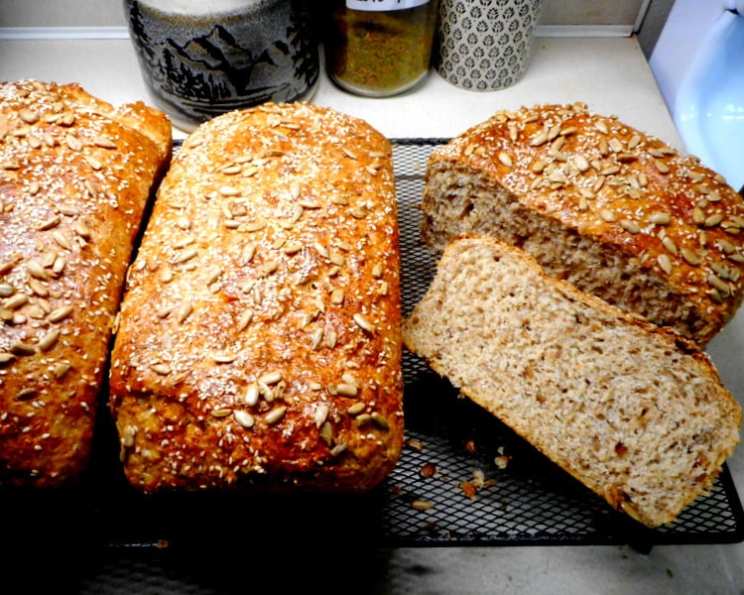
Baking with the Seed of an Idea: My Journey with Whole Grain Sprout Bread
The aroma of freshly baked bread is a powerful time machine. For me, it instantly transports me back to my grandmother’s kitchen, a warm, sun-drenched space where flour dusted every surface and a symphony of comforting smells always filled the air. While she was known for her classic white loaves, I remember her experimenting with different grains and seeds, always searching for ways to make her baking even healthier and more flavorful. It was this spirit of innovation that inspired my take on whole grain sprout bread—a hearty, wholesome loaf that combines the earthy goodness of sprouted grains with the satisfying chew of a perfectly baked bread. This bread isn’t just food, it’s a conversation, a warm hug, and a celebration of simple ingredients transformed into something truly special.
Recipe Overview: Whole Grain Sprout Bread
- Prep Time: 3 hours, 10 minutes
- Cook Time: 35-40 minutes
- Total Time: 3 hours, 45-50 minutes
- Yields: 2-3 loaves
- Dietary Type: Vegetarian
Ingredients:
- 2 1/2 cups warm water
- 2 tablespoons active dry yeast
- 1/2 cup oil (vegetable, olive, or your preferred baking oil)
- 1/2 cup honey
- 1 tablespoon salt
- 2 cups mixed grain sprouts (wheat berries, quinoa, rye, spelt, lentils, etc.), whole or lightly ground
- 4 cups flour (any combination of wheat, rye, and white)
- 3-4 cups flour (any combination of wheat, rye, and white), for kneading and adding gradually
Ingredient Notes:
- For the mixed grain sprouts, feel free to experiment with different combinations. Sprout your own for ultimate freshness, or purchase them pre-sprouted.
- If using a high proportion of whole wheat or rye flour, consider adding about 1/8 cup of wheat gluten per cup of flour for a better rise and texture. This is especially important if your flour is old.
- Honey can be substituted with maple syrup or agave nectar for a vegan version, though it may slightly alter the flavor and texture.
Equipment Needed:
- Large mixing bowl
- Measuring cups and spoons
- Mixing spoon or stand mixer (optional)
- Clean kitchen towel
- Lightly floured surface
- Greased bowl for rising
- 2-3 greased loaf pans
- Wire cooling rack
Instructions:
- Activate the Yeast: In a large bowl, combine 2 1/2 cups of warm water and 2 tablespoons of active dry yeast. The water should be warm to the touch, but not hot, to avoid killing the yeast.
- Proofing: Allow the yeast to proof (bubble and foam) for about 5 minutes. This step ensures that the yeast is active and ready to leaven the bread. If the yeast doesn’t bubble, it might be old or the water too hot/cold. Start again with fresh yeast.
- Combine Wet Ingredients: Stir in 1/2 cup of oil, 1/2 cup of honey, and 1 tablespoon of salt into the yeast mixture.
- Add Sprouts and Initial Flour: Incorporate 2 cups of sprouted grains (whole or lightly ground) and 4 cups of flour (your chosen combination of wheat, rye, and white). Beat well to combine the ingredients into a thick batter or “sponge.”
- First Rise (Sponge): Cover the bowl with a clean kitchen towel and let the “sponge” rest and rise for 45-60 minutes. This initial rise allows the yeast to begin its work and develop flavor in the dough.
- Add Remaining Flour: Stir down the risen sponge. Gradually add 3-4 cups of flour (again, your choice of combination), mixing until a dough forms that is slightly sticky but manageable.
- Kneading: Turn the dough out onto a lightly floured surface. Knead the dough for 8-10 minutes, until it becomes smooth and elastic. Add more flour, a tablespoon at a time, if the dough is too sticky to handle.
- First Rise (Dough): Place the kneaded dough into a greased bowl, turning it over to coat all sides. This prevents the dough from drying out.
- Bulk Fermentation: Cover the bowl with a clean kitchen towel and let the dough rise in a warm place until doubled in size. This typically takes 60-90 minutes, but the rising time can vary depending on the temperature of your kitchen.
- Shape the Loaves: Knead the risen dough down in the bowl to release the air. Divide the dough into 2-3 equal portions. Shape each portion into an oblong loaf.
- Pan and Second Rise: Place each loaf into a well-greased loaf pan. Cover the pans with a clean kitchen towel and let the loaves rise for about 60 minutes, or until they have almost doubled in size.
- Bake: Preheat your oven to 375°F (190°C). Bake the loaves for 35-40 minutes, or until they are golden brown and sound hollow when tapped on the bottom.
- Cool: Remove the loaves from the pans immediately and place them on a wire rack to cool completely before slicing and serving.
Expert Tips & Tricks:
- The Windowpane Test: To check if your dough is kneaded enough, perform the windowpane test. Stretch a small piece of dough between your fingers. If it stretches thin enough to see light through it without tearing, it’s ready.
- Even Baking: Rotate the loaf pans halfway through baking to ensure even browning.
- Shiny Crust: For a shiny crust, brush the tops of the loaves with melted butter or an egg wash (1 egg beaten with 1 tablespoon of water) before baking.
- Steam: Create a steamy oven environment during the first 10 minutes of baking by placing a pan of hot water on the bottom rack of the oven. This helps to develop a crispier crust. Remove the pan of water after 10 minutes.
- Freezing: This bread freezes exceptionally well. Allow the loaves to cool completely, then wrap them tightly in plastic wrap and foil before freezing.
Serving & Storage Suggestions:
This whole grain sprout bread is incredibly versatile. Serve it warm with a pat of butter, use it for sandwiches, or toast it for breakfast. It pairs beautifully with soups, salads, and dips.
- Room Temperature: Store cooled loaves in an airtight container at room temperature for up to 3 days.
- Refrigerator: For longer storage, store the bread in an airtight container in the refrigerator for up to a week.
- Freezer: Frozen bread can be stored for up to 3 months. To thaw, leave the loaf at room temperature for several hours or overnight.
- Reheating: To refresh slightly stale bread, wrap it in foil and warm it in a 350°F (175°C) oven for 10-15 minutes.
Nutritional Information:
Note: Nutritional information is an estimate and can vary based on specific ingredients and portion sizes.
| Nutrient | Amount per Serving (approx. 1 slice) | % Daily Value |
|---|---|---|
| Calories | 200 kcal | 10% |
| Total Fat | 8g | 12% |
| Saturated Fat | 1g | 5% |
| Cholesterol | 0mg | 0% |
| Sodium | 250mg | 10% |
| Total Carbohydrate | 30g | 11% |
| Dietary Fiber | 3g | 12% |
| Sugars | 5g | – |
| Protein | 6g | 12% |
Variations & Substitutions:
- Vegan: Substitute the honey with maple syrup or agave nectar. Ensure your oil is plant-based.
- Sweet Bread: Add 1/4 cup of brown sugar and 1 teaspoon of cinnamon to the dough for a slightly sweeter loaf. Raisins, chopped nuts, or dried cranberries can also be added.
- Seeded Bread: Sprinkle the tops of the loaves with sesame seeds, poppy seeds, or sunflower seeds before baking.
- Herb Bread: Add 1-2 tablespoons of chopped fresh herbs (such as rosemary, thyme, or oregano) to the dough for a savory twist.
- Sourdough: Incorporate sourdough starter into the recipe by substituting some of the water and flour with active starter.
FAQs (Frequently Asked Questions):
Q: Can I use pre-ground sprouted flour instead of whole sprouts?
A: Yes, you can substitute pre-ground sprouted flour for the whole or lightly ground sprouts. Use the same amount (2 cups) and adjust the amount of additional flour as needed during kneading.
Q: My dough isn’t rising. What could be the problem?
A: Several factors can affect the rise of your dough, including old yeast, water that is too hot or too cold, or a cold room. Make sure your yeast is fresh, your water is warm but not hot, and place the dough in a warm place to rise.
Q: How do I know when the bread is done baking?
A: The bread is done when it is golden brown and sounds hollow when tapped on the bottom. An internal temperature of 200-210°F (93-99°C) is also a good indication of doneness.
Q: Can I make this bread in a bread machine?
A: Yes, you can adapt this recipe for a bread machine. Follow your bread machine’s instructions for adding ingredients and selecting the appropriate cycle.
Q: What can I do if my bread is too dense?
A: A dense bread can be caused by not kneading enough, not letting the dough rise sufficiently, or using too much flour. Ensure you knead the dough until it’s smooth and elastic, allow it to double in size during both rises, and measure your flour accurately.
Final Thoughts:
From my grandmother’s kitchen to yours, this whole grain sprout bread is more than just a recipe; it’s an invitation to slow down, connect with simple ingredients, and create something truly nourishing. Don’t be afraid to experiment with different grain combinations and flavor additions to make it your own. I hope this recipe inspires you to bake with joy and share the warmth of homemade bread with those you love. Let me know how your loaf turns out, and what delightful pairings you discover! Happy baking!