
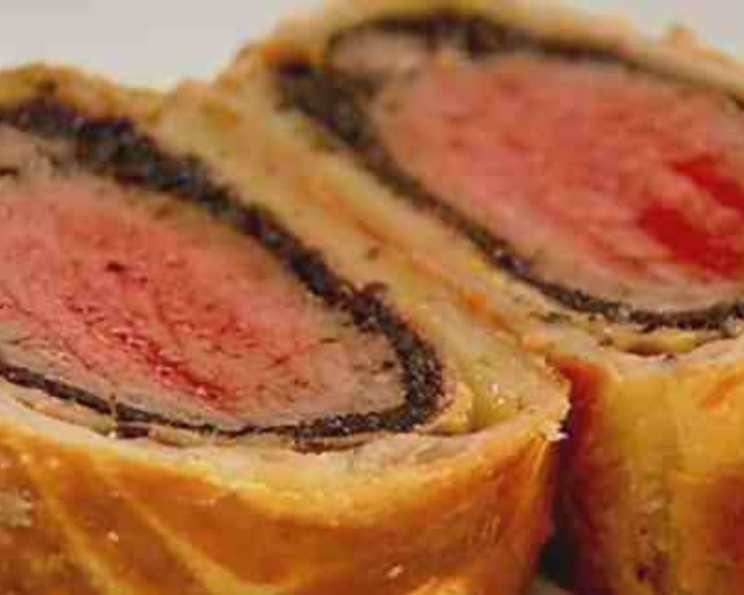
The Weeknight Wellington: A Deliciously Doable Indulgence
I’ll never forget the first time I tasted Beef Wellington. It was at a tiny, impossibly chic restaurant in Paris, and the chef presented it with a flourish. The golden pastry, the rich aroma, the perfectly pink beef within – it was an experience that transcended mere dinner. For years, I considered it a dish strictly reserved for special occasions, far too complicated for the home cook. That was until I discovered a streamlined approach that captures the essence of the classic while being manageable for a weeknight meal. This recipe has become my go-to for impressing guests without spending all day in the kitchen.
Recipe Overview
- Prep Time: 30 minutes
- Cook Time: 40 minutes
- Total Time: 1 hour 10 minutes
- Servings: 2
- Dietary Type: Non-Vegetarian
Ingredients
-
For the Wellington:
- 400g filet of beef
- 400g flat mushrooms
- 4 slices Parma ham
- English mustard, for brushing meat
- 200g puff pastry
- 2 egg yolks
- Salt and pepper
- Olive oil
-
For the Potatoes:
- 8 new potatoes
- 1 garlic clove, crushed
- 1 sprig thyme
- Olive oil
- Salt and pepper
-
For the Baby Gem Lettuce:
- 2 large baby gem lettuce
- Olive oil
- Salt and pepper
-
Optional:
- Mustard vinaigrette
Equipment Needed
- Large frying pan
- Food processor
- Dry pan
- Cling film
- Rolling pin
- Baking tray
- Small pan
Instructions
-
Preheat the oven to 200°C (400°F). Ensure your oven is properly calibrated for consistent results.
-
Heat a drizzle of olive oil in a large pan over high heat. Season the beef generously with salt and pepper. Quickly fry the beef on all sides until browned. This searing process is crucial for locking in the juices. The point here is to sear the beef, not cook it through. Remove the beef from the pan and allow it to cool completely.
-
Once the beef is cool enough to handle, brush it generously with English mustard. The mustard adds a tangy flavor that complements the richness of the beef and mushrooms.
-
Roughly chop the mushrooms. Transfer them to a food processor and blend until they form a puree.
-
Scrape the mushroom mixture into a hot, dry pan (no oil needed). Cook over medium heat, allowing the water to evaporate. This step is essential for preventing a soggy Wellington. Continue cooking until the mixture is sufficiently dry and sticking together easily. Remove from the heat and set aside to cool.
-
Lay out a generous length of cling film on a clean surface. Arrange the Parma ham slices on the cling film, slightly overlapping each other to create a rectangular shape.
-
Using a pallet knife or spatula, spread the cooled mushroom mixture evenly over the Parma ham. Ensure an even layer for consistent flavor in every bite.
-
Place the seared and mustard-coated beef fillet in the center of the mushroom and Parma ham layer.
-
Carefully roll the Parma ham and mushroom mixture around the beef, using the cling film to create a tight barrel shape. Twist the ends of the cling film to secure the roll. Refrigerate for 10-15 minutes. This brief chilling period allows the Wellington to set and helps maintain its shape during baking.
-
On a lightly floured surface, roll out the puff pastry thinly to a size large enough to completely encase the beef.
-
Remove the beef from the refrigerator and unwrap it from the cling film.
-
Egg wash the edges of the rolled-out puff pastry. Place the beef in the center of the pastry. Roll up the pastry around the beef, ensuring a tight seal. Trim any excess pastry from the ends. Fold the ends neatly to the underside of the Wellington.
-
Turnover the Wellington so that the seam is facing down. Egg wash the entire top surface. Chill again for approximately 5 minutes to let the pastry cool and relax. This will help prevent shrinkage during baking.
-
Egg wash the Wellington again before baking. Bake in the preheated oven at 200°C (400°F) for 35-40 minutes, or until the pastry is golden brown and cooked through. The internal temperature of the beef should reach your desired level of doneness. A meat thermometer is highly recommended.
-
Remove the Wellington from the oven and let it rest for 8-10 minutes before slicing. This allows the juices to redistribute, resulting in a more tender and flavorful beef.
-
While the Wellington is baking, prepare the potatoes. Parboil the new potatoes in salted water until slightly tender. Quarter the potatoes (leaving the skin on).
-
Heat some olive oil in a pan. Sauté the potatoes with the crushed garlic and thyme sprig until browned and cooked through. Season with salt and pepper. Remove the thyme sprig and garlic before serving.
-
Separate the outer leaves of the baby gem lettuce, leaving the smaller inner leaves for salads (if desired). Quickly sauté the outer leaves in a pan with a little olive oil, salt, and pepper, just enough to wilt them.
-
Serve hearty slices of the Wellington alongside the sautéed potatoes and wilted baby gem lettuce. A classic mustard vinaigrette makes a great dressing, if desired.
Expert Tips & Tricks
- For a richer flavor, consider using a high-quality Dijon mustard instead of standard English mustard.
- If you’re short on time, you can use pre-made duxelles (mushroom paste) instead of making your own.
- To prevent the bottom of the Wellington from becoming soggy, place it on a preheated baking sheet.
- If the pastry starts to brown too quickly, tent it with foil during the last 10-15 minutes of baking.
- Use an instant-read thermometer to ensure the beef is cooked to your preferred doneness. For medium-rare, aim for an internal temperature of 130-135°F (54-57°C).
- Don’t overcrowd the pan when sautéing the potatoes. Work in batches if necessary to ensure even browning.
Serving & Storage Suggestions
Serve the Beef Wellington immediately after resting for the best flavor and texture. Leftovers can be stored in the refrigerator for up to 3 days. To reheat, wrap the Wellington in foil and bake in a preheated oven at 175°C (350°F) until warmed through. Be careful not to overcook it, as the beef will become dry. The potatoes can also be reheated in the oven or in a skillet. The wilted lettuce is best enjoyed fresh. Freezing is not recommended as the texture of the pastry will suffer.
Nutritional Information
| Nutrient | Amount per Serving | % Daily Value |
|---|---|---|
| Calories | 868 kcal | 43% |
| Total Fat | 45g | 69% |
| Saturated Fat | 15g | 75% |
| Cholesterol | 164mg | 55% |
| Sodium | 214mg | 9% |
| Total Carbohydrate | 85g | 28% |
| Dietary Fiber | 9g | 36% |
| Sugars | 4g | N/A |
| Protein | 32g | 64% |
Note: Nutritional information is an estimate and may vary based on specific ingredients and cooking methods.
Variations & Substitutions
- Vegetarian Wellington: Substitute the beef fillet with a large portobello mushroom or a hearty vegetable medley.
- Gluten-Free Wellington: Use gluten-free puff pastry.
- Pork Wellington: Replace the beef with a pork tenderloin.
- Spicy Wellington: Add a pinch of chili flakes to the mushroom mixture for a touch of heat.
- Herbaceous Wellington: Incorporate fresh herbs like rosemary, thyme, or sage into the mushroom mixture.
FAQs (Frequently Asked Questions)
Q: Can I prepare the Wellington ahead of time?
A: Yes, you can assemble the Wellington up to 24 hours in advance. Store it in the refrigerator, tightly wrapped, until ready to bake. Add the final egg wash just before baking.
Q: How can I prevent the puff pastry from getting soggy?
A: Ensure the mushroom mixture is completely dry before spreading it on the Parma ham. Also, chilling the Wellington before baking helps the pastry crisp up properly.
Q: Can I use a different type of mushroom?
A: While flat mushrooms are recommended, you can use other varieties like cremini or button mushrooms. Just be sure to cook them down thoroughly to remove excess moisture.
Q: What is the best way to check the doneness of the beef?
A: Use an instant-read thermometer inserted into the thickest part of the beef. For medium-rare, aim for 130-135°F (54-57°C).
Q: Can I freeze leftover Wellington?
A: While it’s not ideal, you can freeze leftover Wellington. Wrap it tightly in plastic wrap and then foil. When reheating, bake it from frozen at a low temperature (around 150°C/300°F) to prevent the pastry from burning before the beef thaws.
Final Thoughts
This Wholesome Beef Wellington recipe is a testament to the fact that elegant dishes don’t have to be daunting. With a few clever shortcuts and careful attention to detail, you can create a truly impressive meal that will wow your guests (or simply yourself) any night of the week. Don’t be afraid to experiment with variations and make it your own. I encourage you to try this recipe and share your feedback – I’m always eager to hear about your culinary adventures! And for the ultimate pairing, serve this Wellington with a bold red wine like a Cabernet Sauvignon or Merlot.