
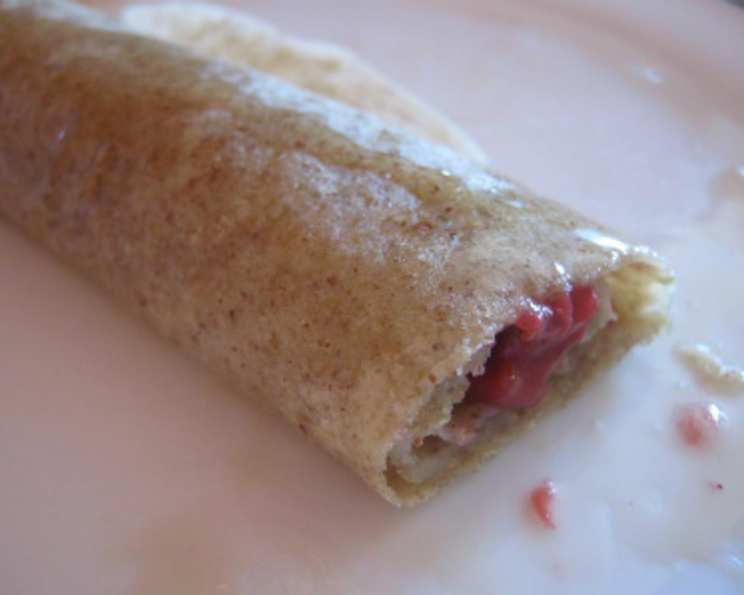
Wholesome Buckwheat Crepes: A Nutty Twist on a Classic
I remember visiting Brittany as a young chef, completely mesmerized by the crepe stands lining the harbor. The aroma of warm, buttery crepes filled the air, a siren song to hungry tourists and locals alike. While traditional crepes are undeniably delicious, I was always intrigued by the idea of exploring variations with different grains. These buckwheat crepes bring that memory full circle, offering a delightful nutty flavor and satisfying texture that’s both comforting and surprisingly versatile. I love how the simple act of soaking the groats transforms them into a smooth batter, ready to become delicate, wholesome crepes perfect for any meal.
Recipe Overview
- Prep Time: 4 hours 20 minutes
- Cook Time: 20 minutes
- Total Time: 4 hours 40 minutes
- Servings: 6
- Yield: 6-8 crepes
- Dietary Type: Gluten-Free, Dairy-Free
Ingredients
- ⅔ cup buckwheat groats (raw, not toasted)
- ½ cup water (plus more if necessary)
- 1 medium egg
- 2 tablespoons brown sugar (or maple syrup)
- 1 teaspoon ground flax seeds (optional)
- ¼ teaspoon ground cinnamon
- ¼ teaspoon salt
Equipment Needed
- Blender
- Skillet
- Measuring cups and spoons
- Spatula
Instructions
- Begin by soaking the buckwheat groats. Place them in a bowl with double the amount of water. Let them soak for at least 4 hours, or ideally overnight. If possible, rinse the groats once or twice during the soaking process. This helps remove any excess starch and improves the final texture.
- Once the soaking is complete, thoroughly drain and rinse the buckwheat groats under cold water. This step is crucial to remove any remaining starchiness.
- In a blender, combine the drained buckwheat groats, water, egg, brown sugar (or maple syrup), ground flax seeds (if using), ground cinnamon, and salt.
- Blend all ingredients until you achieve a completely smooth batter. You may need to scrape down the sides of the blender a few times to ensure everything is evenly incorporated. If the batter appears too thick, add a tablespoon or two of water until it reaches a pourable consistency, similar to pancake batter.
- Preheat a greased skillet over medium heat or slightly below medium heat. The skillet should be hot enough to cook the crepes evenly but not so hot that they burn. I recommend using a non-stick skillet, but a well-seasoned cast iron skillet also works beautifully. Use butter or a neutral oil like grapeseed or coconut oil for greasing.
- Remove the skillet from the heat. Pour ¼ to ⅓ cup of the crepe mixture into the preheated skillet. Immediately swirl the skillet around to distribute the batter evenly, creating a thin, circular crepe. It is important to do this while the skillet is off the heat, as the batter will set quickly once it hits the hot surface.
- Return the skillet to the heat. Cook the crepe for approximately 2 minutes, or until the bottom appears cooked and the edges start to lift slightly.
- Carefully flip the crepe using a spatula and cook the other side until it is cooked through. This usually takes about 1-2 minutes. The crepe should be pliable and slightly browned, but it won’t become crispy like a traditional crepe.
- Flip the crepe a last time for about a dozen seconds. This helps to ensure even cooking and slightly firms up the texture.
- Serve the crepes hot with your favorite toppings.
Expert Tips & Tricks
- Soaking is key: Don’t skimp on the soaking time for the buckwheat groats. This is essential for softening them and achieving a smooth batter.
- Batter consistency: The batter should be pourable but not too thin. If it’s too thick, add a little more water, a tablespoon at a time, until you reach the desired consistency.
- Skillet temperature: Finding the right skillet temperature is crucial. If it’s too hot, the crepes will burn. If it’s too cold, they will be pale and take too long to cook. Start with medium heat and adjust as needed.
- Greasing the skillet: Ensure the skillet is well-greased before cooking each crepe to prevent sticking.
- Make-ahead tip: The batter can be made ahead of time and stored in the refrigerator for up to 24 hours. Just be sure to whisk it well before using, as it may separate slightly.
Serving & Storage Suggestions
These buckwheat crepes are incredibly versatile and can be served with a variety of sweet or savory toppings. For a simple and delicious breakfast, try them with maple syrup, fresh berries, jam, or mashed bananas. They’re also fantastic with a dollop of yogurt or whipped cream.
For a savory option, fill them with sauteed vegetables, cheese, ham, or smoked salmon. They also make a great base for a breakfast burrito.
Leftover crepes can be stored in an airtight container in the refrigerator for up to 3 days. To reheat, simply warm them in a skillet over low heat or microwave them for a few seconds. You can also freeze the crepes for longer storage. Place them in a freezer-safe bag or container, separated by layers of parchment paper, and freeze for up to 2 months. Thaw overnight in the refrigerator before reheating.
Nutritional Information
Please note that these values are estimates and may vary depending on specific ingredients and portion sizes.
| Nutrient | Amount per Serving | % Daily Value |
|---|---|---|
| Calories | 136 kcal | 7% |
| Total Fat | 2.4g | 3% |
| Saturated Fat | 0.8g | 4% |
| Cholesterol | 82mg | 27% |
| Sodium | 330mg | 14% |
| Total Carbohydrate | 25g | 9% |
| Dietary Fiber | 1.7g | 6% |
| Sugars | 14g | N/A |
| Protein | 4.7g | 9% |
Variations & Substitutions
- Vegan: Replace the egg with a flax egg (1 tablespoon ground flaxseed mixed with 3 tablespoons water, let sit for 5 minutes).
- Sweetener: Feel free to experiment with different sweeteners like honey, agave, or coconut sugar.
- Spices: Add a pinch of nutmeg, cardamom, or ginger for a unique flavor.
- Flavorings: Try adding a teaspoon of vanilla extract or almond extract to the batter.
- Savory Crepes: Omit the brown sugar and cinnamon and add a pinch of garlic powder, onion powder, or dried herbs like thyme or rosemary for a savory twist.
FAQs (Frequently Asked Questions)
Q: Why do I need to soak the buckwheat groats?
A: Soaking softens the groats, making them easier to blend into a smooth batter. It also helps to improve the digestibility of the buckwheat.
Q: Can I use buckwheat flour instead of groats?
A: While you can use buckwheat flour, the flavor can be quite strong if the flour isn’t very fresh. Soaking the groats results in a more delicate and pleasant flavor.
Q: My crepes are sticking to the skillet. What am I doing wrong?
A: Make sure your skillet is properly preheated and well-greased before pouring in the batter. If the skillet isn’t hot enough, the crepes will stick.
Q: How can I prevent the crepes from tearing when I flip them?
A: Ensure the first side is fully cooked and set before attempting to flip the crepe. Use a thin, flexible spatula to carefully loosen the edges before flipping.
Q: Can I freeze the crepe batter?
A: It is best to cook the crepes before freezing. The batter may change texture slightly after freezing.
Final Thoughts
I hope you enjoy these wholesome buckwheat crepes as much as I do! They’re a delicious and versatile way to enjoy the nutty flavor of buckwheat in a simple and satisfying dish. Don’t be afraid to experiment with different toppings and fillings to create your own signature crepe. Share your creations and feedback—I can’t wait to see what you come up with! Pair these crepes with a cup of hot coffee or a refreshing glass of orange juice for a perfect breakfast or brunch. Happy cooking!