
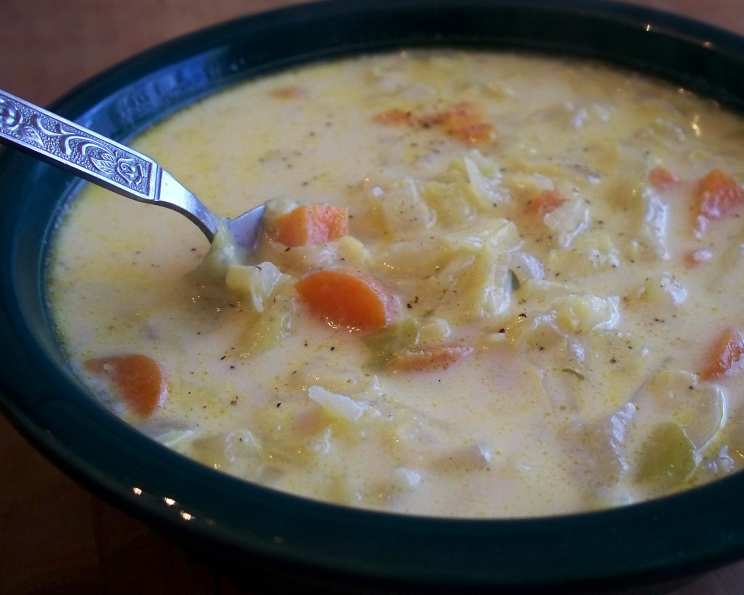
Winter Cabbage Soup: A Heartwarming Bowl of Comfort
There’s a certain magic to simple, honest food, especially during the cold winter months. I remember one particularly harsh winter in culinary school, when money was tight and the days were long. A classmate’s grandmother sent her a massive head of cabbage from her garden. We pooled our resources and turned it into a huge pot of soup, the scent of caramelized onions and sweet cabbage filling the entire kitchen. It was a humble meal, but it warmed us from the inside out, a reminder that even the simplest ingredients, prepared with care, can nourish both body and soul.
Recipe Overview
- Prep Time: 20 minutes
- Cook Time: 40 minutes
- Total Time: 1 hour
- Servings: 4
- Yield: Approximately 6 cups
- Dietary Type: Vegetarian (easily adaptable to Vegan)
Ingredients
- 1 onion, thinly sliced
- 3 1/2 cups cabbage, finely chopped
- 1 1/2 carrots, shredded
- 2 teaspoons canola oil
- 4 teaspoons butter, unsalted (or vegan butter substitute)
- 1/4 teaspoon sugar
- 1/2 teaspoon salt
- 1/4 teaspoon ground pepper
- 2 3/4 cups chicken broth (or vegetable broth for a vegan option)
- 1 1/3 cups 2% low-fat milk, partly skimmed (or unsweetened almond milk/soy milk)
Equipment Needed
- Large saucepan or Dutch oven
- Cutting board
- Knife
- Grater or food processor with shredding attachment
- Measuring cups and spoons
- Ladle
Instructions
-
Prepare the vegetables: Begin by thinly slicing the onion. Then, finely chop the cabbage. Finally, shred the carrots using a grater or a food processor with a shredding attachment. Accuracy in these steps will ensure the soup cooks evenly and develops a desirable texture.
-
Sauté the vegetables: In a large saucepan or Dutch oven, heat the canola oil and butter over medium heat. Once the butter is melted and the pan is shimmering, add the sliced onions, chopped cabbage, and shredded carrots.
-
Caramelize: Add the sugar, salt, and pepper to the vegetables. Stir well to combine, ensuring that the vegetables are evenly coated with the seasonings. Cover the saucepan tightly with a lid and reduce the heat to very low. Cook for 25 minutes, allowing the vegetables to sweat and soften, stirring occasionally to prevent sticking. The goal is to gently caramelize the vegetables, which will bring out their natural sweetness and deepen the flavor of the soup. The sugar aids in the caramelization process.
-
Simmer in broth: After 25 minutes, pour in the chicken broth (or vegetable broth for a vegan option). Increase the heat to medium-high and bring the soup to a boil. Once boiling, reduce the heat back to low, cover the saucepan again, and simmer for another 15 minutes. This allows the flavors to meld together and the vegetables to become even more tender.
-
Add dairy (or non-dairy) and adjust seasoning: Pour in the 2% low-fat milk (or your preferred non-dairy alternative, such as unsweetened almond milk or soy milk). Gently stir to combine the milk with the soup. Taste the soup and adjust the seasoning as needed. You may want to add more salt, pepper, or a pinch of sugar to balance the flavors.
-
Serve: Ladle the hot soup into bowls and serve immediately.
Expert Tips & Tricks
- Deepen the flavor: For a richer, more complex flavor, consider adding a bay leaf or a sprig of fresh thyme to the soup while it simmers. Remember to remove them before serving.
- Caramelization is key: Don’t rush the caramelization process. Allowing the vegetables to gently sweat and brown will significantly enhance the flavor of the soup. Stir occasionally, but avoid stirring too frequently, as this can prevent them from browning properly.
- Adjust the consistency: If you prefer a thicker soup, you can blend a portion of it using an immersion blender or a regular blender (carefully, in batches) before adding the milk.
- Vegan adaptation: Easily make this recipe vegan by using vegetable broth and substituting the butter with vegan butter and the milk with unsweetened almond milk or soy milk.
- Make ahead: This soup is perfect for making ahead of time. The flavors actually improve after a day or two in the refrigerator. Simply store the soup in an airtight container and reheat it before serving. If you plan to freeze the soup, it’s best to do so before adding the milk, as dairy products can sometimes change texture when frozen and thawed. Add the milk after reheating.
Serving & Storage Suggestions
Serve the Winter Cabbage Soup hot, garnished with a sprinkle of fresh parsley or a dollop of plain yogurt (or vegan sour cream). A crusty piece of bread is the perfect accompaniment for soaking up the flavorful broth.
Leftover soup can be stored in an airtight container in the refrigerator for up to 3-4 days. To reheat, simply warm it gently in a saucepan over medium heat, stirring occasionally, or microwave in individual portions. The soup can also be frozen for up to 2-3 months. Thaw it in the refrigerator overnight before reheating.
Nutritional Information
| Nutrient | Amount per Serving | % Daily Value* |
|---|---|---|
| Calories | 160 kcal | 8% |
| Total Fat | 8g | 10% |
| Saturated Fat | 4g | 20% |
| Cholesterol | 17mg | 6% |
| Sodium | 910mg | 38% |
| Total Carbohydrate | 14g | 5% |
| Dietary Fiber | 3g | 11% |
| Sugars | 10g | – |
| Protein | 8g | 16% |
*Percent Daily Values are based on a 2,000 calorie diet.
Variations & Substitutions
- Spicy Kick: Add a pinch of red pepper flakes or a dash of hot sauce to the soup for a spicy kick.
- Smoked Sausage: For a heartier soup, add diced smoked sausage or kielbasa to the saucepan along with the vegetables. (Not vegetarian)
- Different Vegetables: Feel free to experiment with other vegetables, such as potatoes, turnips, or parsnips.
- Creamy Version: For a creamier soup, use whole milk or add a tablespoon of heavy cream or vegan cream alternative per serving.
- Herb Variations: Experiment with different herbs like dill, thyme, or marjoram to customize the flavor profile.
FAQs (Frequently Asked Questions)
Q: Can I make this soup ahead of time?
A: Absolutely! In fact, the flavors often meld and improve after a day or two in the refrigerator. Store in an airtight container.
Q: Can I freeze this soup?
A: Yes, but it’s best to freeze it before adding the milk, as dairy products can sometimes change texture when frozen and thawed. Add the milk after reheating.
Q: What can I substitute for chicken broth?
A: Vegetable broth works perfectly as a vegetarian or vegan substitute. You could also use water with a bouillon cube for added flavor.
Q: Can I use different types of cabbage?
A: While green cabbage is the most common, you can experiment with other varieties like savoy or red cabbage for subtle flavor variations.
Q: How do I prevent the vegetables from burning during the caramelization process?
A: Keep the heat very low and stir occasionally to ensure even cooking and prevent sticking. If the vegetables start to brown too quickly, add a splash of water or broth to the pan.
Final Thoughts
This Winter Cabbage Soup is more than just a recipe; it’s a hug in a bowl, a comforting reminder of simpler times and shared meals. I encourage you to try it, adapt it to your own tastes, and share it with the people you love. Don’t be afraid to experiment with different vegetables, herbs, and spices to create your own unique version. And most importantly, savor every spoonful of this heartwarming and nourishing soup. Bon appétit!