
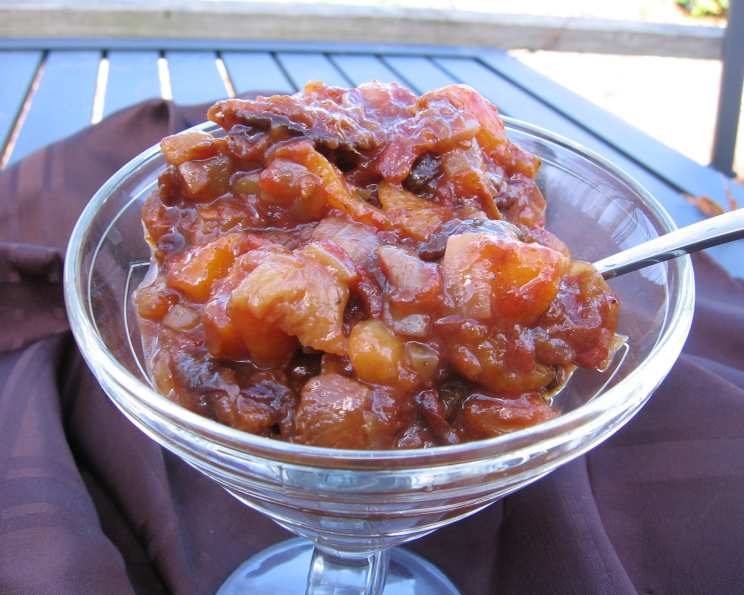
Winter Fruit Chutney: A Taste of Holiday Warmth
I can almost smell it now – the comforting aroma of simmering fruit, warm spices, and a hint of tartness that always filled my grandmother’s kitchen each December. She’d carefully assemble her winter fruit chutney, a treasured recipe passed down through generations. The scent alone transported me back to crackling fireplaces, family gatherings, and the joyous anticipation of the holidays, a tradition I’ve happily embraced in my own home.
Recipe Overview
- Prep Time: 30 minutes
- Cook Time: 1 hour
- Total Time: 1 hour 30 minutes
- Yields: 2 cups
- Dietary Type: Vegetarian, Gluten-Free
Ingredients
- 3⁄4 cup quartered pitted prunes
- 3⁄4 cup quartered dried apricots
- 1 large onion, chopped
- 1 large tart apple, peeled and finely chopped
- 1⁄2 cup canned tomato, chopped, drained, and seeded
- 1⁄3 cup granulated sugar
- 1⁄2 teaspoon ground ginger (or 1 teaspoon fresh grated ginger)
- 1⁄4 teaspoon ground cinnamon
- 1⁄4 teaspoon ground cloves
- 1⁄4 teaspoon ground nutmeg
- 1⁄4 teaspoon black pepper
- 1⁄4 teaspoon cayenne pepper
- 1⁄4 teaspoon salt
- 1⁄4 cup cider vinegar
Equipment Needed
- Saucepan
- Measuring cups and spoons
- Wooden spoon or spatula
- Sterilized jars for storage
Instructions
- Begin by placing the prunes and apricots in a saucepan. Add 1 cup (250 mL) of water and bring to a boil over medium-high heat.
- Remove the saucepan from the heat, cover it, and let the prunes and apricots stand in the hot water for 30 minutes. This step allows them to soften and plump up, contributing to a better texture in the final chutney.
- After the soaking period, stir in the chopped onion, finely chopped apple, drained and seeded tomatoes, granulated sugar, ground ginger (or fresh grated ginger), ground cinnamon, ground cloves, ground nutmeg, black pepper, cayenne pepper, salt, and cider vinegar. Ensure all ingredients are well combined.
- Bring the mixture to a simmer over medium heat, stirring occasionally to prevent sticking.
- Once simmering, reduce the heat to low, cover the saucepan, and continue to simmer, stirring occasionally, for approximately 50 to 60 minutes. The goal is to allow the chutney to thicken to a jam-like consistency. Keep a close eye on it during the last 20 minutes to prevent burning.
- To test for doneness, place a small spoonful of chutney on a chilled plate. If it sets up quickly and doesn’t run, it is ready. If it’s still too liquid, continue simmering for a few more minutes, testing again until the desired consistency is achieved.
- Remove the saucepan from the heat. Carefully spoon the hot chutney into sterilized jars. Leave about 1/4 inch of headspace at the top of each jar.
- If you plan to store the chutney for an extended period, process the filled jars in a boiling water bath for 10 minutes to ensure proper preservation. Otherwise, let the jars cool completely before sealing and refrigerating.
Expert Tips & Tricks
- Spice it up (or down): The cayenne pepper adds a subtle kick. Adjust the amount to your preference, or omit it entirely for a milder chutney. Conversely, if you like heat, try adding a finely chopped chili.
- Apple Variety: Use a firm, tart apple variety like Granny Smith, Braeburn, or Honeycrisp. These apples hold their shape well during cooking and provide a nice balance to the sweetness of the dried fruits.
- Fresh Ginger Boost: While ground ginger works perfectly well, using fresh grated ginger adds a brighter, more vibrant flavor to the chutney. Be sure to peel the ginger before grating.
- Tomato Tip: Using fresh tomatoes instead of canned is also a delicious option when in season. Be sure to peel and seed them before chopping.
- Prevent Sticking: Stir the chutney frequently, especially during the last 20 minutes of cooking, to prevent it from sticking to the bottom of the pan and burning. A heavy-bottomed saucepan will also help distribute heat more evenly.
- Make-Ahead Magic: This chutney is fantastic made a day or two in advance. The flavors meld and deepen over time.
Serving & Storage Suggestions
This winter fruit chutney is incredibly versatile. It’s a delightful accompaniment to a strong cheddar cheese or other savory cheeses on a cheese board. It’s also delicious served alongside roasted meats like pork, chicken, or turkey. For a vegetarian option, try it with grilled halloumi or tofu. It adds a festive touch to sandwiches and wraps, and can even be stirred into yogurt or oatmeal for a burst of flavor.
Once cooled, store the chutney in sterilized jars in the refrigerator. It will keep for up to 2-3 weeks. If properly processed in a boiling water bath, it can be stored at room temperature in a cool, dark place for up to a year. Once opened, refrigerate and consume within a few weeks.
Nutritional Information
| Nutrient | Amount per Serving (estimated) | % Daily Value* |
|---|---|---|
| Calories | 250 kcal | 13% |
| Total Fat | 1 g | 1% |
| Saturated Fat | 0 g | 0% |
| Cholesterol | 0 mg | 0% |
| Sodium | 200 mg | 8% |
| Total Carbohydrate | 65 g | 24% |
| Dietary Fiber | 6 g | 24% |
| Sugars | 50 g | N/A |
| Protein | 2 g | 4% |
*Percent Daily Values are based on a 2,000 calorie diet.
Variations & Substitutions
- Maple Sweetness: Replace the granulated sugar with maple syrup for a more complex sweetness and a slightly darker color.
- Citrus Zest: Add the zest of an orange or lemon for a bright, citrusy note. Stir it in during the last 15 minutes of cooking.
- Dried Cranberries: Substitute some of the dried apricots or prunes with dried cranberries for a festive red hue and a slightly tart flavor.
- Walnuts or Pecans: Add a handful of chopped walnuts or pecans during the last 10 minutes of cooking for added texture and nutty flavor.
- Spiced Cider Variation: Substitute apple cider for the water in the initial soaking step for an extra layer of apple flavor.
- Use different vinegars: Experiment using red wine vinegar, or balsamic vinegar. They offer distinct flavors to the final product.
FAQs (Frequently Asked Questions)
Q: Can I use frozen fruit in this recipe?
A: While fresh or dried fruit is preferred for the best texture and flavor, you can use frozen fruit if necessary. Be sure to thaw it completely and drain off any excess liquid before adding it to the saucepan.
Q: How can I sterilize the jars for long-term storage?
A: To sterilize jars, wash them thoroughly with hot, soapy water. Then, place them in a large pot of boiling water for 10 minutes. Remove them carefully and let them air dry on a clean towel. Sterilize the lids in the same way.
Q: My chutney is too runny. How can I thicken it?
A: If your chutney is too runny, continue simmering it over low heat, uncovered, for a longer period. Stir frequently to prevent sticking. The longer it simmers, the more the liquid will evaporate, and the thicker the chutney will become.
Q: Can I make this chutney in a slow cooker?
A: Yes, you can adapt this recipe for a slow cooker. Combine all the ingredients in the slow cooker and cook on low for 6-8 hours, or on high for 3-4 hours, stirring occasionally.
Q: How long will the chutney last once opened?
A: Once opened, store the chutney in the refrigerator. It will typically last for 2-3 weeks. Be sure to use a clean spoon each time you take some out to prevent contamination.
Final Thoughts
I sincerely hope this winter fruit chutney recipe brings a little warmth and joy to your kitchen this season, just as it has to mine for so many years. Don’t be afraid to experiment with the spices and fruits to create your own unique version. And, of course, I’d love to hear how it turns out! Let me know in the comments below. Happy cooking, and happy holidays!