
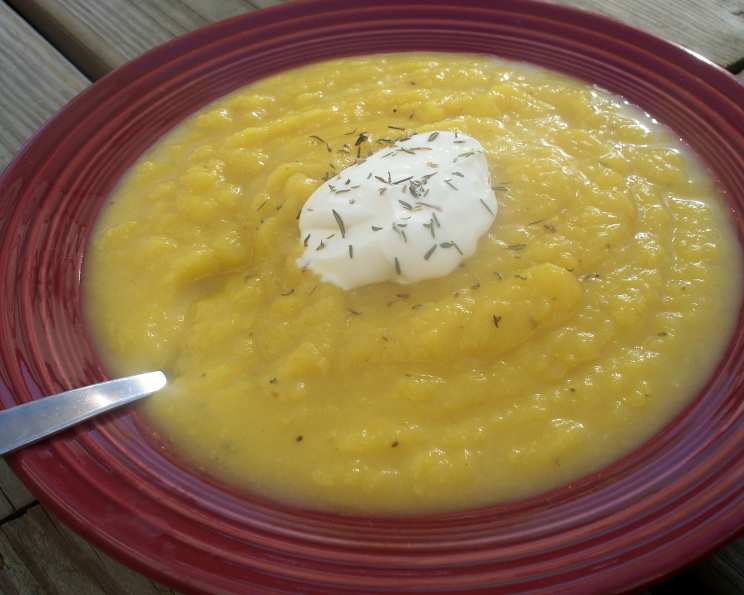
Winter Squash Bisque: A Bowl of Cozy
The first crisp days of autumn always bring back a flood of memories—the crunch of leaves underfoot, the smell of woodsmoke in the air, and, most vividly, the comforting aroma of my grandmother’s winter squash bisque simmering on the stove. Her tiny kitchen, perpetually warm and fragrant, was the heart of our family gatherings. This bisque, with its earthy sweetness and velvety texture, was her signature dish, a liquid hug that chased away the chill and filled our bellies with happiness. I’ve adapted her recipe over the years, but the essence remains: a celebration of the season’s bounty in every spoonful.
Recipe Overview
- Prep Time: 20 minutes
- Cook Time: 50-55 minutes
- Total Time: 1 hour 15-20 minutes
- Servings: 12
- Yield: Approximately 12 cups
- Dietary Type: Vegetarian (can be made vegan)
Ingredients
- 6 medium acorn squash
- 3 (14 ounce) cans chicken broth (or vegetable broth for vegan option)
- 3/4 teaspoon ground ginger
- 3/4 teaspoon salt
- 1/4 teaspoon pepper
- 1/2 teaspoon ground cinnamon
- 1 1/2 cups half-and-half or 1 1/2 cups light cream (or plant-based cream for vegan option)
- 3/4 cup sour cream (optional) (or plant-based sour cream alternative for vegan option)
- Fresh thyme sprigs (optional, for garnish)
Equipment Needed
- Baking Dish
- Large saucepan
- Blender or Food Processor
- Knife
- Spoon
Instructions
-
Begin by preparing the acorn squash. Halve each squash lengthwise and scoop out the seeds. Discard the seeds and any stringy fibers.
-
Place the squash halves, cut sides down, on a baking dish. This prevents them from drying out and ensures even cooking.
-
Bake in a preheated 350-degree F oven for 30 minutes.
-
Carefully turn the squash halves cut sides up. This allows the heat to penetrate the flesh directly.
-
Cover the baking dish with foil and bake for an additional 20 to 25 minutes, or until the squash is tender. A fork should easily pierce the flesh.
-
Remove the baking dish from the oven and let the squash cool slightly.
-
Once the squash is cool enough to handle, scoop the pulp out of the peel using a spoon. Discard the peel.
-
Place the squash pulp in batches in a blender container or food processor bowl. Working in batches prevents overloading and ensures a smooth puree.
-
Cover the blender or food processor and blend or process until the squash is smooth. If the mixture is too thick to blend easily, add a little of the chicken broth (or vegetable broth).
-
In a large saucepan, stir together the pureed squash and the remaining chicken broth (or vegetable broth).
-
Stir in the ground ginger, salt, pepper, and cinnamon. These spices add warmth and depth of flavor to the bisque.
-
Bring the mixture to a boil over medium-high heat. Watch carefully to prevent scorching.
-
Once boiling, reduce the heat to low and stir in the half-and-half or light cream (or plant-based cream alternative).
-
Heat through, but do not boil. Boiling the cream can cause it to curdle.
-
If desired, garnish each serving with a dollop of sour cream (or plant-based alternative) and a fresh thyme sprig.
Expert Tips & Tricks
- Roasting Squash Perfection: The key to deeply flavored bisque is perfectly roasted squash. Don’t be afraid to let the squash caramelize slightly in the oven; the browning adds a delicious complexity.
- Spice it Up: Feel free to adjust the spices to your liking. A pinch of nutmeg or a dash of cayenne pepper can add a delightful twist.
- Make-Ahead Magic: This bisque can be made a day or two in advance. In fact, the flavors often meld together even more beautifully after a day in the refrigerator.
- Vegan Variation: To make this bisque vegan, substitute vegetable broth for chicken broth and use a plant-based cream alternative (such as oat cream or cashew cream) in place of half-and-half or light cream. You can also use a plant-based sour cream alternative for the garnish. For a creamier, richer flavour, roast some garlic cloves along with the squash and blend them into the soup.
- Blending without a Blender: If you don’t have a blender or food processor, you can use an immersion blender directly in the saucepan. Be careful to avoid splattering. Alternatively, for a chunkier bisque, simply mash the squash with a potato masher instead of blending it.
Serving & Storage Suggestions
Serve the Winter Squash Bisque hot, garnished with a dollop of sour cream (optional) and a fresh thyme sprig. A swirl of olive oil or a sprinkle of toasted pumpkin seeds also makes a beautiful presentation. This bisque pairs well with crusty bread, a grilled cheese sandwich, or a simple side salad.
Leftover bisque can be stored in an airtight container in the refrigerator for up to 3-4 days. It can also be frozen for up to 2-3 months. To reheat, gently warm the bisque in a saucepan over low heat, stirring occasionally, until heated through. If frozen, thaw it overnight in the refrigerator before reheating.
Nutritional Information
| Nutrient | Amount per Serving | % Daily Value |
|---|---|---|
| Calories | 143.1 kcal | – |
| Calories from Fat | 38 g | 27% |
| Total Fat | 4.3 g | 6% |
| Saturated Fat | 2.4 g | 11% |
| Cholesterol | 11.2 mg | 3% |
| Sodium | 498.2 mg | 20% |
| Total Carbohydrate | 24.3 g | 8% |
| Dietary Fiber | 3.3 g | 13% |
| Sugars | 0.4 g | 1% |
| Protein | 4.8 g | 9% |
Variations & Substitutions
- Spiced Apple Squash Bisque: Add 1 diced apple (such as Honeycrisp or Gala) to the saucepan along with the spices for a sweeter, fruitier twist.
- Coconut Curry Squash Bisque: Substitute coconut milk for the half-and-half or light cream and add 1 teaspoon of curry powder for an exotic flavor profile.
- Butternut Squash Bisque: Substitute butternut squash for the acorn squash for a slightly sweeter and nuttier flavor.
- Smoked Paprika Squash Bisque: Add 1/2 teaspoon of smoked paprika for a smoky and savory depth.
- Gingerbread Squash Bisque: Increase the cinnamon to 1 teaspoon and add 1/4 teaspoon of ground cloves and 1/4 teaspoon of ground allspice for a festive, gingerbread-inspired bisque.
- For a smoother soup: Use a fine-mesh sieve to strain the soup after blending. This will remove any remaining fibers and create a velvety texture.
FAQs (Frequently Asked Questions)
Q: Can I use a different type of squash?
A: Absolutely! Butternut squash, kabocha squash, or even pumpkin can be used in place of acorn squash. Keep in mind that the flavor will vary slightly depending on the type of squash you choose.
Q: How can I make this soup thicker?
A: If you prefer a thicker bisque, you can add a slurry of cornstarch and water (1 tablespoon cornstarch mixed with 2 tablespoons cold water) to the saucepan while heating. Bring to a simmer and cook for a few minutes until thickened. Alternatively, you can blend in a cooked potato for a naturally creamy texture.
Q: Can I freeze this bisque?
A: Yes, this bisque freezes well. Allow it to cool completely before transferring it to an airtight container or freezer bag. Thaw overnight in the refrigerator before reheating.
Q: What can I serve with this bisque?
A: This bisque pairs perfectly with crusty bread, grilled cheese sandwiches, or a simple green salad. It also makes a delicious starter for a holiday meal.
Q: How do I prevent the cream from curdling?
A: To prevent the cream from curdling, make sure not to boil the bisque after adding the cream. Heat it gently over low heat until warmed through.
Final Thoughts
This Winter Squash Bisque is more than just a recipe; it’s an invitation to embrace the warmth and comfort of the season. Whether you’re a seasoned chef or a beginner cook, I encourage you to try this recipe and create your own memories around this delightful dish. Feel free to experiment with different spices and garnishes to make it your own. And most importantly, share your creations with loved ones! I’d love to hear your feedback and see your adaptations. Perhaps serve this luscious bisque alongside a crisp apple salad and a glass of chilled Pinot Grigio for the perfect autumn lunch. Happy cooking!