
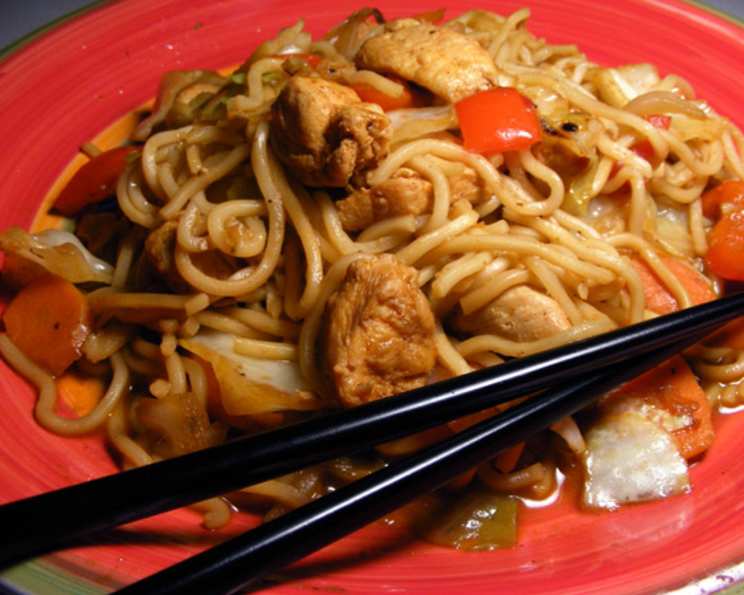
Yakisoba Chicken: A Fiery Noodle Stir-Fry
The first time I encountered yakisoba, it wasn’t the perfectly crafted versions you find in trendy izakayas. It was at a bustling street food festival, a whirlwind of sizzling woks and vibrant aromas. A vendor, with a mischievous grin, handed me a steaming bowl piled high with noodles, veggies, and chicken slicked in a glossy, crimson sauce. The initial bite was an explosion of heat, a delightful slap in the face that made me cough, then crave more. I knew right then and there I needed to learn to make this at home.
Recipe Overview
- Prep Time: 20 minutes
- Cook Time: 25 minutes
- Total Time: 45 minutes
- Servings: 6
- Yield: About 6 cups
- Dietary Type: Adaptable
Ingredients
- ½ teaspoon sesame oil
- 1 tablespoon canola oil
- 2 tablespoons Thai red curry paste
- 4 garlic cloves, chopped
- 3 chicken breasts, boneless and skinless, cut into 1 inch cubes
- ½ cup light soy sauce
- 1 small red onion, thinly sliced lengthwise
- 1 medium red bell pepper, cut into bite-size slices
- ½ medium cabbage, coarsely chopped, about 8 cups
- 2 carrots, coarsely chopped
- 8 ounces soba noodles, cooked and drained (or wheat spaghetti noodles)
Equipment Needed
- Large skillet or wok
- Cutting board
- Chef’s knife
- Mixing bowl
Instructions
-
Before you begin cooking, take a few moments to cut and chop all vegetables and cube the chicken. Having everything prepped will make the stir-fry process much smoother.
-
Place a large skillet or wok over medium heat and allow it to heat up for 5-7 minutes. This is important to ensure the ingredients will properly sear and not steam.
-
Add the sesame oil and canola oil to the heated pan. Then, incorporate the Thai red curry paste and sauté for one minute, allowing the fragrant spices to bloom.
-
Add the chopped garlic and sauté for an additional minute, being careful not to burn it. Burnt garlic will impart a bitter taste to the dish.
-
Introduce the cubed chicken to the pan. Add ¼ cup of the light soy sauce and sauté until the chicken is no longer pink, approximately 10 minutes. Ensure the chicken is cooked through for safety.
-
Remove the chicken mixture from the pan and set aside in a bowl. Cover to keep it warm while you prepare the vegetables.
-
Into the emptied pan, add the red onion, cabbage, bell pepper, and carrots. Note that you may need to add the cabbage in batches if it doesn’t all fit at once.
-
Stir-fry the vegetables until the cabbage begins to wilt, about 5-7 minutes. This process should soften the vegetables without making them mushy.
-
Now, stir in the remaining soy sauce, cooked noodles, and the reserved chicken mixture to the pan. Ensure all ingredients are well incorporated.
-
Mix all of it to blend. You may want to serve the chicken mixture on top of the noodles instead of mixing the noodles into the chicken mixture.
-
Heat everything through completely, ensuring the noodles are warmed and the flavors meld together. This should only take a few minutes.
-
Serve immediately and offer extra soy sauce on the side for those who prefer a saltier flavor.
Expert Tips & Tricks
- For a more intense flavor, marinate the chicken in a mixture of soy sauce, sesame oil, and a touch of curry paste for at least 30 minutes before cooking.
- If you don’t have soba noodles, feel free to use wheat spaghetti noodles or even udon noodles. The cooking time may vary slightly.
- Be careful not to overcrowd the pan, especially when adding the vegetables. Overcrowding will lower the pan temperature and cause the vegetables to steam instead of stir-fry. Cook in batches if necessary.
- Adjust the amount of Thai red curry paste to your spice preference. Start with less and add more to taste.
Serving & Storage Suggestions
Serve yakisoba chicken hot, straight from the pan. Garnish with a sprinkle of sesame seeds or chopped green onions for added flavor and visual appeal. Leftovers can be stored in an airtight container in the refrigerator for up to 3 days. To reheat, simply microwave or stir-fry in a pan until warmed through. Reheating in a pan helps to retain the texture of the noodles. I don’t advise freezing due to the noodles becoming too soft when thawed.
Nutritional Information
| Nutrient | Amount per Serving | % Daily Value |
|---|---|---|
| Calories | 332.1 kcal | N/A |
| Calories from Fat | 89 g | 27% |
| Total Fat | 9.9 g | 15% |
| Saturated Fat | 2.2 g | 11% |
| Cholesterol | 46.4 mg | 15% |
| Sodium | 1743.3 mg | 72% |
| Total Carbohydrate | 39 g | 13% |
| Dietary Fiber | 3.3 g | 13% |
| Sugars | 5.2 g | N/A |
| Protein | 24.8 g | 49% |
Note: Nutritional information is an estimate and can vary based on specific ingredients and portion sizes.
Variations & Substitutions
- Vegetarian Yakisoba: Substitute tofu or tempeh for the chicken and use vegetable broth instead of soy sauce to keep it vegetarian friendly.
- Seafood Yakisoba: Swap the chicken for shrimp or scallops for a delicious seafood variation.
- Spicier Yakisoba: Add a dash of chili oil or a sprinkle of red pepper flakes for an extra kick.
- Lower Sodium: Use low-sodium soy sauce and reduce the amount used in the recipe.
- Gluten-Free Yakisoba: Use gluten-free soba noodles or rice noodles and tamari instead of soy sauce.
FAQs (Frequently Asked Questions)
Q: Can I make this ahead of time?
A: While best served immediately, you can prep the ingredients (chopping vegetables and cubing chicken) ahead of time and store them separately in the refrigerator. This will significantly reduce the cooking time when you’re ready to make the dish.
Q: Can I use different vegetables?
A: Absolutely! Feel free to customize the vegetables to your liking or what you have on hand. Broccoli, snow peas, mushrooms, and bok choy are all great additions.
Q: How do I prevent the noodles from sticking together?
A: Make sure to cook the noodles according to package directions and drain them well. Toss them with a little sesame oil after draining to prevent sticking.
Q: Is Thai red curry paste very spicy?
A: Thai red curry paste can be quite spicy, depending on the brand and the amount of chili peppers used. Start with a smaller amount and add more to taste, especially if you are sensitive to spice.
Q: What if I don’t have soba noodles?
A: No problem! You can use wheat spaghetti noodles, udon noodles, or even rice noodles as a substitute. Adjust the cooking time accordingly.
Final Thoughts
Yakisoba Chicken is a dish that brings together the best of flavors and textures in a single bowl. With its vibrant vegetables, savory chicken, and fiery sauce, it’s a guaranteed crowd-pleaser. Don’t be afraid to experiment with different ingredients and adjust the spice level to your liking. I encourage you to try this recipe and make it your own. And if you do, please let me know how it turns out – I always love hearing about your culinary adventures! Serve it alongside a crisp Japanese beer or a refreshing glass of iced green tea to complete the experience.