
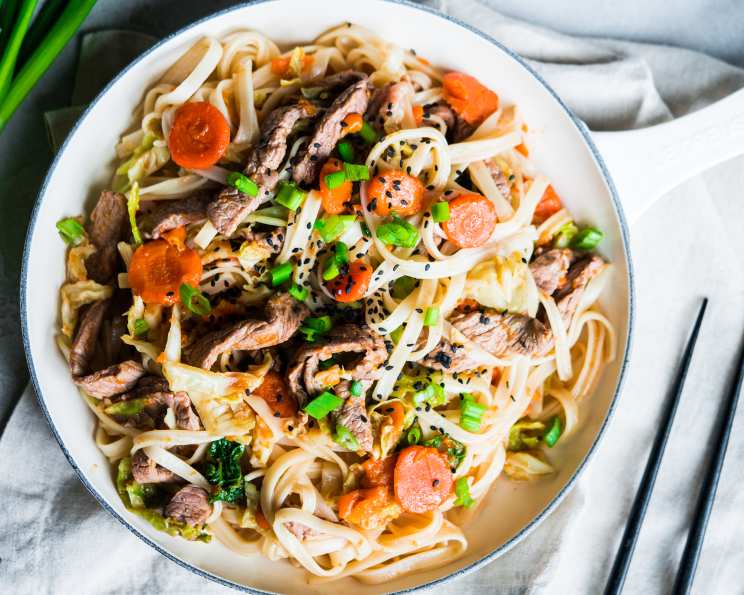
Savory Stir-Fry Sensation: Mastering the Art of Yakisoba
The first time I truly understood the soul of yakisoba was at a bustling summer festival in Kyoto. The air crackled with the energy of a thousand conversations, the rhythmic thwack of taiko drums, and the irresistible aroma of sizzling noodles. I watched a street vendor, his face etched with decades of experience, expertly toss cabbage, pork, and thick, chewy noodles on a scorching hot griddle. The sweet and savory sauce, a closely guarded family secret, transformed the simple ingredients into a symphony of flavors that danced on my tongue. It wasn’t just a meal; it was a moment, a memory, a taste of pure joy.
Recipe Overview
- Prep Time: 20 minutes
- Cook Time: 30 minutes
- Total Time: 50 minutes
- Servings: 4
- Dietary Type: Adaptable (can be gluten-free with substitutions)
Ingredients
- 1 lb lean pork loin, sliced thinly (against the grain)
- 1/3 cup soy sauce
- 1/3 cup rice wine
- 1 1/2 tablespoons sugar
- 12 ounces Chinese wheat noodles (udon noodles may be substituted)
- 3 tablespoons vegetable oil
- 1 onion, sliced thin
- 1 lb napa cabbage or 1 lb savoy cabbage, sliced very thin
- 3 carrots, grated
- 1 tablespoon chopped ginger
- 2 scallions, thinly sliced (optional)
Equipment Needed
- Cutting board
- Sharp knife
- Small bowl
- Large pot
- Large deep skillet or wok
- Measuring cups and spoons
Instructions
-
In a small bowl, mix together the soy sauce, rice wine, and sugar, stirring until the sugar is completely dissolved. This creates the base for our flavorful yakisoba sauce. Set aside.
-
Bring a large pot of water to a rolling boil. Add the Chinese wheat noodles and cook for about 8 minutes, or until they are tender but still have a slight chew. Udon noodles may require a slightly longer cooking time, so taste them as they cook to ensure they reach the desired texture.
-
Drain the cooked noodles immediately and rinse them thoroughly under cold running water. This stops the cooking process and prevents the noodles from becoming sticky. Set aside.
-
Heat the vegetable oil in a large deep skillet or wok over medium-high heat. Once the oil is shimmering, add the thinly sliced onion and cook, stirring occasionally, for about 3 minutes, or until the onion becomes translucent and slightly softened.
-
Add the sliced cabbage, grated carrots, and chopped ginger to the skillet or wok. Cook, stirring frequently, until the cabbage has softened, about 3-5 minutes. The ginger will infuse the vegetables with a warm, aromatic flavor.
-
Add the thinly sliced pork loin to the vegetable mixture. Cook, stirring constantly, for about 2 minutes, or until the pork is cooked through and lightly browned. Be careful not to overcrowd the pan, as this can lower the temperature and prevent the pork from browning properly. Cook in batches if necessary.
-
Cover the cooked pork and vegetable mixture with the cooked and drained noodles. Then, pour the prepared soy sauce mixture evenly over the noodles.
-
Cover the skillet or wok with a lid and cook for 3-5 minutes. This allows the sauce to penetrate the noodles and the flavors to meld together.
-
Remove the lid and use tongs or a large spatula to toss the mixture thoroughly until everything is well combined and evenly coated with the sauce. Continue to cook for another minute or two, allowing the sauce to thicken slightly.
-
Transfer the yakisoba to a serving platter. Garnish with thinly sliced scallions, if desired, for a pop of color and a fresh, mild onion flavor.
Expert Tips & Tricks
- Don’t overcook the noodles: Overcooked noodles will become mushy and detract from the overall texture of the dish. Aim for a slightly al dente texture.
- Slice the pork thinly: Thinly sliced pork cooks quickly and evenly, ensuring a tender and juicy result. Partially freezing the pork for about 30 minutes before slicing can make it easier to achieve thin, uniform slices.
- Prepare the sauce in advance: Making the sauce ahead of time allows the flavors to meld and deepen. Store it in an airtight container in the refrigerator for up to 24 hours.
- High heat is key: Cooking yakisoba over high heat helps to create a slightly charred and caramelized flavor, similar to what you would find at a street food stall.
- Adjust the sauce to your liking: Feel free to adjust the amount of soy sauce, rice wine, or sugar in the sauce to suit your personal taste preferences.
Serving & Storage Suggestions
Serve your homemade yakisoba hot and fresh, garnished with sliced scallions and a sprinkle of toasted sesame seeds for added flavor and visual appeal. Leftover yakisoba can be stored in an airtight container in the refrigerator for up to 3 days. To reheat, microwave on medium power until heated through, or stir-fry in a skillet with a little oil until warmed. The noodles may become slightly softer upon reheating. Yakisoba is best enjoyed fresh, but can be frozen for up to 1 month. Thaw completely before reheating.
Nutritional Information
| Nutrient | Amount per Serving | % Daily Value |
|---|---|---|
| Calories | 438 kcal | 22% |
| Total Fat | 21.6 g | 33% |
| Saturated Fat | 5.4 g | 27% |
| Cholesterol | 91.9 mg | 30% |
| Sodium | 1448.8 mg | 60% |
| Total Carbohydrate | 18.6 g | 6% |
| Dietary Fiber | 3.5 g | 13% |
| Sugars | 10.1 g | – |
| Protein | 37.3 g | 74% |
Note: Nutritional information is an estimate and may vary based on specific ingredients and cooking methods.
Variations & Substitutions
- Vegetarian Yakisoba: Substitute tofu or tempeh for the pork. Add extra vegetables like bell peppers, mushrooms, or broccoli.
- Chicken Yakisoba: Use boneless, skinless chicken thighs or breasts instead of pork.
- Seafood Yakisoba: Incorporate shrimp, scallops, or squid for a delicious seafood twist.
- Gluten-Free Yakisoba: Use gluten-free noodles and tamari (gluten-free soy sauce) instead of regular soy sauce.
- Spicy Yakisoba: Add a dash of chili oil or a pinch of red pepper flakes to the sauce for a spicy kick.
FAQs (Frequently Asked Questions)
Q: Can I use different types of noodles for yakisoba?
A: While Chinese wheat noodles or udon noodles are traditional, you can experiment with other types of noodles like soba (buckwheat) noodles or even spaghetti in a pinch. Just be sure to adjust the cooking time accordingly.
Q: How do I prevent the noodles from sticking together?
A: Rinsing the noodles under cold water after cooking helps to remove excess starch and prevent them from clumping. Tossing them with a little oil before adding them to the skillet can also help.
Q: Can I make yakisoba ahead of time?
A: While yakisoba is best enjoyed fresh, you can prepare the sauce and chop the vegetables in advance to save time. Store them separately in the refrigerator until ready to cook.
Q: What is the best way to reheat yakisoba?
A: Microwaving or stir-frying are both good options. Add a splash of water or broth to the noodles before reheating to prevent them from drying out.
Q: What other toppings can I add to yakisoba?
A: The possibilities are endless! Consider adding dried seaweed flakes (nori), pickled ginger (beni shoga), or a drizzle of Japanese mayonnaise for extra flavor and texture.
Final Thoughts
Yakisoba is more than just a simple noodle dish; it’s a culinary adventure that allows you to explore the vibrant flavors of Japanese cuisine. Don’t be afraid to experiment with different ingredients and techniques to create your own unique version. Whether you’re cooking for a crowd or simply craving a comforting weeknight meal, this savory stir-fry is sure to satisfy. So grab your wok, gather your ingredients, and get ready to embark on a delicious journey to noodle nirvana! I encourage you to try this recipe and share your feedback. Pair it with a crisp Japanese beer or a refreshing glass of iced green tea for the complete yakisoba experience.