
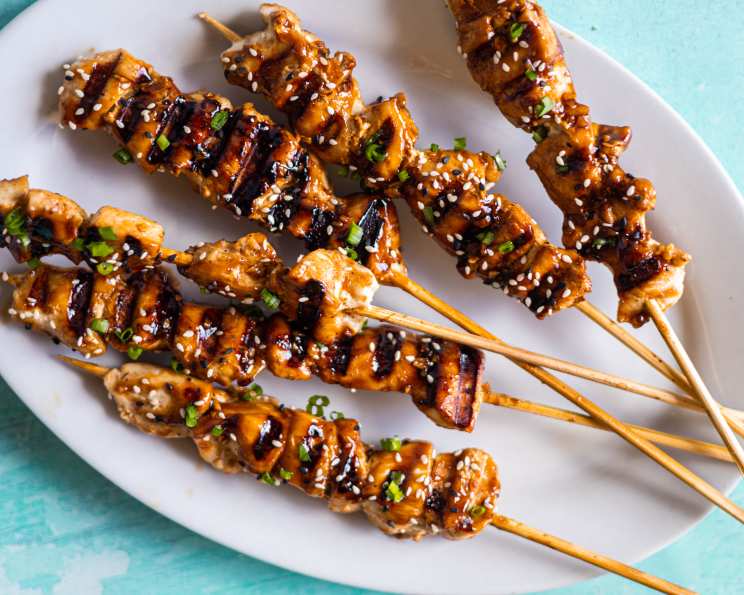
Yakitori: A Taste of Tokyo at Home
The memory is etched in my mind: the narrow, lantern-lit alleyways of Tokyo, the air thick with the savory aroma of grilling meat, and the boisterous chatter of locals spilling from tiny izakayas. I was a fresh-faced culinary student, utterly mesmerized. One bite of perfectly charred yakitori, brushed with a glistening, umami-rich sauce, and I was hooked. It wasn’t just the flavor; it was the experience, the feeling of connection to a vibrant culture. Recreating that magic at home has become a culinary passion, a way to transport myself back to those unforgettable nights.
Recipe Overview
- Prep Time: 20 minutes
- Cook Time: 25 minutes
- Total Time: 45 minutes
- Servings: 4
- Yields: 8 skewers
- Dietary Type: Gluten-Friendly (use tamari instead of soy sauce)
Ingredients
- 1 1/2 cups mirin
- 3/4 cup soy sauce
- 4 tablespoons sugar
- 1 garlic clove, pressed (optional)
- 1 lb boneless chicken thighs
- 1-2 green onion, in inch-long pieces (optional)
- 8 bamboo skewers
Equipment Needed
- Medium-sized saucepan
- Grill (charcoal preferred, but gas grill or grill pan works)
Instructions
- Prepare the Sauce: In a medium-sized saucepan, combine the mirin, soy sauce, sugar, and garlic (if using).
- Simmer the Sauce: Cook the mixture over medium heat. This step requires patience! Allow the sauce to simmer gently, reducing it until it’s about half its original volume. This concentration intensifies the flavors and creates a luscious glaze. Be vigilant, as the sauce has a tendency to boil over.
- Cool the Sauce: Once reduced, remove the saucepan from the heat and allow the sauce to cool slightly while you prepare the chicken.
- Prepare the Chicken: Cut the chicken thighs into bite-sized pieces. Leaving the skin on is traditional in Japan, as it crisps up beautifully during grilling and adds a wonderful texture contrast.
- Thread the Skewers: Thread the chicken onto the bamboo skewers. If desired, alternate the chicken pieces with inch-long pieces of green onion. The green onion adds a subtle, refreshing bite that complements the richness of the chicken and sauce.
- Grill the Yakitori: Preheat your grill to medium heat. Place the chicken skewers on the grill and cook them on both sides without any sauce initially.
- Baste and Grill: As the chicken begins to change color (approximately 5-7 minutes per side), begin brushing it with the prepared yakitori sauce. Brush the sauce on both sides of the skewers, turning them frequently to ensure even cooking and prevent burning.
- Continue Grilling: Continue grilling the yakitori, brushing on the sauce about 3 times in total, and turning until the chicken is cooked through and the sauce has caramelized into a beautiful, glossy glaze. The internal temperature of the chicken should reach 165°F (74°C).
- Serve immediately: Serve the yakitori skewers immediately.
Expert Tips & Tricks
- Charcoal vs. Gas: While a gas grill works perfectly well, nothing beats the smoky flavor imparted by cooking over charcoal. If using charcoal, make sure the coals are glowing red with a light coating of ash before you start grilling.
- Bamboo Skewer Prep: To prevent the bamboo skewers from burning on the grill, soak them in water for at least 30 minutes before threading the chicken.
- Sauce Consistency: The consistency of the sauce is key. You want it to be thick enough to cling to the chicken but not so thick that it burns easily. If the sauce becomes too thick during reduction, you can add a tablespoon or two of water to thin it out.
- Don’t Overcrowd: Avoid overcrowding the grill. This will lower the temperature and steam the chicken instead of searing it. Cook the yakitori in batches if necessary.
- Rest the Meat: After grilling, let the yakitori rest for a couple of minutes before serving. This allows the juices to redistribute, resulting in a more tender and flavorful bite.
Serving & Storage Suggestions
Serve the yakitori immediately after grilling, ideally while still hot and glistening with sauce. It’s delicious on its own as an appetizer or snack, or as part of a larger Japanese meal.
For leftovers, remove the chicken from the skewers and store it in an airtight container in the refrigerator for up to 3 days. To reheat, you can pan-fry the chicken over medium heat, microwave it in short intervals, or briefly broil it in the oven. Reheating may slightly alter the texture, but the flavor will remain delicious.
Storage Times:
- Room Temperature: Do not leave out for more than 2 hours.
- Refrigerator: Up to 3 days.
- Freezer: Not recommended, as the texture will degrade upon thawing.
Nutritional Information
| Nutrient | Amount per Serving | % Daily Value |
|---|---|---|
| Calories | 320 kcal | 16% |
| Total Fat | 12g | 18% |
| Saturated Fat | 3g | 15% |
| Cholesterol | 70mg | 23% |
| Sodium | 1500mg | 65% |
| Total Carbohydrate | 20g | 7% |
| Dietary Fiber | 1g | 4% |
| Sugars | 15g | 30% |
| Protein | 25g | 50% |
Note: Nutritional information is an estimate and may vary based on specific ingredients and portion sizes.
Variations & Substitutions
- Gluten-Free Yakitori: Substitute tamari for soy sauce to make this recipe gluten-free. Tamari is a Japanese soy sauce alternative that is typically made without wheat.
- Chicken Liver Yakitori (Kimo): For a more adventurous option, try using chicken livers instead of or in addition to chicken thighs. Be sure to trim any connective tissue before threading them onto skewers.
- Vegetable Yakitori: Create a vegetarian version by using firm tofu, shiitake mushrooms, bell peppers, or cherry tomatoes.
- Spicy Yakitori: Add a pinch of red pepper flakes or a dash of chili oil to the sauce for a spicy kick.
- Lemon-Garlic Yakitori: Omit the sugar from the sauce and add the zest and juice of one lemon, along with an extra clove of minced garlic.
FAQs (Frequently Asked Questions)
Q: Can I use regular sake instead of mirin?
A: While mirin is ideal for its sweetness and lower alcohol content, you can substitute regular sake. Add an extra tablespoon or two of sugar to compensate for the lack of sweetness in the sake.
Q: How do I know when the chicken is cooked through?
A: The best way to ensure the chicken is cooked through is to use a meat thermometer. The internal temperature should reach 165°F (74°C). Alternatively, you can cut into a piece of chicken and check that the juices run clear and the meat is no longer pink.
Q: Can I make the sauce ahead of time?
A: Absolutely! The yakitori sauce can be made up to a week in advance and stored in an airtight container in the refrigerator. In fact, making it ahead of time allows the flavors to meld together even more beautifully.
Q: My skewers are burning on the grill. What can I do?
A: Soaking the bamboo skewers in water for at least 30 minutes before grilling is crucial. If they are still burning, try wrapping the exposed ends of the skewers in foil.
Q: What’s the best way to serve yakitori?
A: Traditionally, yakitori is served with a sprinkle of shichimi togarashi (Japanese seven-spice blend) and a side of steamed rice. It also pairs well with a cold Japanese beer or sake.
Final Thoughts
Yakitori is more than just grilled chicken on a stick; it’s a journey to the heart of Japanese street food culture. With this recipe, you can easily recreate the authentic flavors and aromas of Tokyo in your own kitchen. Don’t be afraid to experiment with different variations and find your own perfect yakitori experience. I encourage you to gather your friends and family, fire up the grill, and share this delicious taste of Japan. Let me know in the comments what you think and how you personalized this classic dish! Itadakimasu!