
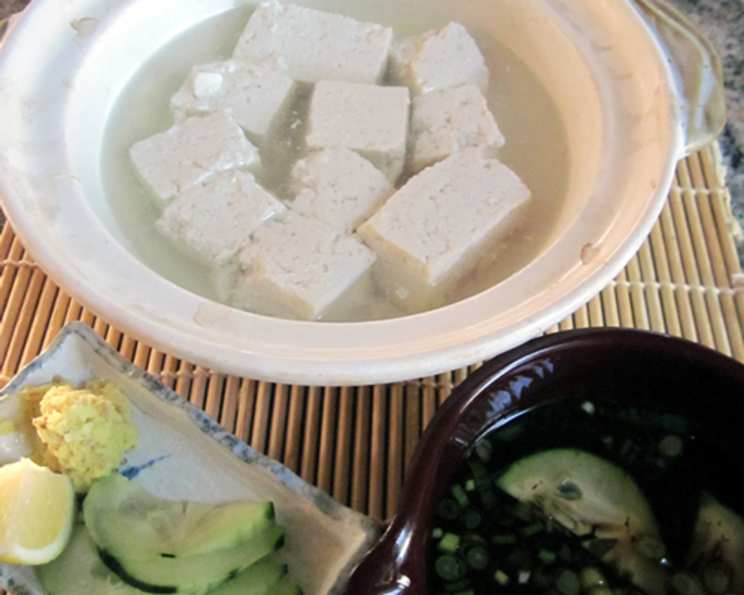
Yu-Dofu: Kyoto-Style Simmered Tofu
There’s a certain magic to simplicity, and few dishes embody that better than Yu-Dofu. I remember stumbling upon a tiny, unassuming restaurant tucked away in a Kyoto alleyway. Steam gently clouded the windows, promising warmth and comfort within. That evening, I tasted Yu-Dofu for the first time, and it was a revelation. The silken tofu, gently simmered in its own fragrant bath, was a testament to the beauty of letting high-quality ingredients speak for themselves. It was a moment of pure culinary zen, a reminder that the most satisfying experiences are often the simplest.
Recipe Overview
- Prep Time: 10 minutes
- Cook Time: 15 minutes
- Total Time: 25 minutes
- Servings: 2-4
- Dietary Type: Vegetarian
Ingredients
- 2 lbs tofu (silken or firm, depending on preference)
- ½ cup soy sauce
- ¼ cup sake or ¼ cup dry sherry
- 1 tablespoon sugar
- 1 tablespoon bonito flakes (katsuobushi shavings)
- 1 scallion, chopped finely
- ¼ inch fresh gingerroot, grated
- 2 lemons
Equipment Needed
- Large, shallow earthenware casserole or pot
- Saucepan
- Individual serving saucers
Instructions
-
Prepare the tofu. Dice the tofu into approximately 1-inch cubes. Gently arrange the cubed tofu in a large, shallow earthenware casserole dish or pot. This should be a dish that can be safely brought to the table for serving.
-
Add water to the tofu. Pour boiling water over the tofu in the casserole until the tofu is completely covered.
-
Begin simmering the tofu. Place the casserole over medium heat on the stovetop.
-
Prepare the dipping sauce. In a separate saucepan, combine the soy sauce, sake (or dry sherry), sugar, and bonito flakes. Add ⅔ cup of water to the saucepan.
-
Simmer the dipping sauce. Place the saucepan with the dipping sauce ingredients over medium-high heat. Bring the sauce to a simmer and allow it to simmer for about 3 minutes. After 3 minutes, turn off the heat and set the sauce aside.
-
Assemble individual condiments. Chop the scallion finely and grate the fresh gingerroot. Cut the lemons in half.
-
Prepare for serving. When the water in the casserole with the tofu begins to boil, carefully remove the casserole from the stovetop and place it on the table. This is meant to be a communal dish where everyone serves themselves.
-
Serve the dipping sauce. Pour approximately ¼ cup of the prepared dipping sauce into individual saucers for each guest.
-
Provide condiments. Place a saucer of the chopped scallion and grated ginger alongside each guest’s dipping sauce.
-
Serve the lemon. Give half a lemon to each guest.
-
Enjoy the Yu-Dofu. Each guest helps themselves to the simmering tofu, transferring the desired amount to their own empty saucer. They then squeeze the lemon juice into their prepared dipping sauce and dip the tofu into the sauce, followed by the scallion and ginger, according to their preference. The dish is now ready to be savored.
Expert Tips & Tricks
-
Tofu Type: The type of tofu you use significantly impacts the final texture. Silken tofu will be incredibly delicate and almost melt-in-your-mouth, while firm tofu will hold its shape better during simmering. Experiment to find your preferred texture.
-
Bonito Flakes Infusion: Don’t skip the bonito flakes! They are a crucial component of the dipping sauce, adding umami depth that elevates the entire dish. For a vegetarian version, you can try using dried shiitake mushrooms steeped in hot water to create a flavorful broth to substitute the bonito flakes.
-
Water Temperature: Maintaining a gentle simmer is key. Avoid a rolling boil, which can cause the tofu to break apart. Adjust the heat as needed to maintain a steady, gentle simmer.
-
Sauce Adjustment: Taste the dipping sauce after simmering and adjust the sweetness or saltiness to your liking. You can add a touch more sugar for sweetness or a splash of soy sauce for more saltiness.
-
Serving Dish: Using an earthenware casserole not only adds an aesthetic touch but also helps to retain heat, keeping the tofu warm throughout the meal. If you don’t have an earthenware dish, any shallow pot that can be safely placed on the table will work.
Serving & Storage Suggestions
Yu-Dofu is best served immediately while the tofu is warm and the dipping sauce is freshly prepared. It is designed to be enjoyed as a communal dish, encouraging interaction and shared experience.
Leftovers, while not ideal, can be stored in the refrigerator for up to 24 hours. Keep the tofu submerged in its simmering liquid to prevent it from drying out. Store the dipping sauce separately.
To reheat, gently warm the tofu in its liquid on the stovetop over low heat. Avoid microwaving, as this can alter the texture of the tofu. The dipping sauce can be reheated gently as well. However, the flavor of the sauce is best when freshly made.
Nutritional Information
Please note that the values are approximate and may vary depending on the specific ingredients used.
| Nutrient | Amount per Serving | % Daily Value |
|---|---|---|
| Calories | 250 kcal | 13% |
| Total Fat | 12g | 15% |
| Saturated Fat | 2g | 10% |
| Cholesterol | 0mg | 0% |
| Sodium | 1500mg | 63% |
| Total Carbohydrate | 15g | 5% |
| Dietary Fiber | 2g | 8% |
| Sugars | 8g | – |
| Protein | 20g | 40% |
Variations & Substitutions
-
Vegan Yu-Dofu: To make this dish entirely vegan, simply omit the bonito flakes from the dipping sauce. As mentioned previously, use dried shiitake mushrooms steeped in hot water to create a flavorful broth to substitute the bonito flakes.
-
Spicy Yu-Dofu: Add a small amount of chili oil or a pinch of red pepper flakes to the dipping sauce for a touch of heat.
-
Citrus Variations: Experiment with different citrus fruits in place of lemon. Yuzu or lime can offer unique and refreshing flavor profiles.
-
Seasonal Garnishes: Add seasonal vegetables such as thinly sliced radishes, cucumber, or sprouts to the serving platter for added color and flavor.
-
Regional Adaptations: In some regions of Japan, Yu-Dofu is served with a small amount of kombu (dried kelp) added to the simmering water for extra umami.
FAQs (Frequently Asked Questions)
Q: Can I use any type of tofu for Yu-Dofu?
A: While you can use different types of tofu, silken or firm tofu are generally recommended. Silken tofu provides a delicate texture, while firm tofu holds its shape better during simmering.
Q: Can I prepare the dipping sauce ahead of time?
A: Yes, the dipping sauce can be prepared a few hours in advance. Store it in the refrigerator until ready to use. However, the flavor is best when freshly made.
Q: What if I don’t have sake or dry sherry?
A: You can substitute sake or dry sherry with a small amount of rice vinegar or even just water, although the flavor will be slightly different.
Q: How do I know when the tofu is cooked?
A: The tofu is essentially ready to eat as soon as it’s warmed through. The simmering process is more about infusing it with flavor and creating a pleasant texture than actually “cooking” it.
Q: Can I reuse the simmering liquid?
A: The simmering liquid can be reused once if stored properly in the refrigerator. However, it will gradually lose its flavor, so it’s best to use fresh water each time you make Yu-Dofu for the best taste.
Final Thoughts
Yu-Dofu is more than just a recipe; it’s an experience. It’s a celebration of simplicity, fresh ingredients, and the joy of sharing a meal with loved ones. I encourage you to try this recipe and discover the subtle nuances of flavors and textures that make this dish so special. Don’t be afraid to experiment with the dipping sauce and garnishes to create your own unique version. Pair it with a crisp, dry sake or a light green tea for a truly authentic Japanese dining experience. Let me know what you think, and happy cooking!