
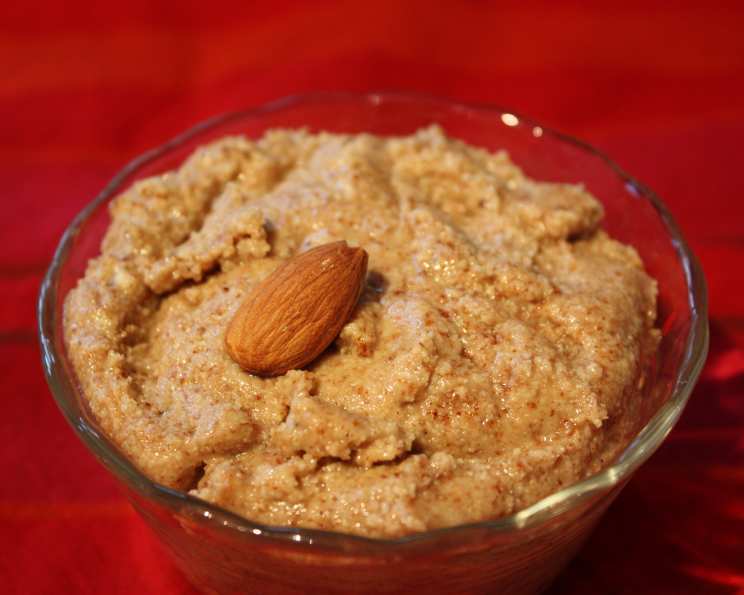
Yummy Almond Butter: 3 Delicious Variations
The scent of toasted nuts always brings me back to my childhood kitchen. My grandmother, a woman who could coax magic from the simplest ingredients, would often have a pan of almonds gently browning on the stovetop. She’d let me sneak a few, still warm, and the intense, nutty flavor was a revelation. It’s a memory that fuels my love for creating delicious and wholesome treats from scratch, and this almond butter recipe, with its three tempting variations, is a perfect embodiment of that feeling.
Recipe Overview
- Prep Time: 5 minutes
- Cook Time: 5 minutes
- Total Time: 10 minutes
- Yields: 1 small bowl almond butter
- Dietary Type: Vegan, Gluten-Free, Dairy-Free
Ingredients
- 1 1/3 cups almonds (skin on)
- 1/16 teaspoon salt
- 2 tablespoons oil (a neutral one like sunflower or salad)
For Vanilla Cocoa Almond Butter:
- 1/2 teaspoon cocoa powder (unsweetened, good quality)
- 3/8 teaspoon ground vanilla bean
For Vanilla Almond Butter:
- 3/8 teaspoon ground vanilla bean
For Cinnamon Almond Butter:
- 1/2 teaspoon ground cinnamon
Equipment Needed
- Skillet
- Food processor or Immersion blender
- Spoon
Instructions
-
Heat a skillet over medium heat.
-
Meanwhile, place the almonds in a food processor and chop finely. Don’t over-process them at this stage; you just want them broken down into smaller pieces.
-
Place the chopped almonds in the preheated skillet and dry toast for about 5 minutes, stirring frequently to prevent burning. The almonds should release a roasty aroma and develop a slightly golden-brown color. This toasting process is crucial for bringing out the full depth of the almond flavor.
-
Remove the skillet from the heat and allow the almonds to cool slightly. This prevents the food processor from overheating and ensures a smoother final product.
-
Place the toasted almonds, oil, and salt in the food processor. Process continuously until a thick paste forms. This may take several minutes, and you may need to scrape down the sides of the bowl periodically to ensure even processing. Alternatively, you can use an immersion blender for this step, blending in a wide-mouthed jar.
-
If you prefer a less thick almond butter, gradually add a little more oil or water until you reach your desired consistency. Add just a teaspoon at a time, processing briefly after each addition, to avoid making the almond butter too thin.
-
Now, choose your flavor variation! Add the flavourings of your choice to the plain almond butter: either the cocoa powder and vanilla bean for the Vanilla Cocoa Almond Butter, the vanilla bean for the Vanilla Almond Butter, or the cinnamon for the Cinnamon Almond Butter.
-
Mix the flavourings in well with a spoon until evenly distributed.
-
Enjoy your homemade almond butter!
Expert Tips & Tricks
- Toasting is key: Don’t skip the toasting step! It intensifies the almond flavor and makes the butter smoother. Watch the almonds carefully in the skillet, as they can burn quickly.
- Patience is a virtue: Making almond butter takes time and patience. Don’t be discouraged if it doesn’t come together immediately. Just keep processing and scraping down the sides as needed.
- Spice it up: For a bolder flavor, add a pinch of cayenne pepper to the Cinnamon Almond Butter.
- Sweetness control: If you have a sweet tooth, feel free to add a teaspoon or so of your favourite sweetener, such as maple syrup or honey (if not vegan), to any of the variations. Adjust the amount to your preference.
- Prevent burning: If using a food processor that gets hot quickly, take breaks during processing to allow it to cool down. This will prevent the motor from overheating and burning out.
- Achieving ultimate smoothness: For ultra-smooth almond butter, blanch the almonds before toasting to remove the skins. This step is optional but results in a more refined texture.
Serving & Storage Suggestions
This homemade almond butter is incredibly versatile. Spread it on toast, swirl it into oatmeal, use it as a dip for apple slices, or add it to smoothies. You can also use it in baking recipes as a substitute for other nut butters.
Store your almond butter in an airtight container at room temperature for up to a week, or in the refrigerator for up to a month. The oil may separate slightly during storage; simply stir it back in before using. Freezing is not recommended as it can alter the texture.
Nutritional Information
| Nutrient | Amount per Serving (approx. 2 tbsp) | % Daily Value* |
|---|---|---|
| Calories | 175 kcal | 9% |
| Total Fat | 15g | 23% |
| Saturated Fat | 1g | 5% |
| Cholesterol | 0mg | 0% |
| Sodium | 48mg | 2% |
| Total Carbohydrate | 6g | 2% |
| Dietary Fiber | 3g | 12% |
| Sugars | 1g | |
| Protein | 6g | 12% |
- Percent Daily Values are based on a 2000 calorie diet. Your daily values may be higher or lower depending on your calorie needs.
Variations & Substitutions
- Different Nuts: Experiment with other nuts, such as cashews, walnuts, or hazelnuts, to create different nut butters. Adjust the toasting time accordingly.
- Seed Butter: For a nut-free option, use sunflower seeds or pumpkin seeds instead of almonds.
- Chocolate Almond Butter: Melt some dark chocolate and stir it into the almond butter for an extra indulgent treat.
- Maple Cinnamon Almond Butter: Substitute maple syrup for a portion of the oil and add cinnamon for a warm, comforting flavor.
- Spicy Almond Butter: Add a pinch of cayenne pepper or a dash of hot sauce for a spicy kick.
- Coconut Almond Butter: Add shredded coconut to the food processor along with the almonds for a tropical twist.
FAQs (Frequently Asked Questions)
Q: Why is my almond butter grainy?
A: This is usually due to not processing the almonds long enough. Keep processing until the oils release and the mixture becomes smooth. Warming the almonds slightly can also help.
Q: My almond butter is too thick. What should I do?
A: Add a little more oil, a teaspoon at a time, until you reach your desired consistency. Water can also be used, but oil will result in a richer flavor.
Q: Can I use pre-roasted almonds?
A: Yes, you can, but the flavor won’t be as intense as if you toast them yourself. Reduce the toasting time accordingly.
Q: How long does homemade almond butter last?
A: It will last for up to a week at room temperature or up to a month in the refrigerator.
Q: Can I use a regular blender instead of a food processor?
A: A high-powered blender may work, but a food processor is generally better suited for this task due to its wider base and more powerful motor. You might have to scrape the sides down more frequently if using a blender.
Final Thoughts
Making your own almond butter is surprisingly easy and rewarding. With just a few simple ingredients and a little patience, you can create a delicious and wholesome spread that’s far superior to anything you’ll find in the store. Don’t be afraid to experiment with different flavors and variations to find your perfect combination. This recipe is a blank canvas for your culinary creativity, so go ahead and unleash your inner chef! Share your creations and feedback – I can’t wait to hear about your delicious almond butter adventures!