
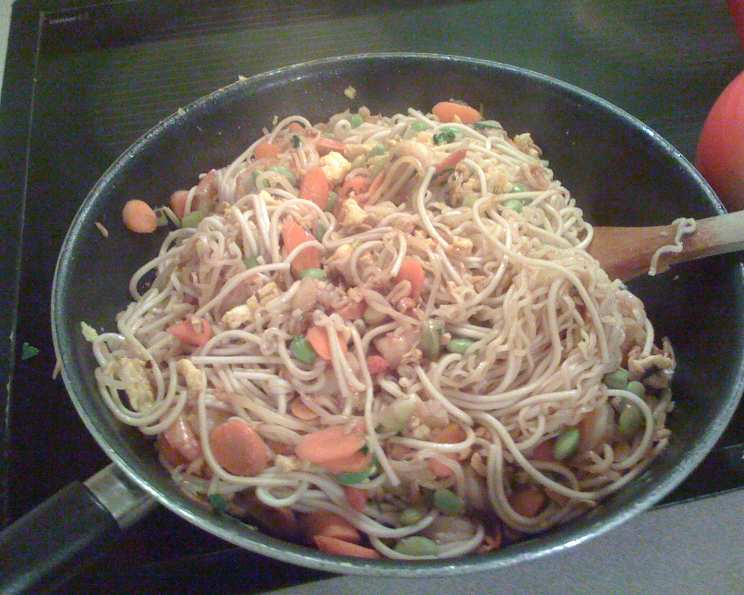
Yummy Shrimp Pad Thai: A Flavorful Journey
The scent of Pad Thai always transports me back to the bustling night markets of Bangkok. I remember weaving through crowded stalls, the air thick with the aroma of exotic spices and sizzling woks, all culminating in that first unforgettable bite of perfectly balanced sweet, sour, and savory noodles. Each strand was coated in a rich sauce, punctuated by the crunch of peanuts and the freshness of bean sprouts. Recreating that magic at home has become a passion, and this Shrimp Pad Thai recipe captures the essence of those delicious memories.
Recipe Overview
- Prep Time: 20 minutes
- Cook Time: 20 minutes
- Total Time: 40 minutes
- Servings: 4-6
- Dietary Type: Dairy-Free (can be made Gluten-Free)
Ingredients
- 8 ounces rice noodles, Banh Pho*
- 3 tablespoons fish sauce, Three Crabs Brand*
- 2 tablespoons rice vinegar
- 2 tablespoons dark brown sugar
- 1 teaspoon cayenne seasoning
- ½ tablespoon coriander seasoning
- ½ tablespoon ginger seasoning
- 1 teaspoon chili powder
- 2 tablespoons soy sauce
- 2 tablespoons ketchup
- 1 cup water
- 3 tablespoons canola oil
- 3 large eggs
- 6 garlic cloves
- 2 cups green onions, – 1 inch pieces
- 1 cup grated carrot
- 2 cups bean sprouts
- ½ lb medium shrimp, peeled and deveined
- 2 limes
- 1 ½ cups honey roasted peanuts
- 2 tablespoons red pepper flakes
- ½ cup fresh cilantro, cleaned
Note: Banh Pho are wide, flat rice noodles commonly used in Pad Thai. If Three Crabs Brand fish sauce is unavailable, use another high-quality fish sauce.
Equipment Needed
- Large pot
- Medium bowl
- Small bowl
- Plastic bag
- Rolling pin (or similar instrument for crushing peanuts)
- Veggie peeler
- Skillet or wok
- Serving plate
Instructions
-
Begin by boiling a large pot of water for the rice noodles. While the water is heating, prep all the ingredients. Having everything ready before you start stir-frying will make the process much smoother.
-
In a medium bowl, mix together the fish sauce, rice vinegar, brown sugar, ketchup, soy sauce, chili powder, cayenne, coriander, ginger, and the juice from one of the limes to create the sauce. Whisk until the sugar is dissolved.
-
In another bowl, lightly beat the eggs with a few dashes of salt. Set aside.
-
Cut the green onions into 1-inch pieces and mince the garlic. Place each in separate bowls.
-
Place the peanuts in a plastic bag and crush them with a rolling pin (or another heavy object). Transfer the crushed peanuts to a bowl.
-
Slice the remaining lime into wedges and place in another bowl.
-
Using a vegetable peeler, grate the carrots into slices and place them into a bowl. Prepare separate bowls for the bean sprouts and cleaned cilantro.
-
Once the water is boiling, remove the pot from the burner and place the rice noodles in the water. Let them sit until they are tender yet firm. This usually takes about 5-8 minutes, but check them frequently to avoid overcooking. The noodles should still have a slight bite. Remove the noodles from the water and drain thoroughly.
-
Defrost the shrimp under cold water. Drain and let sit for a few minutes. Remove the tails, devein the shrimp, and place them in a bowl.
-
Place all of your prepared ingredient bowls near the stovetop, ensuring they are readily available for quick addition during the stir-frying process.
-
In a cleaned and dry skillet or wok, heat 1 tablespoon of canola oil over medium heat. When the oil is hot, add the eggs and cook until they are set but not too brown. Gently scramble them as they cook. Remove the eggs from the skillet and place them in a clean bowl.
-
Heat the remaining 2 tablespoons of oil in the skillet over medium heat and add the garlic. Stir-fry for a moment until fragrant, then add the shrimp and raise the heat to medium-high. Stir-fry until the shrimp is pink and well-cooked. This usually takes about 3-5 minutes, depending on the size of the shrimp. Be careful not to overcook the shrimp, as they can become rubbery.
-
While the shrimp is cooking, quickly rinse the cooked noodles again and drain thoroughly. Then add the rice noodles, sauce, water, bean sprouts, peanuts, green onions, 1 tbsp of red pepper flakes, and cooked eggs to the skillet with the shrimp. Cook for about 5 minutes, tossing often to ensure the noodles are evenly coated in the sauce and heated through. Do not overcook. The green onions should still be slightly crisp when you serve.
-
Finally, place the Pad Thai on a serving plate and top with lime wedges, more peanuts, red pepper flakes, and fresh cilantro.
-
Serve immediately and enjoy!
Expert Tips & Tricks
- Don’t oversoak the noodles! They should be al dente because they will continue to cook in the wok. Over-soaked noodles will become mushy.
- Prep everything ahead of time. This is crucial for stir-fries. Once you start cooking, everything moves quickly.
- Taste and adjust the sauce. Pad Thai is all about the balance of flavors. Adjust the sweetness, sourness, or spice to your liking. A little extra lime juice or a pinch of sugar can make all the difference.
- Use high heat for best results. A wok is ideal for stir-frying, as it distributes heat evenly. However, a large skillet will also work. Make sure the pan is hot before adding ingredients.
- If the Pad Thai seems too dry while cooking, add a splash more water to loosen it up.
Serving & Storage Suggestions
Serve the Shrimp Pad Thai immediately after cooking for the best flavor and texture. Garnish generously with lime wedges, crushed peanuts, red pepper flakes, and fresh cilantro.
Leftovers can be stored in an airtight container in the refrigerator for up to 2 days. Reheat gently in a skillet or microwave until warmed through. Be aware that the noodles may become slightly softer upon reheating.
It is not recommended to freeze Pad Thai, as the noodles can become mushy and the sauce may separate.
Nutritional Information
| Nutrient | Amount per Serving | % Daily Value |
|---|---|---|
| Calories | 855.8 kcal | N/A |
| Calories from Fat | 404 g | 47% |
| Total Fat | 45 g | 69% |
| Saturated Fat | 7.1 g | 35% |
| Cholesterol | 245 mg | 81% |
| Sodium | 2085.2 mg | 86% |
| Total Carbohydrate | 82.9 g | 27% |
| Dietary Fiber | 11.3 g | 45% |
| Sugars | 17.1 g | N/A |
| Protein | 38.9 g | 77% |
Note: Nutritional information is an estimate and may vary based on specific ingredients and portion sizes.
Variations & Substitutions
- Vegetarian Pad Thai: Omit the shrimp and add tofu or tempeh.
- Chicken Pad Thai: Substitute the shrimp with cubed chicken breast or thigh.
- Gluten-Free Pad Thai: Use gluten-free soy sauce and ensure all other ingredients are gluten-free. Check the label on your fish sauce, as some brands contain gluten.
- Spicy Pad Thai: Add more red pepper flakes or a dash of sriracha to the sauce for extra heat.
- Nut-Free Pad Thai: Omit the peanuts or substitute with toasted sesame seeds.
- Vegetable Boost: Add extra vegetables like bell peppers, broccoli florets, or snow peas to the stir-fry.
- Sweetness Level: If you prefer a sweeter Pad Thai, increase the amount of brown sugar.
FAQs (Frequently Asked Questions)
Q: Can I make this Pad Thai ahead of time?
A: While it’s best served fresh, you can prep all the ingredients in advance (chop vegetables, make the sauce, cook the noodles) and store them separately. Then, when you’re ready to eat, just stir-fry everything together.
Q: How do I prevent the noodles from sticking together?
A: Rinse the cooked noodles thoroughly with cold water to remove excess starch. Toss them with a little oil before adding them to the wok.
Q: What if I don’t have fish sauce?
A: Fish sauce is a key ingredient in Pad Thai, providing a unique savory flavor. If you don’t have it, you can try substituting with soy sauce mixed with a small amount of Worcestershire sauce, but it won’t be quite the same.
Q: Can I use a different type of noodle?
A: While Banh Pho rice noodles are the traditional choice, you can experiment with other types of rice noodles. Just be sure to adjust the cooking time accordingly.
Q: How do I adjust the spice level?
A: Start with a small amount of cayenne pepper and red pepper flakes, then add more to taste. You can also serve with extra red pepper flakes on the side for those who like it extra spicy.
Final Thoughts
This Shrimp Pad Thai recipe is a celebration of flavors, textures, and vibrant ingredients. It’s a dish that’s both comforting and exciting, perfect for a weeknight dinner or a special occasion. Don’t be afraid to experiment and adjust the recipe to your liking. The most important thing is to have fun and enjoy the process of creating something delicious. I encourage you to try this recipe and share your feedback. Consider pairing it with a refreshing Thai iced tea for the ultimate culinary experience. Happy cooking!