
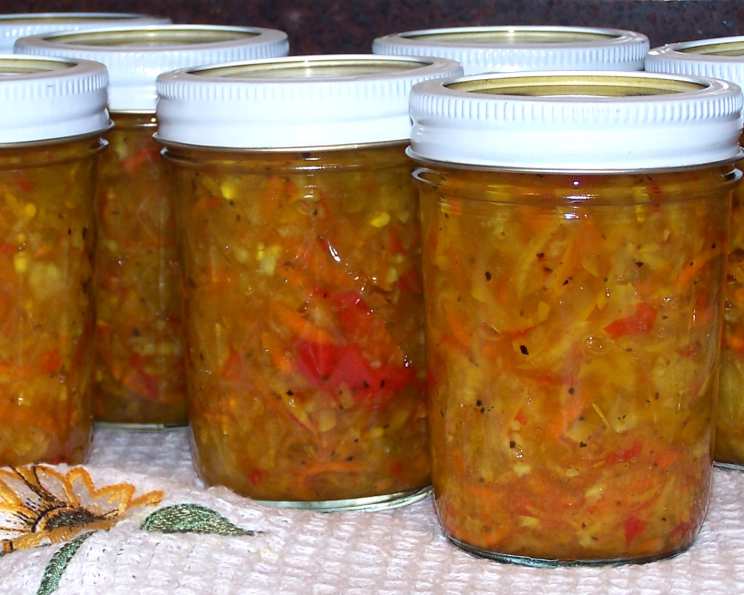
Zucchini Relish: A Taste of Summer Sunshine
I can almost smell the late-summer air just thinking about zucchini relish. My grandmother, bless her heart, used to make enormous batches every August, the kitchen windows fogged with steam and the air thick with the tangy scent of vinegar. We’d all gather around, shelling peas or snapping beans, waiting for the first taste on a crusty piece of bread. The vibrant green relish, bursting with the freshness of zucchini and the slight zing of pepper, was pure sunshine in a jar – a little taste of summer to brighten up the winter months.
Recipe Overview
- Prep Time: 48 hours, 15 minutes (includes soaking)
- Cook Time: 30 minutes
- Total Time: 48 hours, 45 minutes
- Yields: 8-9 16 oz canning jars
- Serves: Approximately 240
- Dietary Type: Vegetarian, Gluten-Free
Ingredients
For Soaking:
- 10 cups zucchini, grated
- 3 cups onions, grated
- 4 red bell peppers, grated
- 5 tablespoons salt
For Mixing:
- 3 cups sugar
- 1 tablespoon cornstarch
- 1 teaspoon turmeric
- 3 cups vinegar
- 1 teaspoon dry mustard
- 1 teaspoon coarse black pepper
- 1 teaspoon celery seed
Equipment Needed
- Food processor or grater
- Large plastic bowl
- Large strainer
- Large heavy pan
- Sterilized canning jars and lids
- Jar lifter
- Canning funnel (optional)
Instructions
- Prepare the Vegetables: Using a food processor or a hand grater, grate the zucchini, onions, and red bell peppers. You want a fairly fine shred for the best texture.
- Soak with Salt: In a large plastic bowl, combine the grated zucchini, onions, and bell peppers. Mix in the salt thoroughly, ensuring it’s evenly distributed throughout the vegetables.
- Overnight Soak: Cover the bowl and let it stand overnight (approximately 24 hours). This process helps to draw out excess moisture from the vegetables, which is crucial for a relish that isn’t too watery.
- Rinse and Drain: The next morning, rinse the vegetable mixture thoroughly in a large strainer under cold running water. This removes the salt. Drain well, pressing gently to remove as much excess liquid as possible. This is a vital step – don’t skip it!
- Combine Ingredients: In a large, heavy-bottomed pan (stainless steel or enameled cast iron is ideal to prevent scorching), place the rinsed and drained shredded vegetables. Add the remaining ingredients: sugar, cornstarch, turmeric, vinegar, dry mustard, coarse black pepper, and celery seed.
- Mix Well: Stir all the ingredients together thoroughly until well combined. The sugar and cornstarch should be evenly dispersed.
- Boil and Simmer: Bring the mixture to a boil over medium-high heat, stirring constantly to prevent sticking. Once boiling, reduce the heat to medium-low and simmer for 30 minutes, stirring frequently. The relish will thicken slightly as it cooks.
- Canning Preparation: While the relish is simmering, ensure your canning jars are sterilized. You can do this by boiling them in water for 10 minutes, or by running them through a sterilization cycle in your dishwasher. Keep the jars hot until ready to fill.
- Pack the Relish: Using a jar lifter, carefully remove a hot sterilized jar from the water. Using a canning funnel (optional, but highly recommended!), pack the hot relish into the jar, leaving about ½ inch of headspace at the top.
- Remove Air Bubbles: Gently tap the jar on the counter to release any trapped air bubbles. You can also use a clean utensil, like a chopstick or spatula, to run along the inside of the jar to release air bubbles.
- Wipe Rim and Seal: Wipe the rim of the jar with a clean, damp cloth to ensure a good seal. Place a sterilized lid on top of the jar and secure it with a screw band, tightening it fingertip tight (not too tight!).
- Process in Boiling Water Bath (Recommended): For long-term storage, process the filled jars in a boiling water bath canner for the time recommended by your local extension office, adjusting for your altitude. Typically, this is around 10-15 minutes for pint jars.
- Cool and Check Seal: Remove the jars from the canner using a jar lifter and place them on a towel-lined surface to cool completely. As the jars cool, you should hear a “pop” as the lids seal. After cooling, check the seal by pressing down on the center of the lid. If it doesn’t flex or pop, the jar is properly sealed. Any unsealed jars should be refrigerated and used promptly.
Expert Tips & Tricks
- Choosing Zucchini: Select firm, medium-sized zucchini for the best texture. Overgrown zucchini can be watery and have large seeds that are best avoided.
- Controlling Sweetness: Adjust the amount of sugar to your liking. Start with the recommended amount and taste the relish as it simmers. Add more sugar gradually if you prefer a sweeter relish.
- Spice It Up: For a spicier relish, add a pinch of red pepper flakes or a finely diced jalapeño pepper to the mix.
- Prepping Ahead: While the relish benefits from the overnight soak, you can prep the other ingredients (measuring spices, etc.) ahead of time to streamline the cooking process.
- Thickening Issues: If your relish seems too thin after 30 minutes of simmering, continue simmering for a few more minutes, stirring frequently, until it reaches your desired consistency. Cornstarch helps, but be careful not to overcook it.
- Safety First: Always follow proper canning procedures to ensure the safety of your homemade relish. Using sterilized jars and lids, proper headspace, and appropriate processing times are crucial for preventing spoilage.
Serving & Storage Suggestions
Zucchini relish is incredibly versatile! Serve it as a condiment with grilled sausages, hamburgers, or hot dogs. It’s also delicious with baked ham or roasted chicken. Try adding it to sandwiches, deviled eggs, or potato salad for a tangy twist. Unopened jars of properly canned zucchini relish can be stored in a cool, dark place for up to a year. Once opened, refrigerate and use within 2-3 weeks. The relish does not freeze well due to its high water content.
Nutritional Information
(Estimated, per 2 tablespoon serving)
| Nutrient | Amount per Serving | % Daily Value |
|---|---|---|
| Calories | 25 kcal | 1% |
| Total Fat | 0g | 0% |
| Saturated Fat | 0g | 0% |
| Cholesterol | 0mg | 0% |
| Sodium | 75mg | 3% |
| Total Carbohydrate | 6g | 2% |
| Dietary Fiber | 0g | 0% |
| Sugars | 5g | |
| Protein | 0g | 0% |
Variations & Substitutions
- Yellow Zucchini: Feel free to use yellow zucchini in addition to or instead of green zucchini.
- Different Peppers: Experiment with other types of bell peppers, such as yellow or orange, for a different flavor and color profile.
- Vinegar Variations: White vinegar is the standard choice, but you can substitute apple cider vinegar for a slightly sweeter, more complex flavor.
- Sugar Alternatives: While granulated sugar provides the best texture, you can use a sugar substitute like stevia or monk fruit sweetener, but be aware that this may affect the final consistency.
- Onion Options: If you prefer a milder onion flavor, try using sweet onions like Vidalia or Walla Walla.
FAQs (Frequently Asked Questions)
Q: Why do I need to soak the zucchini overnight?
A: Soaking the zucchini with salt helps draw out excess moisture, preventing the relish from becoming watery. It also helps to soften the vegetables and mellow their flavor.
Q: Can I use a different type of vinegar?
A: Yes, you can substitute apple cider vinegar for a slightly different flavor profile. However, white vinegar is traditionally used for its neutral flavor.
Q: How long will the zucchini relish last?
A: Properly canned and sealed jars of zucchini relish can be stored in a cool, dark place for up to a year. Once opened, refrigerate and use within 2-3 weeks.
Q: What do I do if my jars don’t seal?
A: If a jar doesn’t seal properly, you should refrigerate the relish immediately and use it within a few days. You can also try re-processing the jar with a new lid.
Q: Can I freeze zucchini relish?
A: Freezing zucchini relish is not recommended as it can become watery and lose its texture upon thawing. Canning is the best method for long-term storage.
Final Thoughts
I truly hope you’ll give this zucchini relish recipe a try. It’s a fantastic way to preserve the bounty of summer and enjoy its flavors throughout the year. Whether you’re a seasoned canner or a curious beginner, this recipe is sure to bring a little sunshine to your kitchen. Don’t hesitate to experiment with the spices and vegetables to create your own unique version. And please, share your experiences and feedback – I’d love to hear how it turns out! Perhaps a grilled cheese sandwich with a smear of this delightful relish is in order? Enjoy!