
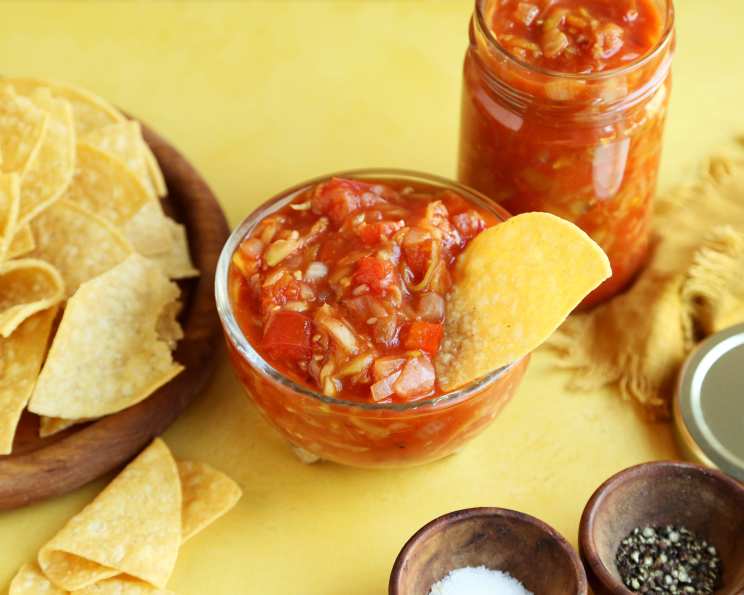
Zucchini Salsa: A Canning Classic
I remember the first time I tasted this zucchini salsa. It was at a family reunion, tucked away in a small town where everyone seemed to have a secret recipe. My aunt, bless her heart, proudly presented a jar, explaining it was “a little something” she whipped up using zucchini from her garden. I was skeptical; zucchini in salsa? But one bite and I was hooked. The sweet, tangy flavor, with just a hint of heat, was unlike anything I’d ever tasted. Now, years later, I still make this salsa every summer, and it brings back fond memories of that reunion and the simple joy of shared food.
Recipe Overview
- Prep Time: 30 minutes
- Cook Time: 15 minutes
- Total Time: 45 minutes (+ overnight resting)
- Yields: 10-12 Pints
- Dietary Type: Vegan, Gluten-Free
Ingredients
- 10 cups zucchini, peeled & shredded
- 4 onions, chopped
- 2 green peppers, chopped
- 2 red peppers, chopped
- ¼ cup pickling salt
- 1 tablespoon pickling salt
- 2 tablespoons dry mustard
- 1 tablespoon garlic powder
- 1 tablespoon cumin
- 2 cups white vinegar
- 1 cup brown sugar
- 2 tablespoons red pepper flakes
- 1 teaspoon nutmeg
- 1 teaspoon pepper
- 5 cups chopped ripe tomatoes
- 2 tablespoons cornstarch
- 12 ounces tomato paste
Equipment Needed
- Large Bowl
- Large Pot
- Sterilized Jars with Lids and Rings
- Canning Funnel (optional but helpful)
- Jar Lifter (for water bath canning, if desired)
Instructions
Day One: Preparing the Vegetables
- In a large bowl, combine the shredded zucchini, chopped onions, chopped green peppers, and chopped red peppers.
- Add ¼ cup of pickling salt to the vegetables.
- Mix the ingredients thoroughly to ensure the salt is evenly distributed.
- Cover the bowl and let it stand overnight in the refrigerator. This step helps draw out excess moisture from the zucchini, preventing a watery salsa.
Day Two: Cooking the Salsa
- The next day, thoroughly rinse the vegetable mixture under cold water to remove the salt.
- Drain the vegetables well, pressing out any excess moisture. This is a crucial step to prevent a soggy salsa.
- Transfer the drained vegetable mixture to a large pot.
- Add the remaining ingredients: dry mustard, garlic powder, cumin, white vinegar, brown sugar, red pepper flakes, 1 tablespoon pickling salt, cornstarch, nutmeg, pepper, chopped ripe tomatoes, and tomato paste.
- Stir all ingredients together to ensure everything is well combined.
- Bring the mixture to a boil over medium-high heat, stirring frequently to prevent scorching.
- Once boiling, reduce the heat to low and simmer for 15 minutes, stirring occasionally. This allows the flavors to meld together and the salsa to thicken slightly.
Canning the Salsa
- While the salsa is simmering, ensure your canning jars are sterilized. You can sterilize them by boiling them in water for 10 minutes, running them through a hot dishwasher cycle, or following the manufacturer’s instructions for your jars. Keep the jars hot until ready to fill.
- Ladle the hot salsa into the sterilized jars, leaving ½ inch of headspace at the top of each jar. Use a canning funnel to minimize spills.
- Wipe the rims of the jars with a clean, damp cloth to remove any food residue.
- Place the lids on the jars and screw on the bands until fingertip-tight. Do not overtighten.
- At this point, you have two options: proceed with the salsa as is, ensuring a proper seal has formed, or process the filled jars in a water bath canner for 15 minutes. Processing in a water bath canner is the safest way to ensure long-term storage and prevent spoilage.
- To water bath can, place the jars in a boiling water bath canner, ensuring they are fully submerged in water by at least 1 inch. Bring the water to a rolling boil and process for 15 minutes.
- After processing, carefully remove the jars from the canner using a jar lifter and place them on a towel-lined surface to cool completely.
- As the jars cool, you should hear a “pop” sound, indicating that the lids have sealed properly.
- After the jars have cooled completely (about 12-24 hours), check the seals by pressing down on the center of each lid. If the lid flexes up and down, it is not sealed and should be refrigerated and used promptly or reprocessed with a new lid.
Expert Tips & Tricks
- Controlling the Heat: For a spicier salsa, add finely chopped jalapeños along with the other vegetables. Start with a small amount (1-2 peppers) and taste as you go to adjust the heat to your preference. Remove the seeds and membranes for less heat.
- Choosing the Right Zucchini: Smaller to medium-sized zucchini tend to have fewer seeds and a firmer texture, making them ideal for salsa. Avoid using overly mature zucchini, as they can be watery and have tough skins.
- Thickening the Salsa: If you prefer a thicker salsa, you can add an extra tablespoon of cornstarch to the mixture. Mix the cornstarch with a little cold water to form a slurry before adding it to the pot to prevent lumps.
- Flavor Boost: For a deeper, richer flavor, try roasting the tomatoes before chopping them. Roasting brings out their natural sweetness and adds a smoky element to the salsa.
- Jar Sterilization is Key: Always thoroughly sterilize your jars and equipment to prevent spoilage and ensure a safe and shelf-stable product.
Serving & Storage Suggestions
This zucchini salsa is incredibly versatile and can be used in a variety of ways. Serve it as a dip with tortilla chips, as a topping for tacos, grilled chicken or fish, or as a flavorful addition to scrambled eggs or omelets.
- Unopened jars of properly canned salsa can be stored in a cool, dark place for up to 1 year.
- Once opened, refrigerate the salsa and use it within 1-2 weeks.
- If you did not water bath the jars, it is recommended to store the sealed jars in the refrigerator.
Nutritional Information
Note: Nutritional information is an estimate and may vary based on specific ingredients used.
| Nutrient | Amount per Serving | % Daily Value |
|---|---|---|
| Calories | 211.9 kcal | N/A |
| Calories from Fat | N/A | N/A |
| Total Fat | 1.8 g | 2% |
| Saturated Fat | 0.3 g | 1% |
| Cholesterol | 0 mg | 0% |
| Sodium | 3826.5 mg | 159% |
| Total Carbohydrate | 46.2 g | 15% |
| Dietary Fiber | 6.1 g | 24% |
| Sugars | 34.9 g | N/A |
| Protein | 5.5 g | 10% |
Variations & Substitutions
- Spicy Zucchini Salsa: Add chopped jalapeños or a dash of cayenne pepper for extra heat.
- Smoked Zucchini Salsa: Use smoked paprika instead of regular paprika for a smoky flavor.
- Sweet and Tangy Zucchini Salsa: Add a splash of lime juice or a tablespoon of honey for a sweeter and tangier taste.
- Different Peppers: Experiment with using different types of peppers, such as poblano or Anaheim peppers, for a unique flavor profile.
- Herb Infusion: Add fresh herbs like cilantro or oregano to the salsa for a burst of freshness.
FAQs (Frequently Asked Questions)
Q: Why do I need to let the zucchini sit overnight with salt?
A: This process, called maceration, draws out excess moisture from the zucchini. This prevents the salsa from being too watery and helps concentrate the flavors.
Q: Do I have to water bath the jars?
A: Water bath canning is the safest way to ensure long-term storage and prevent spoilage. However, if you are confident in your sterilization and sealing process, you can skip this step and store the sealed jars in the refrigerator.
Q: Can I use frozen zucchini for this recipe?
A: Fresh zucchini is recommended for the best texture and flavor. Frozen zucchini may be too watery, even after thawing and draining.
Q: How can I tell if my jars have sealed properly?
A: After the jars have cooled completely, press down on the center of each lid. If the lid flexes up and down, it is not sealed and should be refrigerated and used promptly or reprocessed with a new lid. A properly sealed lid will be slightly concave and won’t move when pressed.
Q: Can I reduce the amount of sugar in this recipe?
A: Yes, you can reduce the amount of sugar to your liking. However, keep in mind that sugar helps to balance the acidity of the tomatoes and vinegar, which is important for safe canning. If you significantly reduce the sugar, you may need to add a small amount of lemon juice to maintain the proper acidity level.
Final Thoughts
This zucchini salsa is more than just a recipe; it’s a taste of summer, a celebration of fresh ingredients, and a reminder of the simple joys of homemade food. Whether you’re a seasoned canner or a beginner in the kitchen, I encourage you to give this recipe a try. The process is straightforward, the results are delicious, and the satisfaction of preserving your own food is truly rewarding. Share your creation with friends and family, and enjoy the flavors of summer all year round. Don’t be afraid to experiment with variations and make this recipe your own. Happy canning!