
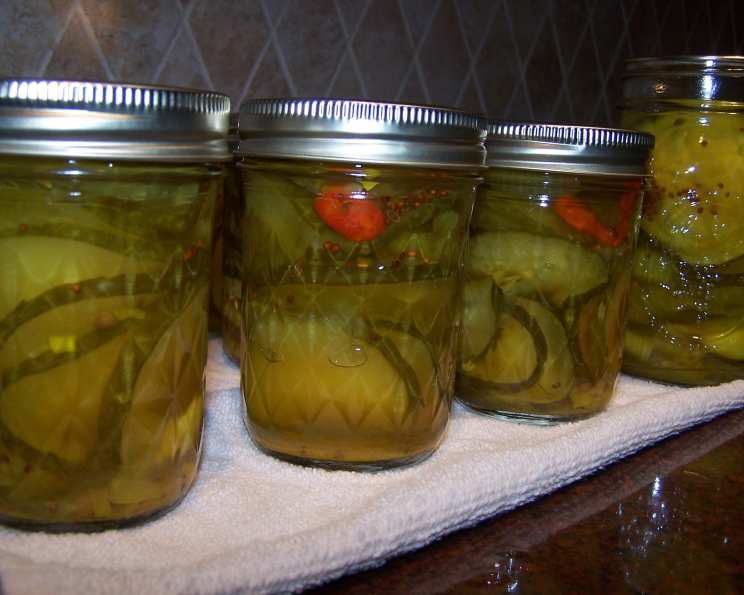
Zucchini Squash Pickles With Ginger and Lemongrass
The late summer sun beat down on my grandmother’s garden as she surveyed her bounty. Rows of zucchini plants, heavy with their oversized green fruit, stretched toward the horizon. “Too many zucchini,” she’d sigh with a twinkle in her eye, knowing full well this was her annual playful lament. But rather than let a single one go to waste, she’d transform them into jars of sunshine: sweet, tangy, and wonderfully aromatic zucchini pickles. The sweet scent of lemongrass and ginger simmering on the stove still brings me right back to those golden days of summer.
Recipe Overview
- Prep Time: 30 minutes
- Cook Time: 20 minutes
- Total Time: 5 hours 50 minutes (includes soaking time)
- Yields: Approximately 14 pints
- Serves: 40-60
- Dietary Type: Vegan
Ingredients
- 4 lbs zucchini (summer squash, or fussy squash, hairy melon washed and sliced 1/4 inch thick, about 10 cups)
- 1 large onion, halved and sliced (2 cups)
- 2 stalks lemongrass, halved and sliced lengthwise (use only the white part of lemongrass)
- 8 ounces fresh ginger, peeled and sliced 1/8 inch thick
- 1/4 cup salt
- 4 cups white vinegar
- 1 cup brown sugar
- 1 tablespoon fruit fresh, produce protector (optional)
- 1 teaspoon coriander seed
- 1 teaspoon celery seed
- 1 teaspoon turmeric
- 2 teaspoons mustard seeds
- 10 garlic cloves
- 10 chilies (adjust to taste for heat level)
Equipment Needed
- Large non-reactive pot
- Colander
- Large saucepan
- Sterilized jars, lids, and screw rings
- Jar lifter
- Boiling water bath canner
Instructions
- Slice the white part of the lemongrass into thin pieces, leaving the top portion of the stalk intact. This will help release its aromatic oils during the pickling process.
- In a large, non-reactive pot, combine the sliced zucchini, onions, sliced lemongrass, and ginger.
- Add the salt to the pot.
- Pour enough ice-cold water (preferably bottled or filtered) over the vegetables to cover them by about one inch. This helps to draw out excess moisture and firm up the zucchini.
- Let the mixture stand for 2-4 hours, allowing the salt to work its magic. The longer soaking time results in a crispier pickle.
- After soaking, drain the vegetables thoroughly in a colander, placing a large pot underneath to catch the brine. Discard the brine – it’s drawn out unwanted moisture from the vegetables.
- Add the garlic cloves and chilies to the drained zucchini mixture in the colander.
- In a large saucepan, combine the remaining ingredients: white vinegar, brown sugar, fruit fresh (if using), coriander seed, celery seed, turmeric, and mustard seeds.
- Bring this pickling solution to a boil over medium-high heat, stirring until the sugar dissolves completely.
- Once boiling, add the drained vegetables (zucchini, onions, lemongrass, ginger, garlic, and chilies) to the saucepan.
- Let the mixture stand for 2 hours. This allows the vegetables to absorb the flavors of the pickling solution.
- While the vegetables are soaking in the brine, prepare your canning equipment. Sterilize your jars, lids, and screw rings according to standard canning procedures. This ensures a safe and long-lasting product.
- After the 2-hour soaking period, bring the vegetable mixture in the saucepan to a boil for 5 minutes.
- Remove the longer pieces of lemongrass from the mixture – they’ve imparted their flavor.
- Using a jar lifter, carefully remove the sterilized jars from the hot water.
- Pack the hot vegetable mixture into the sterilized jars, leaving a half-inch headspace at the top. This is crucial for proper sealing.
- Fill the jars to within a half-inch of the top with the hot pickling solution, ensuring the vegetables are fully submerged.
- Remove any air bubbles trapped inside the jars by running a non-metallic utensil (like a chopstick or spatula) along the inside of the jar.
- Wipe the jar rims clean with a damp cloth to ensure a good seal.
- Place the sterilized lids on the jars, and then screw on the rings until they are fingertip tight. Don’t overtighten, as this can prevent proper sealing.
- Process the filled jars in a boiling water bath canner for the appropriate time, based on your altitude: 10 minutes for altitudes from 1 to 1,000 feet, 15 minutes for altitudes from 1,001 to 6,000 feet, and 20 minutes for altitudes above 6,000 feet. Ensure the water covers the jars by at least an inch.
- After processing, carefully remove the jars from the boiling water bath using a jar lifter and place them on a towel-lined surface to cool completely. Avoid touching or moving the jars during this time.
- As the jars cool, you should hear a popping sound as the lids seal.
- Once the jars are completely cool (after 12-24 hours), check the seals by pressing down on the center of each lid. If the lid doesn’t flex or pop back up, it’s properly sealed. If a lid doesn’t seal, refrigerate that jar and consume the pickles within a few weeks.
- Store the sealed jars of zucchini pickles in a cool, dark place for at least 2 weeks before enjoying them. This allows the flavors to fully develop.
Expert Tips & Tricks
- For a spicier pickle, increase the number of chilies or use a hotter variety, such as bird’s eye chilies.
- If you don’t have fruit fresh, you can skip it, but it helps to prevent the zucchini from discoloring.
- Ensure your jars and lids are properly sterilized to prevent spoilage.
- Don’t overcook the vegetables, as they will become mushy.
- Use a non-reactive pot (stainless steel or enamel) to avoid off-flavors from developing during cooking. Aluminum pots can react with the acidic vinegar.
- If you find the pickles too sweet, reduce the amount of brown sugar slightly.
- To get perfectly even zucchini slices, use a mandoline. Just be very careful and use the handguard!
- Let the spices bloom by gently toasting them in a dry pan for a minute or two before adding them to the pickling liquid. This brings out their aromatic oils.
Serving & Storage Suggestions
These zucchini pickles are a fantastic condiment to have on hand. Serve them alongside grilled meats, sandwiches, or charcuterie boards. They also make a delicious addition to salads or as a flavorful topping for crackers and cream cheese.
Once opened, store the pickles in the refrigerator. They will keep for several weeks. Unopened jars, properly sealed, can be stored in a cool, dark place for up to a year.
Nutritional Information
| Nutrient | Amount per Serving | % Daily Value |
|---|---|---|
| Calories | 46.1 kcal | N/A |
| Calories from Fat | 2 g | 4% |
| Total Fat | 0.2 g | 0% |
| Saturated Fat | 0 g | 0% |
| Cholesterol | 0 mg | 0% |
| Sodium | 717.1 mg | 29% |
| Total Carbohydrate | 9.9 g | 3% |
| Dietary Fiber | 0.9 g | 3% |
| Sugars | 7 g | N/A |
| Protein | 1 g | 2% |
Note: Nutritional information is an estimate and may vary based on specific ingredients and serving sizes.
Variations & Substitutions
- Spicier Pickles: Add a pinch of red pepper flakes or a chopped jalapeño pepper to the pickling solution for extra heat.
- Sweeter Pickles: Increase the amount of brown sugar or add a touch of honey or maple syrup.
- Different Vegetables: Experiment with other summer vegetables, such as cucumbers, green beans, or bell peppers.
- Rice Vinegar: Substitute rice vinegar for white vinegar for a milder, slightly sweeter flavor.
- Herbs: Add fresh herbs like dill, Thai basil, or cilantro to the jars for a unique twist.
- Mustard Seed Variation: Use brown or yellow mustard seeds in place of yellow.
- Ginger Boost: For an extra pungent kick, add some thinly sliced fresh turmeric along with the ginger.
FAQs (Frequently Asked Questions)
Q: Why do I need to soak the zucchini in salt water?
A: Soaking the zucchini in salt water helps to draw out excess moisture, resulting in a crisper pickle with a better texture.
Q: Can I use a different type of squash?
A: Yes, you can use other types of summer squash, such as yellow squash or pattypan squash, or even hairy melon (Chi qua). Just be sure to adjust the cooking time if necessary.
Q: How long do these pickles last?
A: Properly sealed jars of zucchini pickles can be stored in a cool, dark place for up to a year. Once opened, store them in the refrigerator for several weeks.
Q: Why didn’t my jars seal properly?
A: Improper sealing can be caused by several factors, including insufficient headspace, dirty jar rims, or loose rings. Make sure to follow the canning instructions carefully.
Q: Can I reduce the amount of sugar in this recipe?
A: Yes, you can reduce the amount of sugar to suit your taste, but keep in mind that sugar helps to preserve the pickles. Start by reducing it slightly and taste the pickling solution before adding more.
Final Thoughts
These Zucchini Squash Pickles with Ginger and Lemongrass are more than just a condiment; they’re a little jar of sunshine, a taste of summer that you can enjoy all year round. Don’t be intimidated by the canning process – it’s easier than you think, and the results are well worth the effort. So, gather your ingredients, put on some music, and get ready to create a batch of these delicious pickles. I can’t wait to hear what you think. Share your creations with friends and family, and let the flavors of ginger, lemongrass, and zucchini transport you to a sun-drenched garden, no matter the season.