
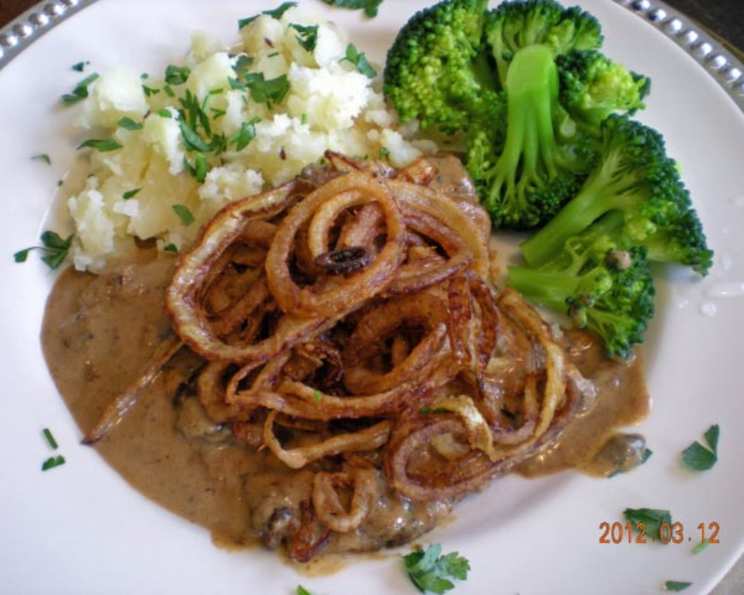
Zwiebelrostbraten: A Culinary Journey Back to My Oma’s Kitchen
The scent of sizzling onions and seared beef instantly transports me back to my grandmother’s (Oma’s) kitchen. Sunday dinners at her house were legendary, filled with laughter, warmth, and the irresistible aroma of Zwiebelrostbraten. I can still picture her, sleeves rolled up, expertly maneuvering around the stove, creating this masterpiece with practiced ease. Every bite was a comforting hug, a reminder of family and tradition, and a taste of pure culinary love. This dish, more than just a recipe, is a cherished memory.
Recipe Overview
- Prep Time: 20 minutes
- Cook Time: 30 minutes
- Total Time: 50 minutes
- Servings: 4
- Yield: 4 steaks
- Dietary Type: Varies (see variations)
Ingredients
- 4 sirloin steaks, 1/4 inch thick, 6-7 oz each
- 2 large onions
- 1 cup flour
- 2 cups oil, plus 2 tsp oil
- 2 teaspoons butter
- 1 teaspoon Hungarian paprika
- 1 teaspoon Dijon mustard
- 1 cup whipping cream, or 1 cup light cream (see variations)
- 1 cup beef broth
- Salt
- Pepper
Equipment Needed
- Heavy saucepan
- Large frying pan
- Paper towels
- Parchment paper
- Meat mallet (optional)
Instructions
-
Begin by preparing the fried onions. In a heavy saucepan, heat 2 cups of vegetable oil to approximately 350°F (175°C). Use a thermometer to ensure accurate temperature for optimal crispness.
-
Cut the onions into thin slices. Separate the slices into rings. This ensures even cooking and prevents clumping.
-
On a plate, mix the flour with the Hungarian paprika. The paprika adds a touch of color and subtle smoky flavor.
-
Lightly moisten the onion rings with water or milk (a quick dip will do). Dip the moistened onion rings into the flour mixture, coating them well on all sides. This creates a crispy coating.
-
Working in batches, quickly fry the coated onion rings in the hot oil. Avoid overcrowding the pan to maintain the oil temperature and ensure even frying.
-
Remove the fried onion rings to a plate lined with paper towels to drain excess oil. Immediately season with salt. Set aside.
-
Prepare the steaks. Lightly pound the steaks between two sheets of parchment paper, using the flat side of a mallet only. This tenderizes the meat slightly without making it too thin. If you don’t have a meat mallet, you can skip this step.
-
Nick the edges of the steaks 3-4 times with a knife to prevent them from curling up during cooking.
-
Season the steaks generously with salt and pepper on both sides.
-
Coat the seasoned steaks on both sides with the remaining flour-paprika mixture. Press the flour into the steak to ensure a good crust.
-
In another large frying pan, heat 2 teaspoons of oil and 2 teaspoons of butter over medium-high heat. The butter adds richness and flavor.
-
Quickly fry the steaks, approximately 1-2 minutes on each side, or until nicely browned. Adjust cooking time based on your desired level of doneness. Add more oil if needed to prevent sticking.
-
Remove the steaks from the pan, cover them loosely with foil, and keep them warm.
-
Now, create the pan sauce. Add about 1/3 of the previously fried onions to the pan. This infuses the sauce with onion flavor.
-
Add the Dijon mustard to the pan. This provides a tangy depth to the sauce.
-
Deglaze the pan with some of the beef broth, scraping off the browned bits from the bottom of the pan. These browned bits, called fond, are packed with flavor.
-
Reduce the pan juices to about half, continuing to scrape off the browned bits. This concentrates the flavors.
-
Add the cream (either whipping cream or light cream) and simmer for a minute or two, until the sauce thickens slightly.
-
At the very end, add the beef steaks back to the sauce to heat through. Do not let the sauce boil anymore, as this can cause the cream to curdle. If the gravy gets too thick, add more beef broth to reach your desired consistency.
-
Serve immediately with spaetzle or potatoes, and generously top with the remaining onion rings.
Expert Tips & Tricks
- Achieve Perfectly Crispy Onions: The key to truly crispy fried onions is to fry them in batches, ensuring the oil temperature doesn’t drop too much. Also, don’t over-mix the onions while they’re frying – let them develop a golden crust before stirring.
- Doneness Check: For medium-rare steaks, aim for an internal temperature of 130-135°F (54-57°C). Use a meat thermometer for accurate results.
- Make-Ahead Gravy: You can prepare the gravy ahead of time and gently reheat it just before serving. This can save you time on busy weeknights.
- Resting is Key: Always let your steaks rest after cooking. This allows the juices to redistribute, resulting in a more tender and flavorful steak. Cover loosely with foil and let rest for 5-10 minutes.
Serving & Storage Suggestions
Serve Zwiebelrostbraten immediately after cooking for the best flavor and texture. The crispy onions tend to soften over time, so it’s best to add them just before serving.
Leftovers can be stored in the refrigerator in an airtight container for up to 3 days. Reheat gently in a skillet over low heat, adding a little beef broth or water if the sauce has thickened too much.
Freezing is not recommended, as the texture of the onions and the sauce can change upon thawing.
Nutritional Information
| Nutrient | Amount per Serving | % Daily Value |
|---|---|---|
| Calories | 669 kcal | 33% |
| Total Fat | 49g | 75% |
| Saturated Fat | 21g | 105% |
| Cholesterol | 146mg | 49% |
| Sodium | 155mg | 7% |
| Carbohydrate | 9g | 3% |
| Fiber | 1g | 4% |
| Sugar | 1g | 1% |
| Protein | 44g | 88% |
Nutritional information is an estimate and may vary based on specific ingredients and portion sizes.
Variations & Substitutions
- Gluten-Free: Substitute the all-purpose flour with a gluten-free flour blend for coating the onions and steaks. Make sure the beef broth and Dijon mustard are also gluten-free.
- Dairy-Free: Substitute the butter with a plant-based butter alternative and use a dairy-free cream alternative like coconut cream or cashew cream. The flavor will be slightly different, but still delicious.
- Vegetarian: While not technically Zwiebelrostbraten, you could adapt the recipe using thick slices of grilled halloumi cheese or portobello mushrooms instead of steak.
- Cream Options: While the recipe calls for whipping cream or light cream, using sour cream or crème fraîche will also work, adding a tangy flavor to the sauce. Just be sure to simmer gently to avoid curdling.
FAQs (Frequently Asked Questions)
Q: Can I use a different cut of beef?
A: While sirloin is traditional, you could use other tender cuts like ribeye or New York strip steak, but adjust the cooking time accordingly.
Q: How do I keep the fried onions crispy?
A: Fry them right before serving and don’t overcrowd the pan. Store any leftover onions in an airtight container at room temperature to help maintain some crispness.
Q: Can I add wine to the sauce?
A: Absolutely! Adding a splash of red wine to the pan while deglazing can enhance the flavor of the sauce.
Q: What if my sauce is too thin?
A: Continue simmering the sauce to reduce it further. You can also whisk in a small amount of cornstarch slurry (cornstarch mixed with cold water) to thicken it quickly.
Q: Can I make this dish ahead of time?
A: While it’s best served fresh, you can prepare the sauce ahead of time and reheat it gently. Fry the onions and cook the steaks just before serving.
Final Thoughts
Zwiebelrostbraten is more than just a recipe; it’s a piece of culinary heritage, a taste of home, and a celebration of simple ingredients transformed into something extraordinary. I encourage you to try this recipe and create your own memories around it. Don’t be afraid to experiment with variations and make it your own. Share your creations and experiences; I’d love to hear how you made this classic dish your own! Guten Appetit!