
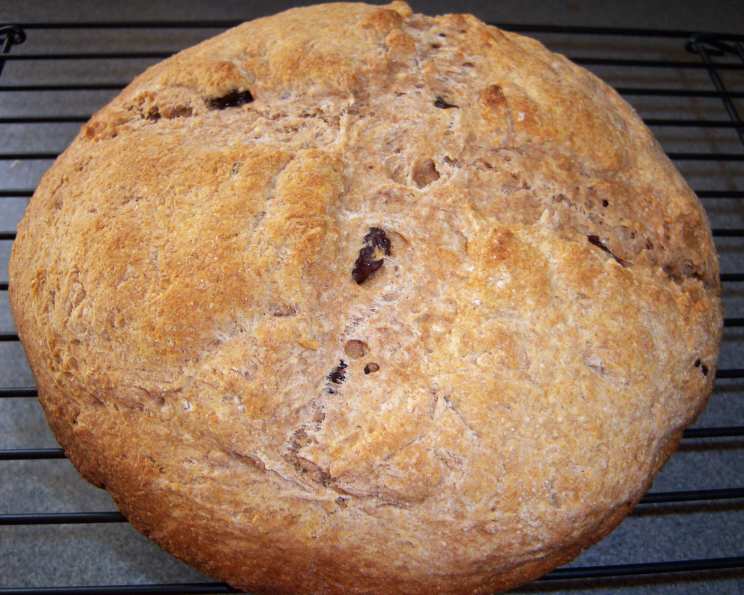
100% Whole Wheat Irish Soda Bread: A Taste of Home
The scent of baking bread always takes me back to my grandmother’s kitchen. It wasn’t fancy bread, mind you – mostly hearty, simple loaves that sustained us through chilly evenings. But there was something magical about the warmth radiating from the oven, the way the aroma clung to our clothes, and the utter comfort of a thick slice slathered with butter. One loaf that she made particularly well, especially around St. Patrick’s Day, was Irish Soda Bread, and while her version wasn’t whole wheat, this recipe comes surprisingly close to capturing that same comforting, slightly sweet, crumbly texture that made her soda bread so special.
Recipe Overview
- Prep Time: 15 minutes
- Cook Time: 35 minutes
- Total Time: 50 minutes
- Servings: 10-12
- Yield: 2 loaves
- Dietary Type: Vegetarian
Ingredients
- 4 cups whole wheat flour
- 3 teaspoons baking powder
- 1 teaspoon baking soda
- 1 teaspoon salt
- 1/4 cup (4 tablespoons) butter, cold
- 1 1/4 cups raisins or currants
- 1 egg, beaten
- 1 3/4 cups low-fat buttermilk (or substitute 1 1/2 cups plain yogurt and 1/4 cup milk)
- 1 tablespoon molasses or honey
Equipment Needed
- Large mixing bowl
- Measuring cups and spoons
- Pastry blender or two knives
- Baking sheet
- Greased baking sheet
- Cooling rack
Instructions
- Preheat your oven to 375°F (190°C). Grease a baking sheet, or line it with parchment paper.
- In a large mixing bowl, whisk together the whole wheat flour, baking powder, baking soda, and salt. Ensure all dry ingredients are well combined for even rising.
- Cut in the cold butter using a pastry blender or two knives until the mixture resembles a coarse meal. You can finish the process with your fingertips, gently breaking up the butter into the flour mixture. The goal is to have small, pea-sized pieces of butter evenly distributed throughout the flour.
- Add the raisins or currants to the flour mixture and toss to coat them lightly. This will help prevent them from sinking to the bottom of the loaves during baking.
- In a separate bowl or measuring cup, whisk together the beaten egg, buttermilk (or yogurt and milk mixture), and molasses or honey. Make sure the wet ingredients are fully incorporated.
- Pour the wet ingredients into the dry ingredients. Mix until a soft dough forms. Initially, you can stir the ingredients together with a spoon or spatula. As the dough comes together, it will become harder to stir.
- Turn the dough out onto a lightly floured surface or knead gently in the bowl. Knead gently until the dough is smooth and comes together, about 3 minutes. Be careful not to over-knead, as this can result in a tough bread. The dough should be slightly sticky.
- Divide the dough in half. Shape each half into a round ball or disc.
- Place the dough balls on the prepared baking sheet. Flatten each ball slightly, to about 1.5 inches thick.
- Using a sharp knife or a dough scorer, cut an “X” shape about 1/4 inch deep into the top of each loaf. This allows the bread to expand during baking and creates a classic Irish Soda Bread look.
- Bake in the preheated oven for 35 minutes, or until the loaves are golden brown and sound hollow when tapped on the bottom. Ovens vary, so start checking for doneness around 30 minutes.
- Remove the loaves from the oven and transfer them to a wire rack to cool completely before slicing and serving.
Expert Tips & Tricks
- Cold Butter is Key: Using very cold butter is essential for creating the characteristic crumbly texture of Irish Soda Bread. If the butter is too soft, it will melt into the flour, resulting in a denser, less tender bread. Consider freezing the butter for 10-15 minutes before cutting it into the flour.
- Don’t Overmix: Overmixing the dough will develop the gluten in the whole wheat flour, leading to a tough bread. Mix just until the wet and dry ingredients are combined.
- Buttermilk Substitute: If you don’t have buttermilk on hand, you can easily make a substitute by adding 1 tablespoon of lemon juice or white vinegar to regular milk. Let it sit for 5 minutes to curdle before using. Alternatively, using plain yogurt thinned with a little milk works very well.
- Scoring the Loaf: The “X” cut on top of the loaf is not just for aesthetics. It allows the bread to expand during baking, preventing it from cracking unevenly. Make sure the cut is deep enough to serve its purpose.
- Prevent Raisin Sinkage: Tossing the raisins or currants with a tablespoon of the flour mixture before adding them to the dough helps prevent them from sinking to the bottom of the loaves.
- Add Orange or Lemon Zest: For a brighter flavor, try adding a tablespoon of orange or lemon zest to the dry ingredients.
Serving & Storage Suggestions
Irish Soda Bread is best served warm or at room temperature. It’s delicious on its own, with butter, or with a dollop of jam or cream. It also pairs well with savory dishes such as soups, stews, and corned beef and cabbage.
To store leftover Irish Soda Bread, wrap it tightly in plastic wrap or place it in an airtight container. It will keep at room temperature for 2-3 days. For longer storage, you can freeze it for up to 2 months. Thaw the bread completely before serving. To refresh day-old bread, you can lightly toast it or warm it in the oven.
Nutritional Information
Note: Nutritional information is an estimate and may vary based on specific ingredients and serving sizes.
| Nutrient | Amount per Serving | % Daily Value |
|---|---|---|
| Calories | 240 kcal | 12% |
| Total Fat | 8g | 10% |
| Saturated Fat | 5g | 25% |
| Cholesterol | 25mg | 8% |
| Sodium | 300mg | 13% |
| Total Carbohydrate | 40g | 15% |
| Dietary Fiber | 5g | 20% |
| Sugars | 8g | – |
| Protein | 6g | 12% |
Variations & Substitutions
- Gluten-Free Irish Soda Bread: Substitute the whole wheat flour with a gluten-free all-purpose flour blend. You may need to adjust the liquid slightly to achieve the right consistency.
- Dairy-Free Irish Soda Bread: Replace the buttermilk with a non-dairy milk alternative, such as almond milk or soy milk, mixed with 1 tablespoon of lemon juice or vinegar. Use a dairy-free butter substitute.
- Savory Irish Soda Bread: Omit the raisins or currants and add savory ingredients such as chopped chives, cheddar cheese, or sun-dried tomatoes.
- Spiced Irish Soda Bread: Add a teaspoon of mixed spice or cinnamon to the dry ingredients for a warm, festive flavor.
- Herb Irish Soda Bread: Substitute 1/4 cup of the flour for finely chopped fresh herbs like rosemary or thyme.
FAQs (Frequently Asked Questions):
Q: Can I use regular milk instead of buttermilk?
A: While buttermilk provides a tangy flavor and helps to tenderize the bread, you can use regular milk mixed with 1 tablespoon of lemon juice or vinegar as a substitute. Let it sit for 5 minutes before using.
Q: How do I know when the bread is done?
A: The bread is done when it’s golden brown and sounds hollow when tapped on the bottom. A toothpick inserted into the center should come out clean.
Q: Can I make this recipe ahead of time?
A: You can prepare the dough ahead of time and store it in the refrigerator for up to 24 hours. Let it come to room temperature before baking.
Q: Can I freeze Irish Soda Bread?
A: Yes, Irish Soda Bread freezes well. Wrap it tightly in plastic wrap and store it in the freezer for up to 2 months. Thaw completely before serving.
Q: My bread is dry. What did I do wrong?
A: Overbaking is the most common cause of dry bread. Be sure to check for doneness around 30 minutes and adjust baking time as needed. Also, avoid overmixing the dough, as this can lead to a tougher, drier bread.
Final Thoughts
This 100% Whole Wheat Irish Soda Bread recipe is a delightful twist on a classic. It retains the characteristic texture and flavor of traditional soda bread while adding the nutritional benefits of whole wheat flour. Whether you’re celebrating St. Patrick’s Day or simply craving a hearty slice of homemade bread, I hope you give this recipe a try. Don’t hesitate to experiment with variations and substitutions to make it your own. And most importantly, share your creations and feedback! It’s a perfect accompaniment to a hearty stew or simply enjoyed with a pat of butter and a warm cup of tea. Enjoy!