
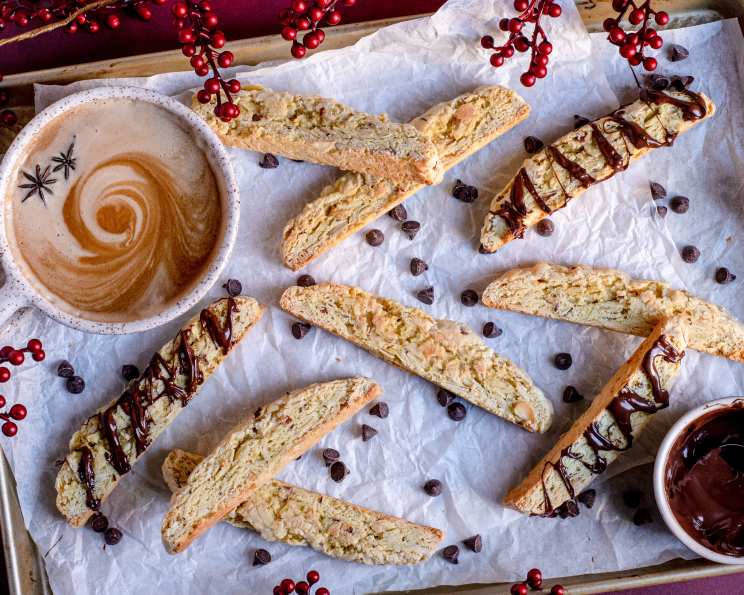
Mastering the Art of Almond Biscotti: A Twice-Baked Delight
The aroma of almond biscotti baking in the oven instantly transports me back to my Nonna’s kitchen. I remember standing on a stool, mesmerized as she expertly shaped the dough into logs, the scent of anise and toasted almonds filling the air. These weren’t just cookies; they were edible memories, meant for lingering over a strong cup of coffee and shared with loved ones. Now, after years of tweaking and perfecting, I’m thrilled to share my own version of this timeless Italian treat.
Recipe Overview
- Prep Time: 20 minutes
- Cook Time: 1 hour 30 minutes
- Total Time: 1 hour 50 minutes
- Yields: 20 biscotti
- Dietary Type: Vegetarian
Ingredients
- 2 cups all-purpose flour
- 1 cup sugar
- 1 teaspoon baking powder
- ⅛ teaspoon salt
- 3 large eggs
- 2 tablespoons Amaretto (OR 2 tablespoons rum with 1 teaspoon almond extract)
- 1 teaspoon vanilla
- 1 teaspoon anise extract (optional)
- 1 cup whole almonds, toasted and chopped a few times, not too fine
Equipment Needed
- 2 baking sheets
- Parchment paper
- Mixing bowl
- Whisk
- Serrated knife
- Cooling rack
Instructions
- Begin by preheating your oven to 300°F (150°C). This lower temperature is key for achieving the signature dry, crunchy texture of authentic biscotti.
- Line two baking sheets with parchment paper. Parchment ensures the biscotti won’t stick and makes for easy cleanup.
- In a medium bowl, combine the dry ingredients: 2 cups all-purpose flour, 1 cup sugar, 1 teaspoon baking powder, and ⅛ teaspoon salt. Whisk them together until well incorporated, then set aside.
- In a separate, larger mixing bowl, whisk together the wet ingredients: 3 large eggs, 2 tablespoons Amaretto (or 2 tablespoons rum with 1 teaspoon almond extract), 1 teaspoon vanilla, and 1 teaspoon anise extract (if using). Whisk until the mixture is light and well blended.
- Gradually add the dry ingredients to the wet ingredients, mixing until just combined. The dough will be thick and sticky – this is perfectly normal! Resist the urge to add more flour, as this can result in tough biscotti.
- Scrape the dough out onto one of the prepared parchment-lined baking sheets.
- Lightly flour your hands to prevent sticking. Shape the dough into a long, flat loaf, approximately 10 inches long and 5 inches wide. Don’t strive for perfection; a slightly rustic shape is part of the charm. This step can be a little messy, but don’t worry too much about neatness.
- Bake the loaf for about 50 minutes, or until it feels firm and dry to the touch. The top should be lightly golden.
- Remove the loaf from the oven and let it cool for 10 minutes. This allows it to firm up slightly before slicing.
- Using a long, serrated knife, carefully slice the loaf into ½-inch wide slices. A serrated knife is crucial for clean, even cuts without crumbling.
- Lay the biscotti slices cut-side down on the prepared baking sheets. Arrange them in a single layer, leaving a little space between each slice.
- Bake for another 20 minutes.
- Turn the biscotti slices over and bake for another 20 minutes, or until they are a light golden brown and feel dry and crisp. The second bake is what gives biscotti their signature crunch.
- Transfer the biscotti to a cooling rack and let them cool completely before storing. This is important to prevent them from becoming soggy.
Expert Tips & Tricks
- Toast the almonds lightly before chopping. This enhances their flavor and adds a delightful nutty aroma to the biscotti. Spread them on a baking sheet and bake at 350°F (175°C) for 5-7 minutes, or until fragrant and lightly golden.
- Use a kitchen scale for precise measurements, especially when measuring flour. This ensures consistent results every time.
- Don’t overmix the dough. Overmixing develops the gluten in the flour, which can result in tough biscotti. Mix until just combined.
- For a deeper almond flavor, consider adding a few drops of almond extract to the dough. Be careful not to overdo it, as almond extract can be quite potent.
- If your biscotti are browning too quickly during the second bake, lower the oven temperature slightly or cover them loosely with foil.
Serving & Storage Suggestions
Almond biscotti are traditionally served alongside coffee or dessert wine. They are perfect for dipping, and their sturdy texture holds up well. You can also crumble them over ice cream or use them as a base for a dessert crust.
Store completely cooled biscotti in an airtight container at room temperature for up to 2 weeks. They can also be frozen for up to 3 months. To freeze, wrap them tightly in plastic wrap and then place them in a freezer-safe bag or container. Thaw at room temperature before serving.
Nutritional Information
(Estimated values per serving)
| Nutrient | Amount per Serving | % Daily Value |
|---|---|---|
| Calories | 137 kcal | 7% |
| Total Fat | 4.4g | 6% |
| Saturated Fat | 0.5g | 2% |
| Cholesterol | 28mg | 9% |
| Sodium | 44mg | 2% |
| Total Carbohydrate | 21g | 7% |
| Dietary Fiber | 1.2g | 5% |
| Sugars | 10g | – |
| Protein | 4g | 8% |
Variations & Substitutions
- Citrus Biscotti: Add the zest of one orange or lemon to the dough for a bright, refreshing twist.
- Chocolate Chip Biscotti: Fold in ½ cup of mini chocolate chips for a decadent treat.
- Pistachio Biscotti: Substitute the almonds with chopped pistachios for a different nutty flavor.
- Gluten-Free Biscotti: Use a gluten-free all-purpose flour blend in place of regular flour. You may need to adjust the liquid slightly.
- Anise-Free Biscotti: Omit the anise extract for a more subtle flavor.
FAQs (Frequently Asked Questions)
Q: Why are my biscotti so hard?
A: Biscotti are meant to be hard and crunchy, but if they are excessively hard, it could be due to overbaking. Make sure to watch them carefully during the second bake and remove them from the oven when they are a light golden brown.
Q: Can I use almond flour instead of all-purpose flour?
A: While you can incorporate some almond flour for added flavor, replacing all of the all-purpose flour with almond flour will result in a very different texture. It’s best to stick with the recipe as written.
Q: Why is my dough so sticky?
A: Biscotti dough is naturally thick and sticky. Don’t add more flour, as this will make the biscotti tough. Lightly flour your hands when shaping the loaf to prevent sticking.
Q: How do I prevent my biscotti from burning during the second bake?
A: If your biscotti are browning too quickly, lower the oven temperature slightly or cover them loosely with foil.
Q: Can I make biscotti without Amaretto?
A: Yes, you can substitute the Amaretto with 2 tablespoons of rum and 1 teaspoon of almond extract. You can also use other liqueurs, such as Frangelico or Grand Marnier, for different flavor profiles.
Final Thoughts
I hope this recipe inspires you to create your own batch of delicious almond biscotti. These twice-baked treats are more than just cookies; they’re a taste of tradition, a symbol of sharing, and a perfect accompaniment to your favorite coffee or dessert wine. Don’t be afraid to experiment with different flavors and variations to create your own signature biscotti. And most importantly, enjoy the process of baking and sharing these delightful treats with your loved ones.