
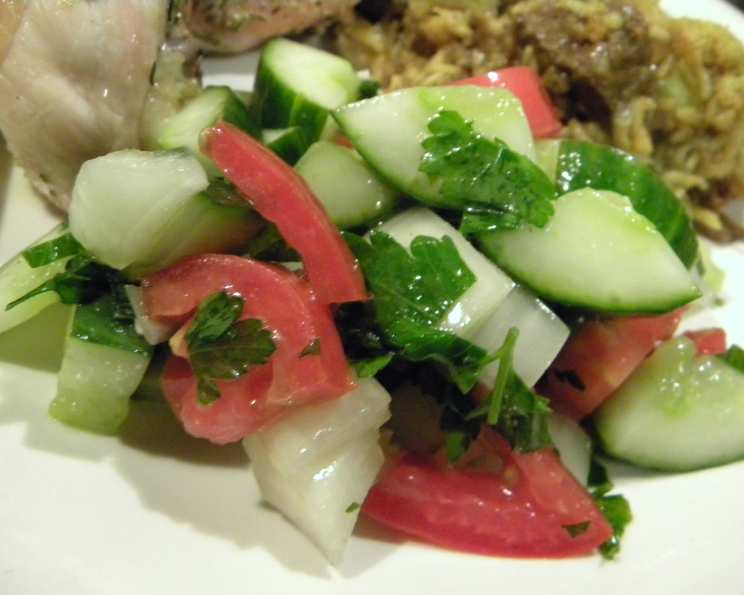
Arabic Salad: A Taste of the Levant in Every Bite
My earliest memories of Arabic salad are painted with vibrant colors and the boisterous laughter of family gatherings. As a child, I’d perch myself on a stool in my grandmother’s kitchen, mesmerized as she meticulously diced each vegetable with practiced ease. The rhythmic thwack, thwack, thwack of her knife against the wooden board was a comforting symphony, culminating in a salad that was more than just a side dish; it was a celebration of freshness and a testament to the simple joys of shared meals. The bright, tangy flavor always cut through the richness of the main course, leaving my palate refreshed and ready for more.
Recipe Overview
- Prep Time: 10 minutes
- Cook Time: 0 minutes
- Total Time: 10 minutes
- Servings: 4
- Yield: About 4 cups
- Dietary Type: Vegan, Gluten-Free
Ingredients
- 4 small English seedless cucumbers
- 4 medium tomatoes
- ½ cup finely chopped parsley
- 1 small finely diced onion (optional)
- 1 teaspoon salt
- 1 medium lemon, juice of
- 1 tablespoon olive oil (optional)
Equipment Needed
- Cutting board
- Sharp knife
- Mixing bowl
- Juicer (for the lemon)
Instructions
-
Begin by preparing your vegetables. Thoroughly wash the cucumbers and tomatoes.
-
Dice the cucumbers and tomatoes into small, even pieces. The size is important; aim for roughly ¼-inch dice. This ensures a consistent texture and allows the flavors to meld beautifully.
-
Place the diced cucumbers and tomatoes into a mixing bowl.
-
Next, prepare the aromatics. Finely chop the parsley. If you choose to include onion, dice it very finely to avoid overpowering the other flavors. The finer the dice, the less assertive the onion will be.
-
Add the chopped parsley and diced onion (if using) to the bowl with the cucumbers and tomatoes.
-
Just before serving, it’s time to dress the salad. This is crucial, as adding the dressing too early will cause the vegetables to become soggy.
-
Add the salt to the bowl. The salt will help draw out the natural juices of the vegetables, enhancing the flavor.
-
Squeeze the juice of one medium lemon over the salad. Ensure you remove any seeds. The lemon juice provides the essential acidity that balances the flavors.
-
If desired, drizzle one tablespoon of olive oil over the salad. The olive oil adds richness and a subtle fruity note. While optional, it’s highly recommended.
-
Gently combine all the ingredients, ensuring the dressing is evenly distributed. Avoid over-mixing, which can crush the vegetables.
-
Serve immediately in small bowls to accompany rice dishes or as part of a mezze spread.
Expert Tips & Tricks
- Perfect Dice: Consistency is key! Aim for uniformly sized pieces for the cucumbers and tomatoes. This not only looks better but ensures even flavor distribution.
- De-Seed Tomatoes: If you prefer a less watery salad, you can remove the seeds from the tomatoes before dicing them.
- Onion Taming: If raw onion is too strong for your taste, soak the diced onion in cold water for 10 minutes before adding it to the salad. This will mellow its flavor.
- Lemon Zest Boost: For an extra burst of citrus, add a pinch of lemon zest along with the juice.
- Herb Variations: Experiment with other fresh herbs like mint or cilantro for a slightly different flavor profile.
- Make-Ahead Prep: You can dice the vegetables and store them separately in the refrigerator. However, only dress the salad right before serving to prevent it from becoming soggy.
Serving & Storage Suggestions
Arabic salad is best served immediately after dressing to ensure the vegetables remain crisp and the flavors are vibrant. It’s traditionally served in small bowls as a refreshing accompaniment to rice dishes, grilled meats, or as part of a larger mezze platter.
If you have leftovers, store them in an airtight container in the refrigerator. The salad will be at its best for up to 24 hours, but it will become softer over time. It’s not recommended to freeze this salad, as the vegetables will lose their texture upon thawing. The excess liquids from the salad may pool at the bottom of the container; you can drain these before serving the leftovers.
Nutritional Information
| Nutrient | Amount per Serving | % Daily Value |
|---|---|---|
| Calories | 72.6 kcal | N/A |
| Calories from Fat | 6 g | N/A |
| Total Fat | 0.7 g | 1% |
| Saturated Fat | 0.2 g | 0% |
| Cholesterol | 0 mg | 0% |
| Sodium | 597.9 mg | 24% |
| Total Carbohydrate | 17 g | 5% |
| Dietary Fiber | 3.3 g | 13% |
| Sugars | 8.6 g | N/A |
| Protein | 3.3 g | 6% |
Note: Daily values are based on a 2,000 calorie diet. Nutritional information is an estimate and may vary based on specific ingredients and preparation methods.
Variations & Substitutions
- Spicy Kick: Add a pinch of red pepper flakes or a finely diced jalapeño for a touch of heat.
- Bell Pepper Boost: Incorporate diced bell peppers (green, red, or yellow) for added color and sweetness.
- Feta Cheese (Non-Vegan): For a non-vegan variation, crumble some feta cheese over the salad.
- Cucumber Variety: While English cucumbers are preferred for their thin skin and lack of seeds, you can use other types of cucumbers. Just be sure to peel them and remove the seeds if necessary.
- Herb Infusion: Experiment with different combinations of herbs. Mint, dill, or even a touch of oregano can add unique flavor dimensions.
- Sumac: A pinch of sumac adds a tangy, lemony flavor.
FAQs (Frequently Asked Questions)
Q: Can I make this salad ahead of time?
A: It’s best to dress the salad just before serving to prevent the vegetables from becoming soggy. You can, however, prep the vegetables ahead of time and store them separately in the refrigerator.
Q: What is the best way to dice the vegetables?
A: Aim for a small, uniform dice (about ¼-inch). This ensures a consistent texture and allows the flavors to meld together nicely.
Q: Can I use different types of tomatoes?
A: Yes, you can use any type of tomato you prefer, such as Roma, cherry, or grape tomatoes. Just adjust the quantity accordingly.
Q: Is olive oil necessary?
A: While optional, olive oil adds richness and a subtle fruity note to the salad. It is highly recommended for the best flavor.
Q: How long will this salad last in the refrigerator?
A: The salad will be at its best for up to 24 hours. After that, the vegetables may become softer and the dressing may become watery.
Final Thoughts
Arabic salad is more than just a recipe; it’s an invitation to experience the vibrant flavors of the Levant. It’s a dish that celebrates freshness, simplicity, and the joy of sharing a meal with loved ones. I encourage you to try this recipe, experiment with the variations, and make it your own. Pair it with grilled chicken or lamb, alongside a hearty rice pilaf, or as part of a colorful mezze spread. I hope this salad brings as much joy to your table as it has to mine for all these years.