
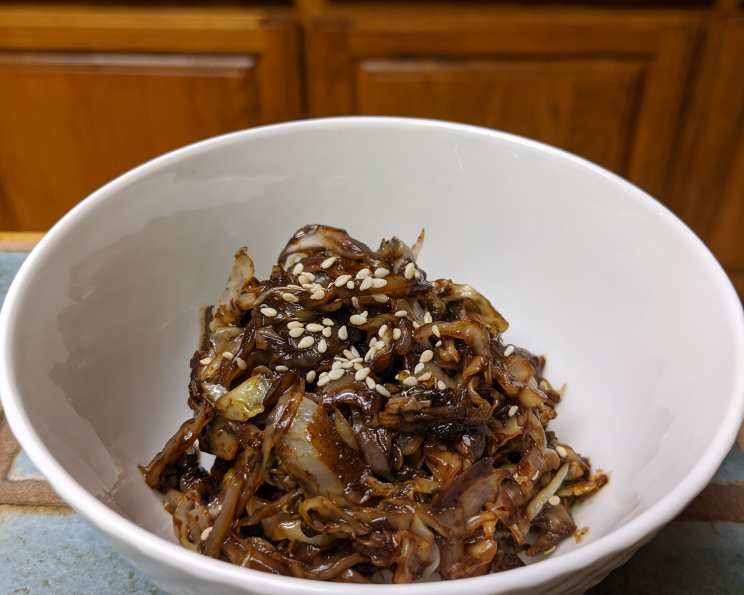
Asian Pork and Cabbage: A Quick & Delicious Low-Carb Delight
The scent of sizzling ginger and garlic always transports me back to my grandmother’s bustling kitchen. She was a master of simple, yet profoundly flavorful dishes, and her stir-fries were legendary. While this recipe for Asian Pork and Cabbage isn’t exactly one of her creations, it captures the same spirit of quick weeknight meals packed with vibrant Asian flavors. The tender pork, crisp cabbage, and savory sauce create a harmonious symphony of textures and tastes that I know you’ll love.
Recipe Overview
- Prep Time: 15 minutes
- Cook Time: 5 minutes
- Total Time: 20 minutes
- Servings: 3
- Dietary Type: Low Carb
Ingredients
- 1 lb boneless pork loin
- ½ head cabbage
- 1 small onion
- 3-4 tablespoons peanut oil
- 1 tablespoon black bean sauce
- 1-2 tablespoons garlic and red chile paste (Vietnamese chili garlic sauce can be substituted)
Equipment Needed
- Large skillet or wok
- Cutting board
- Sharp knife
Instructions
- Begin by preparing your ingredients. Slice the pork loin into very thin strips. The thinner you can get them, the better, as they will cook quickly and become more tender.
- Next, slice the cabbage about ½ inch thick, then cut crosswise a couple of times. This will create bite-sized pieces that are easy to eat.
- Thinly slice the onion. If you prefer a milder flavor, you can soak the sliced onion in cold water for a few minutes before cooking. However, if you’re watching carbs or just don’t have an onion on hand, it can be omitted.
- Heat the peanut oil in a large skillet or wok over medium-high heat. Make sure the oil is hot before adding the pork to ensure proper searing.
- Add the sliced pork to the hot skillet and stir-fry for 3 to 5 minutes, or until the pork is cooked through and lightly browned. Stir-frying involves constant movement of the ingredients, preventing them from sticking and ensuring even cooking.
- Add the sliced cabbage and onion to the skillet. Continue to stir-fry until the cabbage is tender-crisp, about 3 to 5 minutes. You want the cabbage to retain some of its crunch.
- Stir in the black bean sauce and garlic and red chile paste. Ensure that these are thoroughly mixed in. Cook for about a minute more, allowing the flavors to meld together. Adjust the amount of chili paste to your preference of spiciness.
- Serve hot and enjoy!
Expert Tips & Tricks
- Thinly Sliced Pork is Key: Freezing the pork loin for about 30 minutes before slicing makes it much easier to cut into thin strips. This prevents the pork from sliding around on the cutting board.
- Don’t Overcrowd the Pan: If you’re cooking for a larger group, work in batches to avoid overcrowding the skillet. Overcrowding lowers the temperature and causes the pork to steam instead of sear, resulting in a less flavorful dish.
- Spice it Up (or Down): The amount of garlic and red chili paste can be adjusted to suit your spice tolerance. Start with a smaller amount and add more to taste. A dash of red pepper flakes can also be added for extra heat.
- Marinate for Extra Flavor: For even more intense flavor, marinate the pork in a mixture of soy sauce, ginger, and garlic for at least 30 minutes before cooking.
- Deglaze the Pan: After cooking the pork, deglaze the pan with a splash of chicken broth or rice wine vinegar. This will loosen any browned bits from the bottom of the pan, adding depth of flavor to the sauce.
Serving & Storage Suggestions
Serve the Asian Pork and Cabbage hot, garnished with a sprinkle of sesame seeds and chopped green onions, if desired. This dish pairs well with a side of cauliflower rice for a complete low-carb meal.
Leftovers can be stored in an airtight container in the refrigerator for up to 3 days. To reheat, simply stir-fry in a skillet over medium heat until heated through. You can also reheat in the microwave, but be careful not to overcook the cabbage.
This dish is not suitable for freezing, as the cabbage will become mushy upon thawing.
Nutritional Information
| Nutrient | Amount per Serving |
|---|---|
| Calories | 464.8 kcal |
| Calories from Fat | 294 kcal |
| Total Fat | 32.7 g |
| Saturated Fat | 8.9 g |
| Cholesterol | 95.2 mg |
| Sodium | 103.5 mg |
| Total Carbohydrate | 10.8 g |
| Dietary Fiber | 3.8 g |
| Sugars | 6.4 g |
| Protein | 32.2 g |
Variations & Substitutions
- Vegetarian Option: Substitute the pork with firm tofu or tempeh for a vegetarian-friendly version. Be sure to press the tofu to remove excess water before cooking.
- Different Vegetables: Feel free to experiment with other vegetables, such as bell peppers, broccoli, snow peas, or mushrooms.
- Soy-Free Version: Replace the black bean sauce with coconut aminos for a soy-free alternative.
- Nut-Free Version: Use sunflower oil or avocado oil instead of peanut oil.
- Spicy Peanut Sauce: Mix peanut butter, chili garlic sauce, soy sauce, rice vinegar, and a little water for a delicious and spicy peanut sauce to toss with the pork and cabbage.
FAQs (Frequently Asked Questions)
Q: Can I use ground pork instead of pork loin?
A: Yes, you can use ground pork. Brown it in the skillet before adding the cabbage and other ingredients. Adjust cooking time accordingly.
Q: How can I make this dish spicier?
A: Increase the amount of garlic and red chili paste, add a pinch of red pepper flakes, or drizzle with sriracha sauce.
Q: Is peanut oil necessary, or can I use another oil?
A: While peanut oil adds a nice flavor, you can substitute it with other high-heat oils such as canola oil, vegetable oil, or avocado oil.
Q: How do I prevent the cabbage from becoming too soggy?
A: Cook the cabbage over high heat and stir-fry it quickly until it’s tender-crisp. Avoid overcooking it.
Q: Can I add other sauces besides black bean sauce?
A: Yes, you can experiment with other sauces like hoisin sauce, oyster sauce (if not on a strict low-carb diet), or even a touch of soy sauce (in moderation for low carb).
Final Thoughts
I truly believe that great food doesn’t have to be complicated, and this Asian Pork and Cabbage is a perfect example. It’s a quick, easy, and delicious meal that’s perfect for busy weeknights. So, gather your ingredients, fire up the skillet, and get ready to experience a burst of Asian-inspired flavor. I’d love to hear what you think – please share your feedback and any variations you try in the comments below! Consider pairing this dish with a crisp, dry white wine for a truly satisfying meal.