
Bavarian Mulled Wine: A Taste of Christmas
The first snowfall of the year always brings back a rush of memories, most vividly, the aroma of mulled wine simmering on the stovetop at my grandmother’s house in Bavaria. The scent of cinnamon, cloves, and citrus mingled with the warm, spiced wine, filling the cozy kitchen. It was the taste of Christmas itself, warming us from the inside out after a day of sledding down snowy hills. That comforting flavor continues to evoke the magic of the holidays, and I’m eager to share this recipe, passed down through generations, with you.
Recipe Overview
- Prep Time: 10 minutes
- Cook Time: 60 minutes
- Total Time: 1 hour 10 minutes
- Servings: 4-6
- Yield: Approximately 6 cups
- Dietary Type: Gluten-Free, Dairy-Free (naturally vegan, though some wines use animal products for fining – check labels!)
Ingredients
- 1 (750 ml) bottle red wine
- ¾ cup water
- ¾ cup brown sugar
- 2 whole cinnamon sticks
- 1 orange, sliced into rounds
- 1 lemon, sliced into rounds
- 1 whole star anise
- 10 whole cloves
- ½ vanilla bean, split in half
- ½ cup brandy
Equipment Needed
- Large Pot
- Wooden Spoon
- Fine-mesh strainer
Instructions
- In a large pot, combine all ingredients: the 750 ml bottle of red wine, ¾ cup of water, ¾ cup of brown sugar, 2 whole cinnamon sticks, 1 orange sliced into rounds, 1 lemon sliced into rounds, 1 whole star anise, 10 whole cloves, and ½ a vanilla bean split in half.
- Place the pot over medium-low heat. It’s crucial to maintain a gentle simmer.
- Heat the mixture for 60 minutes, being extra careful not to bring it to a boil. Boiling can cause the alcohol to evaporate and the flavors to become bitter. The goal is a gentle infusion of spices.
- After 60 minutes of slow simmering, the flavors will have beautifully melded together. Remove the pot from the heat.
- Strain the mulled wine through a fine-mesh strainer to remove the spices. Be sure to press gently on the solids to extract all the delicious liquid. Reserve the citrus rounds; they make a beautiful garnish.
- Stir in ½ cup of brandy for an extra kick of warmth and flavor.
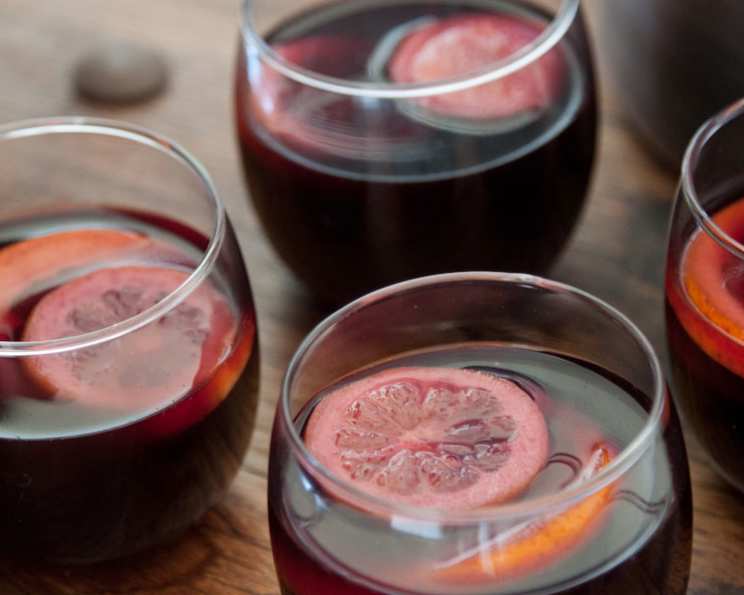
- Serve the warmed wine immediately in mugs or heat-resistant glasses. Garnish each serving with a round of lemon and a round of orange.
Expert Tips & Tricks
- Don’t Boil! I can’t stress this enough. Boiling will ruin the delicate balance of flavors in your mulled wine. Maintain a low simmer throughout the cooking process.
- Wine Selection Matters: Choose a fruity, dry red wine like Merlot, Zinfandel, or Cabernet Sauvignon. Avoid expensive wines, as the spices will mask their subtle nuances.
- Vanilla Bean Power: Splitting the vanilla bean releases its aromatic seeds, infusing the wine with a richer vanilla flavor. If you don’t have a vanilla bean, a teaspoon of pure vanilla extract can be substituted, but add it after straining.
- Spice it Up (or Down): Adjust the spice quantities to your liking. If you prefer a stronger cinnamon flavor, add an extra cinnamon stick. For a more pronounced clove flavor, add a few more cloves.
- Make it Ahead: This mulled wine can be made a day in advance. Simply strain it, let it cool completely, and store it in the refrigerator. Reheat gently on the stovetop before serving, adding the brandy just before serving.
- Citrus Zest Boost: For extra citrus aroma, add a few strips of orange and lemon zest to the pot while simmering. Use a vegetable peeler and avoid the white pith, which can be bitter.
- Sweetness Adjustment: If you prefer a sweeter mulled wine, add more brown sugar to taste. Start with a tablespoon at a time, stirring until dissolved, and taste before adding more.
Serving & Storage Suggestions
Serve Bavarian Mulled Wine warm in mugs or heat-resistant glasses. Garnish each serving with a slice of orange and lemon from the original pot. For an extra touch, you can add a cinnamon stick or a star anise to each mug.
Leftover mulled wine can be stored in an airtight container in the refrigerator for up to 3 days. To reheat, gently warm on the stovetop over low heat. Do not boil. You can also reheat it in the microwave in short bursts, stirring in between, until warmed through. I do not recommend freezing the mulled wine, as it can affect the flavor and texture.
Nutritional Information
Please note that the nutritional information is an estimate and may vary based on specific ingredients used.
| Nutrient | Amount per Serving | % Daily Value |
|---|---|---|
| Calories | 250 kcal | 13% |
| Total Fat | 0g | 0% |
| Saturated Fat | 0g | 0% |
| Cholesterol | 0mg | 0% |
| Sodium | 10mg | 0% |
| Total Carbohydrate | 30g | 11% |
| Dietary Fiber | 1g | 4% |
| Sugars | 25g | N/A |
| Protein | 0g | 0% |
Variations & Substitutions
- Non-Alcoholic Version: Substitute the red wine with grape juice or cranberry juice. You may need to reduce the amount of brown sugar, as these juices are naturally sweeter. Omit the brandy.
- Apple Cider Mulled Wine: Use apple cider instead of red wine for a different flavor profile. Add a splash of apple brandy for an extra apple-y kick.
- Spiced Rum Mulled Wine: Swap out the brandy for spiced rum for a Caribbean-inspired twist.
- Honey Sweetened: Replace the brown sugar with honey for a more natural sweetness. Use a mild honey that won’t overpower the other flavors.
- Gingerbread Mulled Wine: Add a few slices of fresh ginger to the pot while simmering for a warm, spicy gingerbread flavor.
- Citrus Variations: Experiment with different citrus fruits like clementines, blood oranges, or grapefruit.
FAQs (Frequently Asked Questions)
Q: Can I use powdered spices instead of whole spices?
A: While you can, whole spices are highly recommended. They provide a cleaner, more nuanced flavor. If you must use ground spices, use about ½ teaspoon of each spice and add them towards the end of the simmering time to prevent a gritty texture.
Q: How can I prevent the wine from boiling?
A: Use a low heat setting and keep a close eye on the pot. A gentle simmer is ideal. If you see bubbles forming rapidly, immediately reduce the heat.
Q: Can I add other fruits?
A: Absolutely! Apple slices, cranberries, and pears are excellent additions. Add them at the beginning of the simmering process.
Q: What is the best way to reheat mulled wine?
A: The best way is to gently warm it on the stovetop over low heat, stirring occasionally. You can also use the microwave in short bursts, stirring in between, but be careful not to overheat it.
Q: Can I make a large batch for a party?
A: Yes, this recipe can easily be doubled or tripled to serve a larger crowd. Just be sure to use a large enough pot and adjust the cooking time accordingly.
Final Thoughts
Bavarian Mulled Wine is more than just a drink; it’s an experience. It’s the warmth of a crackling fireplace, the joy of gathering with loved ones, and the magic of the holiday season all captured in a single mug. I encourage you to try this recipe and create your own cherished memories. Experiment with different spices and fruits to personalize it to your taste. And please, share your creations and feedback – I’d love to hear about your mulled wine adventures! Perhaps pair this with some Pfeffernusse, or gingerbread cookies, to complete the experience.