
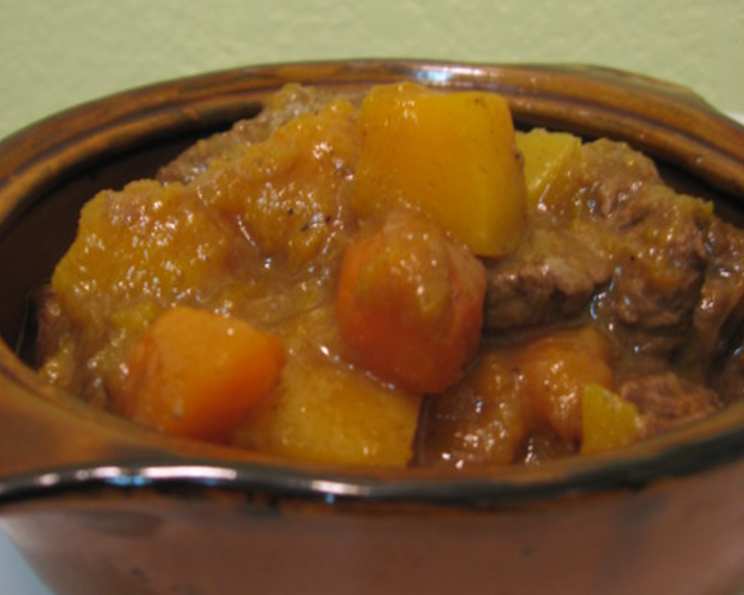
Beef Tzimmes with Butternut Squash: A Taste of Autumn
I can almost smell it now – the sweet, earthy aroma of tzimmes wafting through my grandmother’s kitchen. As a child, the first whiff of cinnamon-spiced squash and tender beef meant that fall was officially here, and that meant family. This dish, a comforting symphony of sweet and savory, was always the centerpiece of our Rosh Hashanah celebrations, a symbol of abundance and togetherness that I now recreate in my own kitchen every year. It’s more than just a recipe; it’s a taste of home, a connection to generations past, and a warm embrace on a cool autumn evening.
Recipe Overview
- Prep Time: 30 minutes
- Cook Time: 2 hours 50 minutes
- Total Time: 3 hours 20 minutes
- Servings: 6
- Yield: 1 large casserole
- Dietary Type: Variable (see variations)
Ingredients
- 2 lbs boneless lean beef chuck, trimmed of fat
- 1-2 tablespoons vegetable oil
- 1 large onion, chopped
- 2 large carrots, peeled and cut in 1-inch chunks
- Salt and freshly ground black pepper
- 2 – 2 ½ cups water
- 2 lbs butternut squash
- 2 tablespoons honey
- ¼ teaspoon ground cinnamon
- 1 ¼ cups prunes, pitted
Equipment Needed
- Heavy stew pan or Dutch oven
- Slotted spoon
- Cutting board
- Sharp knife
- Vegetable peeler
- Measuring cups and spoons
Instructions
- Begin by preparing the beef. Cut the beef chuck into 1 ½ to 2-inch pieces. Thoroughly pat them dry with paper towels. This step is crucial for achieving a good sear.
- Heat 1 tablespoon of vegetable oil in a heavy stew pan or Dutch oven over medium-high heat. Ensure the pan is hot before adding the meat.
- Add the beef cubes in two batches, browning each lightly on all sides. Avoid overcrowding the pan, as this will steam the meat instead of searing it. Use a slotted spoon to remove the browned beef to a plate.
- If the pan appears dry after browning the beef, add the remaining oil and heat it.
- Add the chopped onion to the pan and sauté over medium heat, stirring frequently, until browned and softened, about 10 minutes. If the pan becomes dry, cover it briefly to allow the onion to steam and prevent burning.
- Return the browned beef to the pan along with any accumulated juices on the plate. These juices are packed with flavor and will enhance the richness of the sauce.
- Add the carrot chunks, salt, and pepper to the pan. Season generously, as the long cooking time will mellow the flavors. Pour in enough water to just cover the beef and vegetables. Start with 2 cups and add more if needed.
- Bring the mixture to a boil, skimming off any foam or impurities that rise to the surface. This step ensures a cleaner, clearer sauce.
- Cover the pan tightly and reduce the heat to low. Simmer gently, stirring occasionally, for 2 hours, or until the beef is very tender. Check the liquid level periodically and add more water if necessary to prevent scorching.
- For a lighter sauce (optional): Refrigerate the cooked beef and its sauce separately for several hours, or overnight. This allows the fat to solidify on the surface of the sauce, making it easier to skim off. Return the beef to the sauce and reheat gently before proceeding.
- While the beef is simmering, prepare the butternut squash. Peel the squash and cut it in half lengthwise. Discard the seeds and stringy parts from the cavity.
- Cut the butternut squash into 1-inch cubes.
- Stir the honey and cinnamon into the beef sauce. The honey adds sweetness and depth of flavor, while the cinnamon provides warmth and spice.
- Add the cubed squash to the pan, pushing the pieces into the liquid to ensure they are submerged.
- Cover the pan and simmer for 10 minutes.
- Turn the squash pieces over to ensure even cooking.
- Add the pitted prunes to the pan.
- Cover and simmer for an additional 15 minutes, or until the squash is tender and easily pierced with a fork.
- Taste the tzimmes and adjust the seasoning as needed. Add more salt, pepper, honey, or cinnamon to suit your preferences.
- Serve the tzimmes hot, directly from the stew pan or transferred to a casserole dish.
Expert Tips & Tricks
- Browning the Beef is Key: Don’t rush the browning process. A good sear adds depth of flavor and color to the final dish.
- Don’t Overcrowd the Pan: When browning the beef, work in batches to avoid steaming the meat.
- Adjust Sweetness to Taste: The amount of honey can be adjusted based on the sweetness of your squash and your personal preference.
- Make it Ahead: Tzimmes is a great make-ahead dish. The flavors meld and improve over time. Prepare it a day or two in advance and reheat before serving.
- Use a Heavy-Bottomed Pot: This helps distribute heat evenly and prevents scorching.
Serving & Storage Suggestions
Serve the beef tzimmes with butternut squash hot, as a main course or side dish. It pairs well with mashed potatoes, roasted vegetables, or rice. For a festive presentation, garnish with fresh parsley or thyme.
Leftovers can be stored in an airtight container in the refrigerator for up to 3-4 days. For longer storage, freeze in portion-sized containers for up to 2-3 months. To reheat, thaw overnight in the refrigerator and then gently warm on the stovetop or in the microwave.
Nutritional Information
| Nutrient | Amount per Serving | % Daily Value |
|---|---|---|
| Calories | 555.2 kcal | N/A |
| Calories from Fat | N/A | N/A |
| Total Fat | 16.7 g | 25% |
| Saturated Fat | 5.5 g | 27% |
| Cholesterol | 152.6 mg | 50% |
| Sodium | 125.7 mg | 5% |
| Total Carbohydrate | 51 g | 17% |
| Dietary Fiber | 6.6 g | 26% |
| Sugars | 24.8 g | 99% |
| Protein | 52.7 g | 105% |
Note: Nutritional information is an estimate and may vary based on specific ingredients and portion sizes.
Variations & Substitutions
- Vegetarian Option: Omit the beef and add more root vegetables, such as parsnips or sweet potatoes.
- Vegan Option: Replace the honey with maple syrup or agave nectar. Ensure the beef is omitted.
- Gluten-Free: This recipe is naturally gluten-free.
- Different Squash: Substitute other types of winter squash, such as acorn or kabocha, for the butternut squash.
- Dried Fruit: Experiment with different dried fruits, such as apricots, figs, or cranberries, in place of the prunes.
- Spices: Add a pinch of ground ginger or cloves for a more complex flavor profile.
FAQs (Frequently Asked Questions)
Q: Can I use frozen butternut squash?
A: Yes, you can use frozen butternut squash, but be sure to thaw it completely and drain any excess water before adding it to the dish.
Q: How can I make this dish spicier?
A: Add a pinch of red pepper flakes or a dash of hot sauce to the sauce along with the honey and cinnamon.
Q: Can I use a slow cooker for this recipe?
A: Yes, you can adapt this recipe for a slow cooker. Brown the beef as directed, then transfer all ingredients to the slow cooker. Cook on low for 6-8 hours, or until the beef is very tender.
Q: How do I prevent the squash from becoming too mushy?
A: Be careful not to overcook the squash. It should be tender but still hold its shape. Check it frequently during the last 15 minutes of cooking.
Q: Can I add other vegetables to this dish?
A: Absolutely! Parsnips, sweet potatoes, and celery are all great additions to beef tzimmes. Add them along with the carrots.
Final Thoughts
Beef Tzimmes with Butternut Squash is more than just a meal; it’s an experience, a memory, and a taste of home. Whether you’re looking for a comforting weeknight dinner or a show-stopping dish for a special occasion, this recipe is sure to impress. Don’t be afraid to experiment with different variations and substitutions to create your own unique version. So gather your ingredients, put on some music, and get ready to create a little bit of magic in your kitchen. I can’t wait to hear about your experience and how you make this dish your own. Enjoy!