
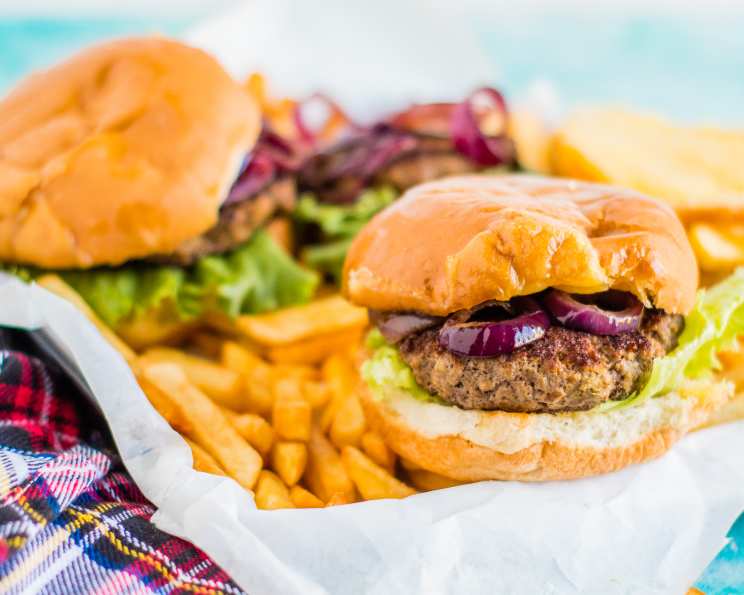
Bison Burgers With Cabernet Onions and Wisconsin Cheddar
I can still picture it: the crackling fire, the crisp autumn air, and the unbelievably rich aroma of caramelized onions mingling with the savory scent of bison sizzling on the grill. It was a family reunion in Montana, years ago, and my uncle, a man as rugged and genuine as the landscape itself, introduced me to the majesty of bison burgers. That first bite – the lean meat, the sweet-tart onions, the sharp cheddar – was an explosion of flavors I’ll never forget. It’s a taste of the West, a taste of family, and a taste I’m thrilled to share with you.
Recipe Overview
- Prep Time: 20 minutes
- Cook Time: 30 minutes
- Total Time: 50 minutes
- Servings: 4
- Dietary Type: Gluten-Free (if served without a bun)
Ingredients
- 2 tablespoons olive oil, divided
- 3 cups sliced onions (about 2)
- ¾ cup dry red wine (such as Cabernet Sauvignon)
- 1 lb ground buffalo meat (bison)
- 2 tablespoons chopped shallots
- ¼ teaspoon coarse kosher salt
- ¼ teaspoon dried thyme
- 4 hamburger buns
- 6 ounces sliced Wisconsin white cheddar cheese
- 2-3 tablespoons Dijon mustard (to taste)
- 1 small head escarole, leaves separated
Equipment Needed
- Heavy medium skillet
- Heavy large skillet
- Large bowl
- Rimmed baking sheet
- Broiler
Instructions
-
Begin by preparing the Cabernet onions. Heat 1 tablespoon of olive oil in a heavy medium skillet over medium-high heat. Add the sliced onions, sprinkle with a pinch of salt, and sauté, stirring frequently, until they become tender and golden brown – this usually takes around 10 minutes. The key here is consistent stirring to prevent burning and ensure even caramelization.
-
Reduce the heat to medium and continue to sauté the onions until they are very tender and well-browned, approximately 15 minutes longer. Patience is key; this slow caramelization process develops the deep, complex flavors we’re after.
-
Pour in the ¾ cup of dry red wine (Cabernet Sauvignon works beautifully) and cook, stirring occasionally, until the liquid is almost entirely absorbed. This will take about 5 minutes. The wine adds a wonderful depth and acidity that balances the sweetness of the onions. At this stage, the Cabernet onions can be made up to 3 days in advance. Simply cool completely, cover, and chill.
-
Preheat your broiler.
-
In a large bowl, gently mix together the ground buffalo meat, chopped shallots, ¼ teaspoon of coarse kosher salt, and ¼ teaspoon of dried thyme. Be careful not to overmix, as this can result in tough burgers.
-
Shape the mixture into four ½-inch-thick patties. Aim for uniform thickness to ensure even cooking.
-
Heat the remaining 1 tablespoon of olive oil in a heavy large skillet over high heat. Ensure the skillet is hot before adding the burgers for a good sear.
-
Sprinkle the bison burgers with salt and pepper to taste, then carefully add them to the hot skillet.
-
Cook the burgers until well-browned, about 2 minutes per side for medium-rare. Remember that bison is leaner than beef, so it cooks more quickly. Avoid overcooking to keep them juicy and tender. Adjust cooking time according to your desired level of doneness.
-
Open the hamburger buns and arrange them, cut side up, on a rimmed baking sheet.
-
Place slices of Wisconsin white cheddar cheese on the bun tops.
-
Broil the buns until the cheese melts and the bottom halves are lightly toasted, about 1 minute. Watch closely to prevent burning!
-
Spread the bottom halves of the toasted buns with Dijon mustard. The amount is up to your personal preference, but a generous layer adds a nice tang.
-
Top each mustard-covered bun bottom with a few leaves of fresh escarole. The slight bitterness of the escarole provides a nice contrast to the richness of the other ingredients.
-
Place a bison burger on top of the escarole.
-
Spoon the Cabernet onions generously on top of the burgers, dividing them equally among the four.
-
Cover with the cheesy bun tops and press lightly. Serve immediately and enjoy!
Expert Tips & Tricks
- For extra flavorful onions, try adding a splash of balsamic vinegar during the last minute of cooking.
- If you don’t have escarole, arugula or spinach are suitable substitutes.
- Don’t overcrowd the skillet when cooking the burgers; this will lower the temperature of the pan and prevent proper browning. Cook in batches if necessary.
- To prevent the burgers from sticking, make sure your skillet is well-seasoned or use a non-stick pan.
- If you prefer a medium-well burger, cook for an additional minute or two per side, but be careful not to dry them out. A meat thermometer inserted into the center should read 145°F (63°C) for medium.
Serving & Storage Suggestions
Serve these decadent bison burgers immediately while they are hot and juicy. They pair perfectly with a side of crispy sweet potato fries or a simple green salad. Leftover burgers can be stored in an airtight container in the refrigerator for up to 3 days. Reheat gently in a skillet or microwave until warmed through. The Cabernet onions can be stored separately in the refrigerator for up to 5 days and reheated in a skillet or microwave. Freezing is not recommended as it will affect the texture of both the burger and the onions.
Nutritional Information
| Nutrient | Amount per Serving | % Daily Value |
|---|---|---|
| Calories | 620 kcal | 31% |
| Total Fat | 35g | 45% |
| Saturated Fat | 15g | 75% |
| Cholesterol | 110mg | 37% |
| Sodium | 850mg | 35% |
| Total Carbohydrate | 45g | 15% |
| Dietary Fiber | 8g | 32% |
| Sugars | 10g | – |
| Protein | 45g | 90% |
Note: Nutritional information is an estimate and may vary based on specific ingredients and portion sizes.
Variations & Substitutions
- For a gluten-free option, serve the bison burgers on lettuce wraps instead of buns.
- Experiment with different types of cheese! Gruyere, provolone, or pepper jack would all be delicious alternatives to Wisconsin cheddar.
- Spice things up by adding a pinch of red pepper flakes to the onion mixture.
- Use ground turkey or chicken instead of bison for a lighter option.
- Add a fried egg on top for an extra layer of richness.
FAQs (Frequently Asked Questions)
Q: Can I use regular beef instead of bison?
A: Absolutely! While bison is leaner and has a slightly different flavor profile, beef works well as a substitute. Choose a ground beef with at least 80% lean to prevent excessive greasiness.
Q: Can I make the burgers ahead of time?
A: You can prepare the patties ahead of time and store them in the refrigerator for up to 24 hours. Cook them just before serving to ensure they are juicy and flavorful. The Cabernet onions can also be made 3 days in advance, cooled, covered and chilled.
Q: What’s the best way to cook bison burgers?
A: Cooking bison burgers in a skillet or on a grill are both great options. The key is to avoid overcooking them, as bison is very lean and can dry out easily. Aim for medium-rare to medium for the best results.
Q: Can I freeze the cooked burgers?
A: While you can freeze cooked burgers, the texture may change slightly upon thawing. To freeze, wrap the burgers individually in plastic wrap and then place them in a freezer-safe bag.
Q: What wine pairs well with these burgers?
A: A Cabernet Sauvignon, Merlot, or Zinfandel would complement the flavors of the bison and Cabernet onions beautifully. Alternatively, a robust craft beer like a porter or stout would also be a great choice.
Final Thoughts
These Bison Burgers with Cabernet Onions and Wisconsin Cheddar are more than just a meal; they’re an experience. The combination of flavors and textures is truly unforgettable, and the recipe is surprisingly easy to make at home. So, fire up your skillet or grill, gather your ingredients, and get ready to create a burger that will impress your family and friends. I encourage you to experiment with different variations and substitutions to make it your own. And, most importantly, don’t forget to savor every delicious bite! Let me know in the comments what you think!