
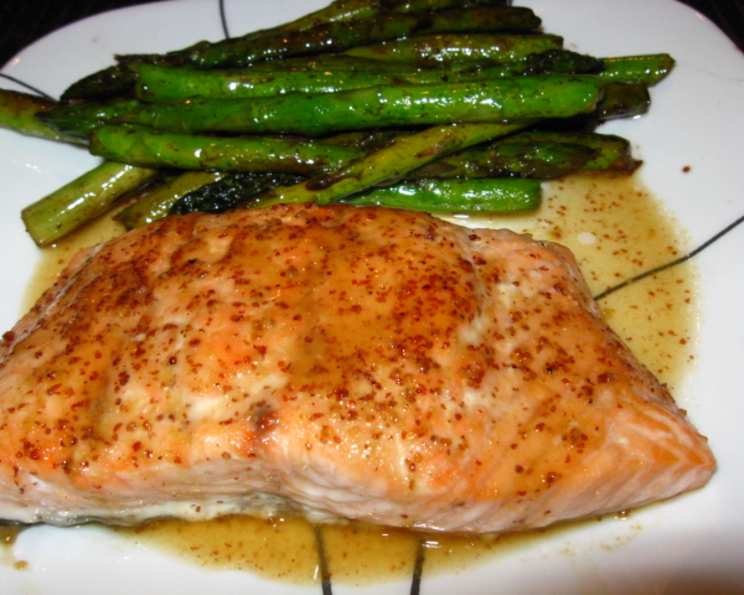
Broiled Salmon With Honey & Vermouth: A Weeknight Delight
The first time I made this dish, I was a newlywed terrified of cooking fish. My husband, a devoted meat-and-potatoes man, declared salmon “fishy” and generally unpalatable. Armed with this recipe – a slightly dog-eared page torn from a well-loved Weight Watchers cookbook – I nervously brushed the honey-vermouth glaze onto the pink fillets, the sweet, floral aroma filling our tiny apartment. The moment he took his first bite, his eyes widened, and all previous salmon prejudices vanished. This recipe has been a staple ever since, a testament to the transformative power of a simple, well-executed dish.
Recipe Overview
- Prep Time: 5 minutes
- Cook Time: 8 minutes
- Total Time: 13 minutes
- Servings: 2
- Dietary Type: Gluten-Free, Dairy-Free
Ingredients
- 2 tablespoons honey
- 2 tablespoons dry vermouth (or 2 tablespoons dry white wine)
- 1 1⁄2 teaspoons peeled grated fresh ginger
- 1 1⁄2 teaspoons country-style Dijon mustard (regular Dijon can be substituted)
- Salt & fresh ground pepper (to taste, approximately 1/8 teaspoon each)
- 2 (6 ounce) salmon fillets, about 1 inch thick
- Cooking spray
Equipment Needed
- Small bowl
- Whisk or fork
- Broiler pan
Instructions
-
Preheat your broiler. Position the rack so the salmon will be about 4-6 inches from the broiler element. This distance is crucial for even cooking and preventing burning.
-
In a small bowl, combine the honey, dry vermouth (or dry white wine), grated fresh ginger, country-style Dijon mustard, salt, and fresh ground pepper. Stir with a whisk or fork until well combined. The goal is to create a smooth, emulsified sauce where the honey is fully incorporated with the other ingredients.
-
Spoon a couple of teaspoons of the honey-vermouth sauce over each of the salmon fillets. Let them sit for 10-15 minutes to marinate. This allows the flavors to penetrate the fish and adds depth to the final dish. While a longer marinade can be used, reserve most of the sauce for basting during the broiling process to prevent excessive sweetness and burning.
-
Coat a broiler pan with cooking spray. This prevents the salmon fillets from sticking to the pan and ensures easy removal after cooking.
-
Place the salmon fillets on the prepared broiler pan. Ensure there’s some space between the fillets to allow for even heat distribution.
-
Brush the salmon fillets with about half of the remaining honey mixture. This creates a beautiful glaze and enhances the flavor of the fish.
-
Broil for 8 minutes, or until the fish flakes easily when tested with a fork. Baste the salmon fillets frequently with the remaining honey mixture during the broiling process. This basting is key to keeping the salmon moist and adding layers of flavor. The internal temperature of the salmon should reach 145°F (63°C) for optimal doneness. Be mindful of your broiler’s strength, as cooking times may vary slightly. Start checking for flakiness at the 6-minute mark to avoid overcooking.
Expert Tips & Tricks
- Ginger Power: Freshly grated ginger is essential for the best flavor. Pre-ground ginger simply doesn’t offer the same vibrant kick.
- Broiler Beware: Keep a close eye on the salmon while broiling. Broilers can be unpredictable, and the honey in the glaze can burn quickly. Adjust the rack position if needed to prevent burning.
- Skin On or Off? This recipe works well with both skin-on and skinless salmon fillets. If using skin-on, consider scoring the skin lightly before marinating to prevent curling during cooking.
- Mustard Matters: Country-style Dijon mustard adds a lovely texture and tang to the sauce. If you only have regular Dijon on hand, that will work perfectly fine.
- Dry Vermouth Substitute: If you don’t have dry vermouth, a crisp dry white wine like Sauvignon Blanc or Pinot Grigio works as a perfect substitute.
- Don’t Overcook: Salmon is best enjoyed when it’s slightly undercooked rather than overcooked. Overcooked salmon becomes dry and loses its delicate flavor. Aim for the point where the fish flakes easily but is still slightly moist in the center.
Serving & Storage Suggestions
Serve the broiled salmon immediately for the best flavor and texture. It pairs beautifully with a side of roasted asparagus, steamed green beans, or a simple quinoa salad. A squeeze of fresh lemon juice can brighten the flavors even further.
To store leftovers, allow the salmon to cool completely before transferring it to an airtight container. Refrigerate for up to 2 days. Reheat gently in a skillet over low heat or in the microwave, being careful not to overcook it. Salmon is best reheated gently to avoid drying it out. Freezing is not recommended as it can change the texture of the salmon.
Nutritional Information
| Nutrient | Amount per Serving | % Daily Value |
|---|---|---|
| Calories | 416 kcal | N/A |
| Total Fat | 14.9 g | 22% |
| Saturated Fat | 1.8 g | 9% |
| Cholesterol | 77.4 mg | 25% |
| Sodium | 2247.6 mg | 93% |
| Total Carbohydrate | 27.9 g | 9% |
| Dietary Fiber | 6.2 g | 24% |
| Sugars | 19 g | 75% |
| Protein | 42.8 g | 85% |
Note: Nutritional information is an estimate and may vary based on specific ingredients and portion sizes.
Variations & Substitutions
- Spice It Up: Add a pinch of red pepper flakes to the honey-vermouth mixture for a touch of heat.
- Citrus Boost: Incorporate a teaspoon of lemon or orange zest into the marinade for a brighter, more vibrant flavor.
- Maple Magic: Substitute maple syrup for honey for a different depth of sweetness.
- Herb Infusion: Add fresh herbs like dill, thyme, or rosemary to the marinade for an herbaceous twist.
- Soy Sauce Variation: Substitute the salt with a teaspoon of low-sodium soy sauce for an umami-rich flavor.
FAQs (Frequently Asked Questions)
Q: Can I use frozen salmon for this recipe?
A: Yes, but be sure to thaw the salmon completely before marinating. Pat it dry with paper towels to remove excess moisture.
Q: How do I know when the salmon is cooked through?
A: The salmon is cooked when it flakes easily with a fork and the internal temperature reaches 145°F (63°C).
Q: Can I grill the salmon instead of broiling it?
A: Absolutely! Preheat your grill to medium-high heat and grill the salmon for about 4-5 minutes per side, or until cooked through.
Q: Can I make the honey-vermouth sauce ahead of time?
A: Yes, you can prepare the sauce up to 24 hours in advance. Store it in an airtight container in the refrigerator.
Q: My salmon is burning under the broiler. What should I do?
A: Lower the oven rack, reduce the broiling time, or tent the salmon loosely with foil.
Final Thoughts
This Broiled Salmon with Honey & Vermouth is more than just a recipe; it’s a gateway to a world of flavorful, healthy eating. It’s quick enough for a weeknight meal, elegant enough for a dinner party, and consistently delicious. Don’t be afraid to experiment with the variations and substitutions to create your own signature version. I encourage you to try this recipe and share your feedback. Pair it with a crisp glass of white wine for a truly memorable meal. Happy cooking!