
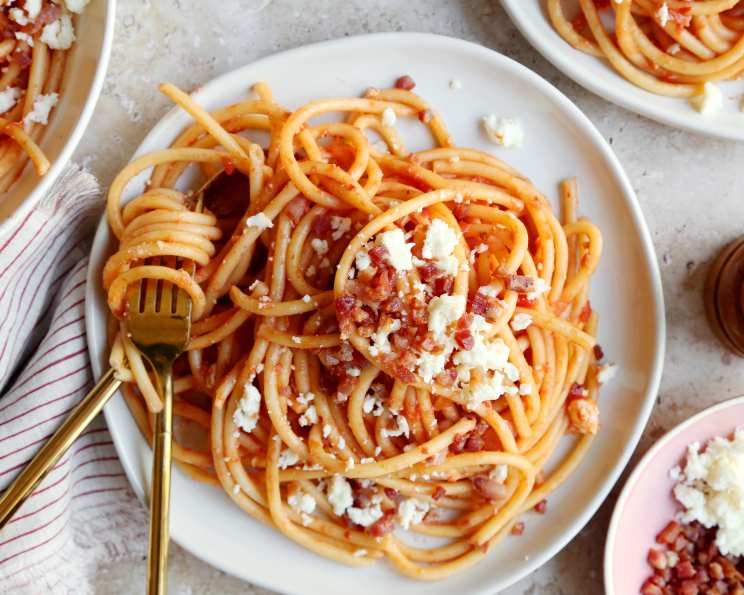
Bucatini Amatriciana With Ricotta Salata: A Culinary Symphony
The first time I tasted Amatriciana, I was in a small trattoria nestled in the hills outside Rome. The simple, rustic flavors of the dish transported me. The sharp tang of Pecorino Romano, the smoky depth of guanciale, and the sweetness of San Marzano tomatoes mingled perfectly with the al dente pasta. Every bite was a celebration of Italian culinary heritage, a reminder that the most profound flavors often arise from the simplest ingredients. It was a dish that stayed with me long after I left Italy, a dish I knew I had to learn to recreate.
Recipe Overview
- Prep Time: 15 minutes
- Cook Time: 50 minutes
- Total Time: 65 minutes
- Servings: 4
- Dietary Type: Can be vegetarian
Ingredients
- 2 ounces pancetta (optional, or bacon or veggie bacon)
- 1 tablespoon olive oil, best quality
- 1 small red onion, peeled, quartered and thinly sliced
- ½ teaspoon hot red pepper flakes (to taste)
- 1 (14 ounce) can Italian tomatoes (whole in puree) or 1 (14 ounce) can Italian tomatoes (crushed in puree)
- Kosher salt or sea salt
- ½ lb pasta (bucatini or perciatelli)
- 2 teaspoons unsalted butter
- ½ cup ricotta salata, finely crumbled
Equipment Needed
- Deep skillet
- Large pot
- Colander
Instructions
-
If using pancetta, cut it into ¼ inch dice.
-
Heat the olive oil in a deep skillet over medium-low heat.
-
Add the diced pancetta (or bacon/veggie bacon) to the skillet and cook, stirring occasionally, until it crisps and renders its fat, about 10 minutes.
-
Remove the pancetta from the skillet and set aside. Let it cool slightly and then break it into small pieces.
-
Remove all but about 1 tablespoon of fat from the pan and discard the rest. If not using pancetta, simply heat the olive oil in the pan.
-
Add the red onion to the skillet and cook, stirring often, until tender and translucent, about 10 minutes. Be patient and allow the onions to soften without browning excessively. This will build a sweeter base for the sauce.
-
Add the hot red pepper flakes to the onion mixture. The amount can be adjusted to your preference. For a milder dish, use a pinch; for a fiery kick, use a full teaspoon.
-
Add the Italian tomatoes to the skillet. If using whole tomatoes, crush them against the pan with a spoon or spatula.
-
Cook, stirring and crushing the tomatoes into small bits, for 5 minutes. This helps the tomatoes break down and release their sweetness.
-
Simmer the sauce for 40 minutes, stirring occasionally. This slow simmering process allows the flavors to meld and deepen, creating a richer, more complex sauce. Taste and adjust the seasoning with salt as needed.
-
While the sauce simmers, bring a large pot of water to a rolling boil. Add salt to the water—about 1 tablespoon for every 2 quarts. The water should be salty, almost like the sea. This seasons the pasta from the inside out.
-
Fifteen minutes before the sauce is done, add the bucatini or perciatelli to the boiling water. Stir the pasta immediately to prevent it from sticking together.
-
Cook the pasta until al dente, 11-12 minutes or according to package directions. “Al dente” means “to the tooth” in Italian—the pasta should be firm to the bite, not mushy.
-
Reserve ½ cup of the pasta cooking water. This starchy water is liquid gold; it will help emulsify the sauce and create a silky, luscious texture.
-
Drain the pasta in a colander.
-
Add the butter to the drained pasta and toss quickly. The butter adds richness and helps to coat the pasta evenly.
-
Transfer the pasta to the pan with the sauce. Stir until the strands are thinly but evenly coated.
-
If the pasta seems dry, add a little of the reserved cooking liquid. The goal is to create a sauce that clings to the pasta, not one that pools at the bottom of the bowl.
-
Add half of the ricotta salata to the pasta and stir to combine well. The ricotta salata will melt slightly into the sauce, adding a salty, cheesy depth.
-
Transfer the pasta to a large bowl or platter and sprinkle with the reserved pancetta (if using) and the remaining ricotta salata.
-
Serve hot immediately. The dish is best enjoyed while the pasta is still warm and the cheese is freshly grated.
-
For a vegetarian version, omit the pancetta or use vegetarian bacon.
Expert Tips & Tricks
- Bloom the Red Pepper Flakes: Toasting the red pepper flakes in the olive oil for a minute or two before adding the onions releases their flavor and adds a subtle warmth to the dish.
- Don’t Overcrowd the Pan: If you’re using pancetta, cook it in batches if necessary to avoid overcrowding the pan. Overcrowding can lower the temperature of the oil and prevent the pancetta from crisping properly.
- Emulsify the Sauce: The key to a great Amatriciana is a well-emulsified sauce. This means that the oil and tomato liquid are properly combined, creating a smooth, creamy texture. The reserved pasta water is crucial for achieving this.
- Use High-Quality Tomatoes: The quality of the tomatoes will significantly impact the flavor of the sauce. Look for San Marzano tomatoes, which are known for their sweetness and low acidity.
- Adjust the Sauce Consistency: If the sauce is too thick, add more pasta water. If it’s too thin, simmer it for a few more minutes to allow it to reduce.
Serving & Storage Suggestions
Serve the Bucatini Amatriciana immediately after preparation for the best flavor and texture. Garnish with a sprinkle of fresh parsley for a pop of color. Pair it with a crisp Italian white wine, such as Vermentino or Pinot Grigio, or a light-bodied red like Chianti.
Leftovers can be stored in an airtight container in the refrigerator for up to 3 days. Reheat gently in a saucepan over low heat, adding a splash of water or broth if needed to prevent the pasta from drying out. While freezing is possible, the pasta may become slightly softer upon thawing.
Nutritional Information
| Nutrient | Amount per Serving | % Daily Value |
|---|---|---|
| Calories | 450 kcal | 23% |
| Total Fat | 18g | 28% |
| Saturated Fat | 7g | 35% |
| Cholesterol | 30mg | 10% |
| Sodium | 700mg | 30% |
| Total Carbohydrate | 60g | 20% |
| Dietary Fiber | 5g | 20% |
| Sugars | 8g | |
| Protein | 15g | 30% |
Variations & Substitutions
- Spicy Amatriciana: Increase the amount of red pepper flakes for a spicier dish. You can also add a pinch of cayenne pepper for extra heat.
- Smoked Paprika: For a smoky twist, add ½ teaspoon of smoked paprika to the sauce along with the red pepper flakes.
- Guanciale: For a truly authentic Amatriciana, use guanciale instead of pancetta. Guanciale is cured pork cheek, and it has a richer, more intense flavor.
- Pecorino Romano: While this recipe calls for ricotta salata, Pecorino Romano is the classic cheese pairing. Try substituting it for a stronger, sharper flavor.
- Add Vegetables: Sautéing additional vegetables like zucchini or bell peppers alongside the onions can add more flavor and nutrients to the dish.
FAQs (Frequently Asked Questions)
Q: Can I use canned diced tomatoes instead of whole tomatoes?
A: Yes, you can use canned diced tomatoes. However, whole tomatoes in puree often have a fresher, sweeter flavor, so if you have the option, they are preferable.
Q: How do I prevent the pasta from sticking together while it cooks?
A: Be sure to use a large pot with plenty of water, and stir the pasta immediately after adding it to the boiling water. This will help prevent the strands from sticking together.
Q: Can I make the sauce ahead of time?
A: Yes, the sauce can be made ahead of time and stored in the refrigerator for up to 3 days. This is a great way to save time on busy weeknights.
Q: What is Ricotta Salata and can I substitute it?
A: Ricotta Salata is a salted, aged, and pressed ricotta cheese. If you can’t find it, Pecorino Romano is a great substitute, offering a similar salty and sharp flavor.
Q: Is this recipe gluten-free friendly?
A: To make this recipe gluten-free, simply substitute the bucatini or perciatelli pasta with a gluten-free pasta alternative.
Final Thoughts
Bucatini Amatriciana with Ricotta Salata is a dish that speaks to the heart. It’s a celebration of simple, honest ingredients, transformed into something truly special. Don’t be intimidated by the somewhat long simmering time for the sauce – it’s what allows the flavors to deepen and meld together beautifully. I encourage you to try this recipe, experiment with the variations, and make it your own. And if you do, please share your feedback – I’d love to hear how it turned out! Enjoy this taste of Italy, and buon appetito!