
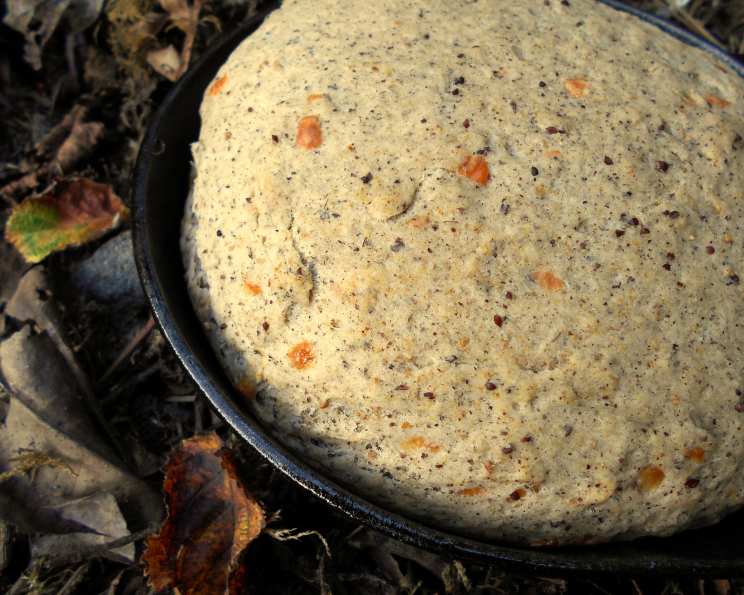
Cheese-Onion Bannocks: A Taste of Scottish Comfort
The scent of oats toasting, mingling with the sharp tang of onion and cheese, always transports me back to a tiny, windswept cottage on the Isle of Skye. My grandmother, a sturdy woman with hands that knew the land, would bake these bannocks on a well-worn cast iron griddle. We’d eat them warm, slathered with butter and a dollop of her homemade heather honey, the salty sea air whipping at our faces as stories of ancient clans filled the cozy kitchen. Each bite was a taste of history, a simple yet profound connection to my heritage. It’s a flavor and feeling I’ve tried to recreate ever since.
Recipe Overview
- Prep Time: 15 minutes
- Cook Time: 15 minutes
- Total Time: 30 minutes
- Servings: 16 wedges (2 bannocks)
- Yield: 2 small bannocks
- Dietary Type: Vegetarian
Ingredients
- 3/4 cup onion, finely chopped
- 1/3 cup flour
- 2 cups oats
- 1 teaspoon baking powder
- 1/2 teaspoon salt
- 1/8 teaspoon ground red pepper
- 2 tablespoons butter, cold and cut into small pieces
- 1/2 cup fresh parmesan cheese, grated
- 1/4 cup water
- 1/4 cup egg substitute (or 1 egg)
Equipment Needed
- Small skillet
- Cooking spray
- Food processor
- Large bowl
- Lightly floured surface
- Baking sheet
- Parchment paper
Instructions
-
Preheat your oven to 400°F (200°C). Prepare a baking sheet by lining it with parchment paper. This prevents the bannocks from sticking and makes cleanup a breeze.
-
Begin by sautéing the finely chopped onion. Lightly coat a small skillet with cooking spray and place it over medium heat. Add the onion and cook until it becomes tender and translucent, about 5-7 minutes. Stir occasionally to prevent burning. Remove the skillet from the heat and allow the cooked onion to cool completely. This is crucial, as adding hot onions to the other ingredients could affect the texture of the dough.
-
Next, prepare the oat mixture. In a food processor, combine the flour, oats, baking powder, salt, and ground red pepper. Process until the oats are coarsely ground. You’re not aiming for a fine powder; a coarse texture is key to the characteristic rustic bite of the bannocks.
-
Add the cold butter, cut into small pieces, to the food processor. Pulse the mixture 3 times, or until the butter is evenly distributed and the mixture resembles coarse crumbs. The cold butter will create pockets of air during baking, resulting in a slightly flaky texture.
-
Now, incorporate the cooled sautéed onion and the grated Parmesan cheese into the oat mixture. Pulse the food processor 3 times, or until these ingredients are just blended. Avoid over-processing; you want to maintain some texture.
-
Transfer the oat mixture to a large bowl. Add the water and the egg substitute (or 1 egg). Stir until the ingredients are just moist. The dough will appear somewhat crumbly at first, but it will come together as it rests.
-
Allow the mixture to stand for one minute. This allows the oats to absorb the moisture, creating a slightly more cohesive dough.
-
Lightly flour a clean work surface. Place the dough onto the floured surface and gently knead it 3 times. Be careful not to over-knead, as this will result in tough bannocks. The dough will be sticky, but resist the urge to add too much flour.
-
Divide the dough in half. On the floured surface, press each half into a 5-inch circle. You can use your hands or a rolling pin to achieve this. Aim for a uniform thickness for even baking.
-
Using a sharp knife or a pizza cutter, cut each circle into 8 wedges.
-
Carefully place the wedges onto the prepared parchment-covered baking sheet. Arrange them so they are not touching, allowing for even air circulation during baking.
-
Bake in the preheated oven at 400°F (200°C) for 15 minutes, or until the bannocks are lightly browned. Keep a close eye on them, as baking times may vary depending on your oven. The bottoms should be golden brown, and the tops should have a slightly firm texture.
-
Remove the baking sheet from the oven and let the bannocks cool slightly on the baking sheet before serving.
Expert Tips & Tricks
- For a richer flavor, use brown butter instead of regular butter. Simply melt the butter in a saucepan over medium heat, cooking until the milk solids turn golden brown and emit a nutty aroma. Let it cool slightly before adding it to the food processor.
- To add a bit of heat, use a pinch of cayenne pepper instead of ground red pepper.
- If you find the dough too sticky to handle, chill it in the refrigerator for 15-20 minutes before shaping.
- For a more intense onion flavor, caramelize the onions slowly over low heat until they are deeply golden and sweet.
- Don’t have Parmesan cheese? Try using mature cheddar or Gruyere for a similarly sharp and nutty flavor.
- If you are short on time, skip the sautéing step and use finely minced raw onion. However, be aware that the flavor will be more pungent.
Serving & Storage Suggestions
These cheese-onion bannocks are best served warm, straight from the oven. They make a fantastic accompaniment to a hearty bowl of soup, such as lentil or potato. They are also delicious on their own as a savory snack.
To store leftovers, place them in an airtight container at room temperature for up to 2 days. For longer storage, refrigerate them for up to 5 days. To reheat, warm them in a low oven (around 300°F or 150°C) for 5-10 minutes, or microwave them for a few seconds until heated through. You can also freeze them for up to 2 months. Thaw overnight in the refrigerator before reheating.
Nutritional Information
| Nutrient | Amount per Serving | % Daily Value |
|---|---|---|
| Calories | 118.2 kcal | N/A |
| Calories from Fat | N/A | 29% |
| Total Fat | 3.8 g | 5% |
| Saturated Fat | 1.7 g | 8% |
| Cholesterol | 6.6 mg | 2% |
| Sodium | 161.1 mg | 6% |
| Total Carbohydrate | 15.9 g | 5% |
| Dietary Fiber | 2.2 g | 9% |
| Sugars | 0.4 g | 1% |
| Protein | 5.3 g | 10% |
Note: Nutritional information is an estimate and may vary based on specific ingredients and portion sizes.
Variations & Substitutions
- Gluten-Free: Substitute the all-purpose flour with a gluten-free blend. Be sure to check that your baking powder is also gluten-free.
- Dairy-Free: Replace the butter with a dairy-free butter substitute and omit the Parmesan cheese. Consider adding nutritional yeast for a cheesy flavor.
- Vegan: In addition to the dairy-free substitutions, use a flax egg (1 tablespoon of ground flaxseed mixed with 3 tablespoons of water, allowed to sit for 5 minutes) instead of the egg substitute.
- Herbaceous: Add a tablespoon of chopped fresh herbs, such as thyme, rosemary, or chives, to the dough for added flavor.
- Spicy: Increase the amount of ground red pepper, or add a pinch of cayenne pepper, for a spicier kick.
- Sweet & Savory: Add a tablespoon of honey or maple syrup to the dough for a touch of sweetness.
FAQs (Frequently Asked Questions)
Q: Can I use quick-cooking oats instead of rolled oats?
A: While rolled oats are preferred for their texture, you can use quick-cooking oats in a pinch. Just be aware that the bannocks may be slightly softer.
Q: How do I prevent the bannocks from becoming too dry?
A: Avoid over-baking them. Check for doneness after 13 minutes, and remove them from the oven as soon as they are lightly browned. Adding a tablespoon of yogurt can also add moisture.
Q: Can I make the dough ahead of time?
A: Yes, you can prepare the dough up to 24 hours in advance. Store it in the refrigerator, wrapped tightly in plastic wrap. Let it come to room temperature slightly before shaping and baking.
Q: Can I freeze the baked bannocks?
A: Absolutely! Allow the bannocks to cool completely before wrapping them individually in plastic wrap and placing them in a freezer-safe bag. They can be stored in the freezer for up to 2 months.
Q: What can I serve with these bannocks?
A: They pair perfectly with soups, stews, salads, or even as a savory component to a cheese board. They are also delicious with a smear of butter, jam, or chutney.
Final Thoughts
These Cheese-Onion Bannocks are more than just a recipe; they’re a taste of tradition, a connection to simpler times, and a comforting reminder that the best flavors are often found in the most humble of ingredients. I urge you to give this recipe a try, experiment with your own variations, and share your creations with loved ones. Whether you enjoy them with a steaming bowl of soup on a chilly evening or as a quick and satisfying snack, I hope these bannocks bring you as much warmth and joy as they have brought me throughout the years. And please, let me know what you think – I’m always eager to hear your stories and culinary adventures!