
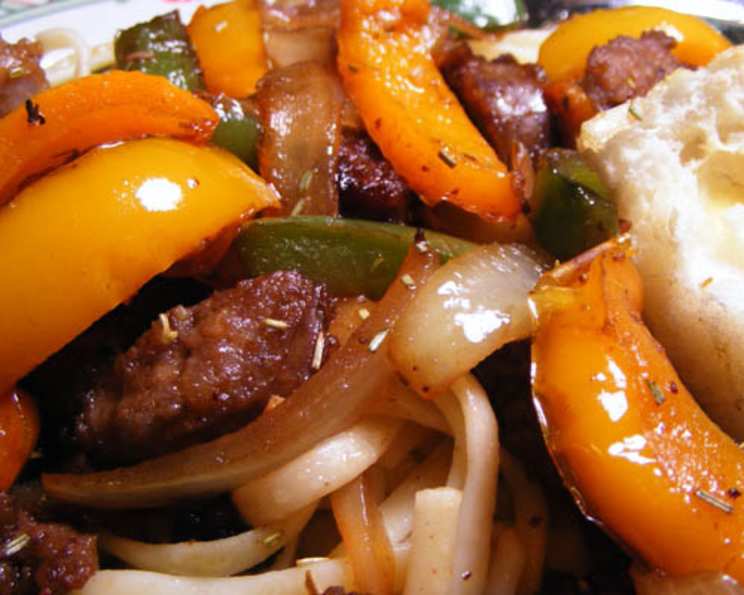
Chicken Sausage Sauté: A Symphony of Flavors in One Pan
There’s something truly magical about the sounds and smells that emanate from a bustling kitchen. For me, the sizzle of sausage hitting a hot pan, the sweet fragrance of caramelized onions, and the vibrant colors of bell peppers always transport me back to my grandmother’s kitchen. She had a way of transforming simple ingredients into culinary masterpieces, and this Chicken Sausage Sauté, in its own right, evokes that same heartwarming feeling of comfort and deliciousness.
Recipe Overview
- Prep Time: 15 minutes
- Cook Time: 20 minutes
- Total Time: 35 minutes
- Servings: 6
- Dietary Type: Varies (depending on pasta choice)
Ingredients
- 12 ounces pasta (linguine, spaghetti, fettuccine, spirals, etc.)
- 4 chicken sausages
- 2 tablespoons olive oil
- 1 medium onion, cut vertically into thin slices
- 2 colored bell peppers, cut into 1/2-inch strips
- 4 garlic cloves, chopped
- 1 tablespoon minced fresh rosemary or 1 teaspoon dried rosemary, crushed
- Fresh ground black pepper
- 2 tablespoons balsamic vinegar
Equipment Needed
- Large pot (for pasta)
- Small skillet (for sausages)
- Large nonstick skillet
- Knife
- Cutting board
Instructions
-
Begin by cooking the pasta according to the package directions. Be sure to cook it al dente, meaning it should be cooked through but still firm to the bite. Reserve about 1/2 cup of pasta water before draining; you may need it to adjust the sauce consistency later. Drain the pasta and set it aside.
-
While the pasta is cooking, prepare the sausages. Place them in a small skillet over medium heat and add 1/4 cup of water. Cover the skillet and let the sausages simmer for 10 minutes. This step ensures that the sausages are cooked through and stay juicy.
-
Turn the sausages halfway through the simmering process, after about 5 minutes. If the water evaporates completely before the 10 minutes are up, add a little more to prevent the sausages from sticking and burning.
-
In the meantime, heat the olive oil in a large nonstick skillet over medium heat. Once the oil is shimmering, add the sliced onion and bell pepper strips.
-
Sauté the onions and peppers for about 10 minutes, stirring occasionally, until they become tender and slightly caramelized. This step is crucial for developing the sweet and savory base of the sauté.
-
Add the chopped garlic and minced or crushed rosemary to the skillet. Season generously with freshly ground black pepper to taste. The aroma at this point should be incredibly enticing!
-
Lower the heat to medium-low and continue to cook the mixture for another 5 minutes, stirring frequently. This allows the garlic to mellow and the rosemary to infuse its earthy flavor into the vegetables.
-
Remove the sausages from the small skillet. Slice each sausage in half lengthwise, and then cut the halves crosswise into 1/2-inch slices. This ensures that the sausage cooks evenly and distributes its flavor throughout the dish.
-
Add the sliced sausage to the skillet with the onions and peppers.
-
Pour in the balsamic vinegar and toss everything together to coat. The balsamic vinegar adds a touch of acidity and sweetness that balances the richness of the sausage and vegetables.
-
Cook the mixture until the sausage is no longer pink in the middle and is heated through. This usually takes about 3-5 minutes, depending on the thickness of the sausage slices. Be careful not to overcook the sausage, as it can become dry.
-
Serve the sausage and vegetable mixture immediately over the cooked pasta. If the sauce seems a bit dry, add a splash of the reserved pasta water to loosen it up and help it cling to the pasta.
Expert Tips & Tricks
- Sausage Selection: Experiment with different types of chicken sausage to find your favorite flavor combination. Chicken sausage varieties flavored with herbs, sun-dried tomatoes, apples, or spices all work beautifully in this recipe.
- Vegetable Prep: To save time, you can often find pre-sliced onions and peppers at the grocery store.
- Deglazing the Pan: After removing the sausages from the small skillet, consider deglazing the pan with a little white wine or chicken broth. This will capture all the flavorful browned bits and add depth to the sauce.
- Fresh Herbs: If you don’t have fresh rosemary on hand, dried rosemary is a perfectly acceptable substitute. Just be sure to crush the dried rosemary before adding it to the skillet to release its flavor.
- Pasta Perfection: Salting your pasta water generously is key to flavorful pasta. Add the salt once the water is boiling.
- Don’t overcrowd the pan: Overcrowding the pan when sauteeing will steam the ingredients instead of browning them. Use a large enough skillet or cook in batches if necessary.
Serving & Storage Suggestions
Serve this Chicken Sausage Sauté hot, garnished with a sprinkle of fresh parsley or grated Parmesan cheese for an extra touch of flavor and presentation. This dish is best enjoyed immediately after cooking.
Leftovers can be stored in an airtight container in the refrigerator for up to 3 days. To reheat, gently warm the sauté in a skillet over medium heat, adding a little water or broth if necessary to prevent it from drying out. You can also microwave the leftovers, but be careful not to overcook the pasta. While freezing is possible, the texture of the pasta and vegetables may change upon thawing. It’s best to consume the leftovers within a few days for optimal quality.
Nutritional Information
| Nutrient | Amount per Serving | % Daily Value |
|---|---|---|
| Calories | 395.5 kcal | N/A |
| Calories from Fat | 121 g | 31% |
| Total Fat | 13.5 g | 20% |
| Saturated Fat | 3.5 g | 17% |
| Cholesterol | 67.2 mg | 22% |
| Sodium | 586.1 mg | 24% |
| Total Carbohydrate | 52.3 g | 17% |
| Dietary Fiber | 2.9 g | 11% |
| Sugars | 5.1 g | N/A |
| Protein | 15.8 g | 31% |
Note: Nutritional information is an estimate and may vary based on specific ingredients and portion sizes.
Variations & Substitutions
- Gluten-Free: Use gluten-free pasta for a gluten-free version of this dish.
- Vegetarian: Substitute the chicken sausage with plant-based sausage alternatives.
- Spicy: Add a pinch of red pepper flakes or a dash of hot sauce to the sauté for a spicy kick.
- Seasonal Vegetables: Feel free to swap out the bell peppers with other seasonal vegetables, such as zucchini, squash, or mushrooms.
- Herbs: Experiment with different herbs, such as thyme, oregano, or basil, in place of or in addition to the rosemary.
- Creamy Sauce: For a creamier sauce, stir in a dollop of cream cheese or mascarpone cheese at the end of cooking.
FAQs (Frequently Asked Questions)
Q: Can I use different types of pasta?
A: Absolutely! Linguine, spaghetti, fettuccine, penne, and rotini all work well with this dish. Choose your favorite pasta shape and enjoy.
Q: Can I prepare this dish ahead of time?
A: While it’s best served fresh, you can prepare the sausage and vegetable mixture ahead of time and store it in the refrigerator. When you’re ready to eat, simply cook the pasta and reheat the sausage mixture.
Q: Can I add other vegetables to the sauté?
A: Definitely! Feel free to add other vegetables, such as mushrooms, zucchini, or spinach, to the sauté. Just be sure to adjust the cooking time accordingly.
Q: How can I make this dish vegetarian?
A: Simply substitute the chicken sausage with plant-based sausage alternatives. There are many delicious vegetarian sausage options available at most grocery stores.
Q: The sauce seems a bit dry. What can I do?
A: Add a splash of the reserved pasta water to loosen up the sauce and help it cling to the pasta. You can also add a drizzle of olive oil or a knob of butter.
Final Thoughts
Chicken Sausage Sauté is a testament to how simple ingredients, combined with a little culinary know-how, can create a dish that is both satisfying and flavorful. Whether you’re a seasoned chef or a novice cook, I encourage you to try this recipe and make it your own. Don’t be afraid to experiment with different flavors and ingredients to create a dish that perfectly suits your taste. And most importantly, share your culinary creations with friends and family and enjoy the simple pleasure of good food.