
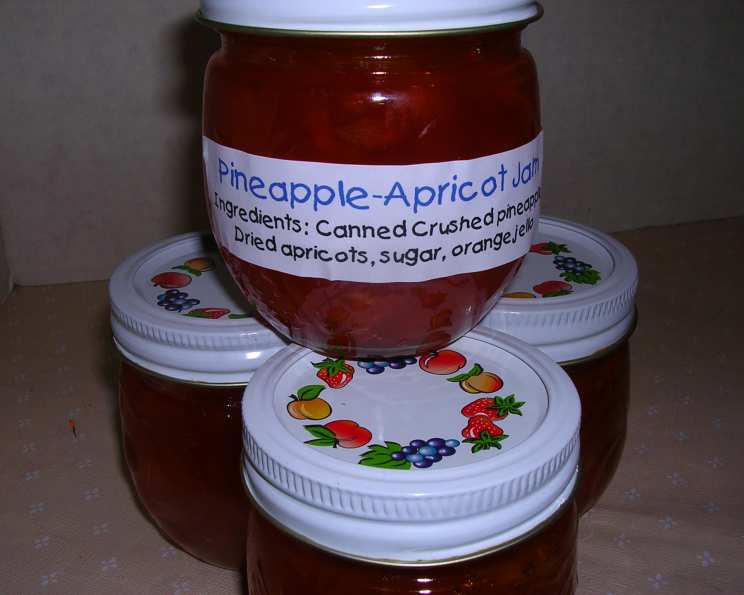
Pineapple-Apricot Jam: A Taste of Sunshine in Every Jar
The scent of summer always takes me back to my grandmother’s kitchen. She wasn’t much for elaborate pastries, but she had a magic touch with fruit, transforming the simplest combinations into vibrant, jewel-toned jams. I remember peering over the edge of her immense stockpot, mesmerized as the bubbling mixture thickened, releasing a sweet and tangy aroma that promised sunny mornings on toast. That’s the same memory evoked by this beautiful Pineapple-Apricot Jam.
Recipe Overview
- Prep Time: 20 minutes
- Cook Time: 20 minutes
- Total Time: 40 minutes
- Servings: Varies (dependent on jar size and number)
- Yield: Approximately 4 half-pint jars
- Dietary Type: Gluten-Free
Ingredients
- 1 (20 ounce) can crushed pineapple in syrup
- 8 ounces dried apricots, sliced very thin
- 2 cups sugar
- 1 (6 ounce) package orange gelatin
Equipment Needed
- Large saucepan
- Metal spoon
- Four 1/2 pint jars, lids, and bands
- Jar lifter (for water bath canning, optional)
- Large pot for water bath canning (optional)
- Wet cloth
Instructions
- Begin by preparing your canning jars. Wash four 1/2 pint jars, lids, and bands in hot, soapy water. Rinse thoroughly with warm water.
- Submerge the clean jars, lids, and bands in boiling water, then remove from heat. Keep them submerged until you’re ready to use them. This helps sterilize the jars.
- In a large saucepan, combine the crushed pineapple (including the syrup), thinly sliced dried apricots, and sugar.
- Bring the mixture to a boil over medium-high heat, stirring occasionally to prevent sticking. Once boiling, reduce the heat to a simmer and cook for 10 minutes, continuing to stir occasionally.
- Stir in the orange gelatin and simmer for another 10 minutes, stirring occasionally. The gelatin will help the jam to set properly.
- Use a metal spoon to skim off any foam that forms on the surface of the jam. This step helps to create a clearer, more appealing final product.
- Ladle the hot jam quickly into the prepared jars, filling them to within 1/8 inch of the top. This is crucial for proper sealing during the canning process.
- Wipe the jar rims and threads with a clean, wet cloth to ensure a good seal.
- Cover each jar with a lid and screw a band on tightly, but not too tightly. You want air to be able to escape during processing.
- For water bath canning (optional but recommended for longer shelf life): Place the filled jars in a large pot of boiling water. The water should be 1-2 inches above the tops of the jars.
- Process the jars in the boiling water for 10 minutes.
- Carefully remove the jars from the water bath using a jar lifter and place them on a towel-lined surface to cool. Avoid tilting the jars.
- Allow the jars to cool completely. As they cool, you should hear a “pop” sound, indicating that the lids have sealed properly.
- Check the lids after cooling. They should be concave (curved inward) and not pop up when pressed in the center. If a lid doesn’t seal, refrigerate that jar and use it first.
- If not using the water bath canning method, refrigerate the jam after cooling.
Expert Tips & Tricks
- Thinly slicing the apricots is crucial. The smaller the pieces, the more evenly they will distribute throughout the jam and soften during cooking. If your apricots are very dry, you can plump them up by soaking them in hot water for about 15 minutes before slicing.
- Don’t skip skimming the foam! Although it’s a bit tedious, removing the foam results in a much clearer and more visually appealing jam.
- Watch the heat carefully. You want a gentle simmer, not a rolling boil that could scorch the bottom of the pan.
- For a richer, more complex flavor, try adding a tablespoon of lemon juice to the jam during the last few minutes of cooking. This brightens the flavors and helps with the setting process.
- If you don’t have orange gelatin on hand, other flavors will work but will slightly alter the taste. Lemon or pineapple gelatin would both complement the base ingredients nicely.
Serving & Storage Suggestions
This Pineapple-Apricot Jam is delicious spread on toast, scones, or biscuits. It also makes a wonderful filling for thumbprint cookies or a glaze for grilled pork or chicken. For a simple appetizer, serve it with cream cheese and crackers.
If the jars have been properly processed using the water bath method and the lids are sealed, the jam can be stored in a cool, dark place for up to a year. Once opened, refrigerate the jam and use it within a few weeks. If you skipped the water bath canning, store the cooled jam in the refrigerator and use it within 2-3 weeks.
Nutritional Information
Please note that these values are estimates and can vary based on specific ingredients and serving size.
| Nutrient | Amount per Serving | % Daily Value |
|---|---|---|
| Calories | 250 kcal | 13% |
| Total Fat | 0g | 0% |
| Saturated Fat | 0g | 0% |
| Cholesterol | 0mg | 0% |
| Sodium | 30mg | 1% |
| Total Carbohydrate | 65g | 24% |
| Dietary Fiber | 1g | 4% |
| Sugars | 60g | N/A |
| Protein | 1g | 2% |
Variations & Substitutions
- Spice it up: Add a pinch of ground ginger, cinnamon, or a dash of chili flakes for a warm and spicy kick.
- Tropical twist: Substitute mango or papaya for some of the apricots to create a more intensely tropical flavor profile.
- Citrus boost: Add the zest of one orange or lemon along with the juice for a brighter, more complex flavor.
- Lower sugar: While sugar is important for preservation, you can reduce it slightly by about 1/4 cup. Just be aware that this may affect the setting of the jam. Consider using a sugar substitute designed for jam making if desired, but follow package directions carefully.
FAQs (Frequently Asked Questions)
Q: Can I use fresh pineapple instead of canned?
A: While you could, canned pineapple is recommended because it’s already crushed and the syrup helps contribute to the overall consistency and sweetness of the jam. Fresh pineapple might require more cooking time to break down.
Q: Do I have to use orange gelatin?
A: No, you don’t have to, but the orange gelatin complements the flavors of the pineapple and apricot beautifully. You can experiment with other flavors like lemon or pineapple gelatin, or even use pectin as a setting agent, following the manufacturer’s instructions.
Q: How do I know if my jam has set properly?
A: Before you start making the jam, place a few small plates in the freezer. When you think the jam is ready, drop a spoonful onto one of the cold plates and return it to the freezer for a minute. If it wrinkles when you push it with your finger, it’s set. If not, continue cooking the jam for a few more minutes and test again.
Q: What happens if my jam doesn’t set?
A: Don’t worry! You can still use it as a delicious syrup for pancakes, waffles, or ice cream. Alternatively, you can try re-cooking it with more pectin or gelatin, following package instructions.
Q: Why is water bath canning recommended?
A: Water bath canning creates a vacuum seal in the jars, which prevents spoilage and allows the jam to be stored at room temperature for a longer period. If you skip this step, the jam must be refrigerated and consumed within a few weeks.
Final Thoughts
This Pineapple-Apricot Jam is a burst of sunshine in a jar, perfect for brightening up your breakfast or adding a touch of sweetness to your favorite dishes. Don’t be intimidated by the canning process; it’s easier than you think! I encourage you to give this recipe a try and experience the joy of homemade jam. Share your creations with friends and family and let me know what you think. This delightful jam pairs wonderfully with a cup of Earl Grey tea and a good book. Happy jamming!