
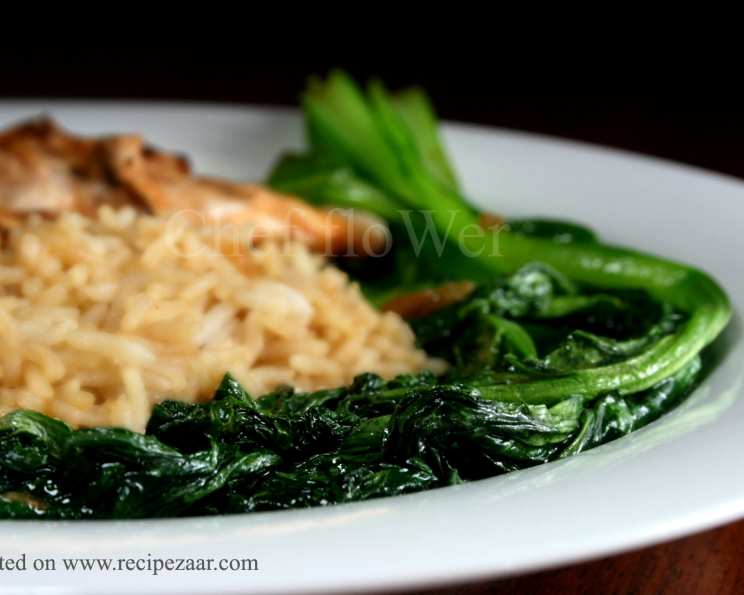
Choy Sum in Oyster Sauce: A Taste of Home
My grandmother, a whirlwind in the kitchen, always had a pot of something fragrant simmering on the stove. While her repertoire spanned countless dishes, I distinctly remember the vibrant green of her choy sum, glistening with a savory, umami-rich sauce. It wasn’t just a side dish; it was a symbol of her love, a reminder of her heritage, and a comforting taste of home that I carry with me always. Every time I prepare this simple yet elegant dish, I’m transported back to her bustling kitchen, filled with warmth and the delicious aroma of Cantonese cooking.
Recipe Overview
- Prep Time: 5 minutes
- Cook Time: 5 minutes
- Total Time: 10 minutes
- Servings: 4-6
- Dietary Type: Not Vegetarian/Vegan
Ingredients
- 300 g choy sum
- 1 tablespoon vegetable oil
- 1 teaspoon garlic, finely chopped
- 1 tablespoon oyster sauce
Equipment Needed
- Large pan
- Wok or deep pan
Instructions
-
Begin by preparing the choy sum. Bring a large pan of water to a rolling boil.
-
Once boiling, blanch the choy sum in the boiling water for approximately 30 seconds. This quick blanching helps to retain the vibrant green color and tender-crisp texture of the vegetable.
-
Immediately drain the choy sum thoroughly and set it aside. This prevents overcooking.
-
Next, prepare your wok or deep pan. Place it over medium-high heat until it’s properly preheated. A hot wok is essential for achieving that characteristic wok hei, or “breath of the wok,” a smoky, slightly charred flavor.
-
Add 1 tablespoon of vegetable oil to the preheated wok or deep pan. Ensure the oil is heated before adding the garlic.
-
Add 1 teaspoon of finely chopped garlic to the hot oil. Stir-fry the garlic until it becomes fragrant, being careful not to burn it. Burnt garlic will impart a bitter taste to the dish. This should take only a few seconds.
-
Add the blanched choy sum to the wok or deep pan. Toss the choy sum continuously for about 1 minute, ensuring it’s evenly coated with the oil and garlic.
-
Now, add 1 tablespoon of oyster sauce to the wok. Stir the oyster sauce into the choy sum, making sure it’s well combined and coats all the vegetables.
-
Continue to toss and cook for another minute or so, until the choy sum is heated through and the sauce has slightly thickened.
-
Serve immediately.
Expert Tips & Tricks
- Don’t overcook the choy sum! The key to delicious choy sum is maintaining a tender-crisp texture. Overcooking will result in a mushy and less appealing dish.
- High heat is your friend. Using high heat ensures the choy sum cooks quickly and retains its vibrant color. It also helps to create that desirable “wok hei” flavor.
- Adjust the oyster sauce to your liking. Some oyster sauces are saltier than others, so taste and adjust the amount accordingly. You can also add a touch of sugar to balance the flavors.
- Ginger boost: For an extra layer of flavor, consider adding a small amount of finely grated ginger along with the garlic.
- Prep is key: Having all your ingredients prepared and ready to go before you start cooking will make the process much smoother and faster. Chop the garlic and measure the oyster sauce beforehand.
- For a richer flavor, use a high-quality oyster sauce. The difference in taste is noticeable.
Serving & Storage Suggestions
Serve the choy sum in oyster sauce immediately while it’s hot and the vegetables are still crisp. It makes an excellent side dish to accompany any Chinese meal, particularly roasted meats, steamed fish, or stir-fried noodles.
Leftovers can be stored in an airtight container in the refrigerator for up to 2 days. To reheat, you can microwave it briefly or stir-fry it in a wok or pan until heated through. Note that the texture may be slightly softer after reheating.
I don’t recommend freezing this dish, as the choy sum will lose its texture and become watery upon thawing.
Nutritional Information
| Nutrient | Amount per Serving | % Daily Value |
|---|---|---|
| Calories | 50 kcal | 3% |
| Total Fat | 4 g | 5% |
| Saturated Fat | 0.5 g | 2% |
| Cholesterol | 0 mg | 0% |
| Sodium | 148 mg | 6% |
| Total Carbohydrate | 3 g | 1% |
| Dietary Fiber | 2 g | 8% |
| Sugars | 0.3 g | 1% |
| Protein | 2.5 g | 5% |
Note: Nutritional information is an estimate and may vary based on specific ingredients and portion sizes.
Variations & Substitutions
- Vegetarian Option: While traditional oyster sauce contains oyster extracts, you can substitute it with vegetarian oyster sauce, which is made from mushrooms.
- Garlic Lover’s Version: Double the amount of garlic for a more intense garlic flavor.
- Spicy Kick: Add a pinch of red pepper flakes or a thinly sliced chili pepper to the oil along with the garlic for a spicy twist.
- Soy Sauce Substitute: If you don’t have oyster sauce, you can use a combination of soy sauce (1/2 tablespoon) and a touch of sugar (1/4 teaspoon). However, the flavor will be different.
- Broccoli or Gai Lan: You can use broccoli or gai lan (Chinese broccoli) as a substitute for choy sum, adjusting the blanching time accordingly.
FAQs (Frequently Asked Questions)
Q: Can I use frozen choy sum?
A: While fresh choy sum is preferred for its texture and flavor, you can use frozen choy sum. Be sure to thaw it completely and squeeze out any excess water before cooking. The texture may be slightly softer.
Q: How do I know when the choy sum is properly blanched?
A: The choy sum should be bright green and slightly softened but still have a good bite. Avoid over-blanching, as it will become mushy.
Q: Can I make this dish ahead of time?
A: It’s best to serve choy sum in oyster sauce immediately after cooking. If you need to prep ahead, you can blanch the choy sum and chop the garlic in advance.
Q: What if I don’t have a wok?
A: A large skillet or frying pan will work just fine. Just make sure it’s large enough to accommodate all the choy sum without overcrowding.
Q: Can I add other vegetables to this dish?
A: Yes, you can add other vegetables like sliced mushrooms, bell peppers, or snow peas for a more complex dish. Add them to the wok along with the choy sum.
Final Thoughts
I hope this recipe brings a little bit of my grandmother’s kitchen into your own. The beauty of Choy Sum in Oyster Sauce lies in its simplicity and the vibrant flavors that come together so effortlessly. Don’t be afraid to experiment with variations and make it your own. I encourage you to try this recipe and share your creations! Serve it alongside your favorite Asian-inspired dishes and let the flavors transport you to a place of comfort and warmth. Enjoy!