
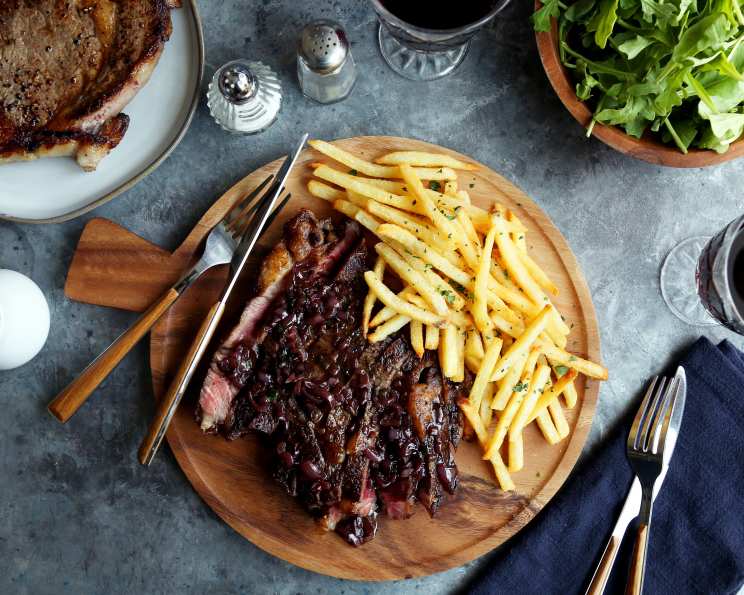
Classic Entrecote Bordelaise: Steak in Red Wine With Shallots
The first time I tasted Entrecote Bordelaise was in a tiny bistro tucked away on a side street in Bordeaux itself. The air was thick with the aroma of red wine, shallots, and sizzling butter, a symphony of scents that promised something extraordinary. When the steak arrived, glistening in a rich, dark sauce, I knew I was in for a treat. Each bite was an explosion of flavor – the perfectly cooked steak, the sweet and savory shallots, and the deep, complex red wine reduction. It was a moment that sparked a lifelong love affair with French cuisine, and this recipe helps me recreate that magic in my own kitchen.
Recipe Overview
- Prep Time: 10 minutes
- Cook Time: 20 minutes
- Total Time: 30 minutes
- Servings: 2
- Dietary Type: Gluten-Free (check demi-glace ingredients)
Ingredients
- 2 (300g) entrecote steaks
- 100g butter
- 2 shallots, finely chopped
- 100ml red wine
- 200ml demi-glace or 200ml beef stock
- 2 tablespoons chopped parsley
- Salt
- Black pepper
Equipment Needed
- Large skillet or frying pan
- Cutting board
- Sharp knife
- Gravy boat (optional)
Instructions
-
Prepare the Steaks: Begin by seasoning the entrecote steaks generously with salt and black pepper on both sides. Don’t be shy – this is your only chance to season the meat directly!
-
Sauté the Steaks: Heat a large skillet or frying pan over high heat until it’s almost smoking. Add half the butter (50g) to the pan. Once the butter is melted and shimmering, carefully place the steaks in the pan.
-
Sear and Cook: Sear the steaks for about two to three minutes on each side to create a beautiful, golden-brown crust. This searing process is crucial for locking in the juices and developing a rich, flavorful exterior. After searing, reduce the heat to medium and continue cooking the steaks to your desired level of doneness.
- Rare: 125-130°F (52-54°C)
- Medium-Rare: 130-140°F (54-60°C)
- Medium: 140-150°F (60-66°C)
- Medium-Well: 150-160°F (66-71°C)
- Well-Done: 160°F+ (71°C+)
Use a meat thermometer to ensure accurate doneness. Once the steaks are cooked to your liking, remove them from the pan and set aside to rest on a cutting board. This resting period is essential for allowing the juices to redistribute throughout the meat, resulting in a more tender and flavorful final product.
-
Cook the Shallots: In the same pan you used to cook the steaks, drain any excess butter if necessary, leaving about a tablespoon or two in the pan. Add the finely chopped shallots to the pan and cook over medium heat, stirring occasionally, until they are soft and starting to turn golden brown. This should take about 5-7 minutes. Be careful not to burn the shallots, as this will impart a bitter flavor to the sauce.
-
Deglaze the Pan: Once the shallots are cooked, pour in the red wine and increase the heat to high. Use a wooden spoon to scrape up any browned bits from the bottom of the pan – this is where a lot of flavor resides! Let the wine simmer for a minute or two, allowing it to reduce slightly.
-
Simmer the Sauce: Add the demi-glace (or beef stock) to the pan and stir until everything is well blended. Bring the sauce to a simmer and let it reduce for about 5 minutes, or until it has thickened slightly. The sauce should be rich and glossy.
-
Enrich the Sauce: Reduce the heat to low. Cut the remaining butter (50g) into small pieces. Add the butter to the sauce one piece at a time, stirring constantly so that each piece melts completely into the sauce before adding the next. This technique, known as “monter au beurre,” will emulsify the sauce, giving it a luxurious, velvety texture and a beautiful glossy finish.
-
Plate the Dish: Cut the meat across the grain into thick slices and arrange them on a plate. This slicing technique helps to tenderize the steak even further.
-
Finish and Serve: Add some chopped parsley to the sauce, then spoon a generous amount of the sauce over each steak. Serve the rest of the sauce in a gravy boat.
-
Serve with Compliments: This dish pairs wonderfully with sautéed potatoes, frites, or haricots verts. And, of course, a good bottle of Saint Emilion or other Bordeaux red wine will elevate the dining experience to new heights.
Expert Tips & Tricks
-
Room Temperature Steaks: For even cooking, let the steaks sit at room temperature for about 30 minutes before cooking. This allows the meat to relax and cook more evenly.
-
High Heat is Key: Don’t be afraid to use high heat when searing the steaks. A hot pan is essential for creating a good crust.
-
Don’t Overcrowd the Pan: If your pan is too small to accommodate both steaks without overcrowding, cook them in batches to ensure proper searing.
-
Quality Ingredients Matter: Use a good quality red wine and demi-glace (or beef stock) for the best flavor.
-
Adjust the Sauce: If the sauce is too thick, add a little more beef stock or red wine. If it’s too thin, continue simmering it until it reduces to the desired consistency.
-
Finishing Touch: For an extra touch of richness, add a tablespoon of Cognac or brandy to the sauce along with the red wine.
Serving & Storage Suggestions
Serve the Entrecote Bordelaise immediately after plating for the best flavor and texture. The warm steak and rich sauce are best enjoyed fresh.
Storage: Leftover steak and sauce can be stored separately in airtight containers in the refrigerator for up to 3 days.
Reheating: To reheat, gently warm the steak in a skillet over low heat or in a microwave. Reheat the sauce separately in a saucepan over low heat, stirring occasionally. Avoid overheating the steak, as this can make it tough.
Freezing: While freezing is not ideal for preserving the quality of the steak, the sauce can be frozen for up to 2 months. Thaw the sauce in the refrigerator overnight before reheating.
Nutritional Information
| Nutrient | Amount per Serving | % Daily Value |
|---|---|---|
| Calories | 947.8 kcal | N/A |
| Calories from Fat | 520 g | 55% |
| Total Fat | 57.9 g | 89% |
| Saturated Fat | 32.2 g | 161% |
| Cholesterol | 343.9 mg | 114% |
| Sodium | 544.4 mg | 22% |
| Total Carbohydrate | 4.9 g | 1% |
| Dietary Fiber | 0.1 g | 0% |
| Sugars | 0.4 g | 1% |
| Protein | 89.3 g | 178% |
Note: Nutritional information is an estimate and may vary based on specific ingredients and portion sizes.
Variations & Substitutions
-
Different Cut of Steak: While entrecote is the classic choice, you can also use ribeye, New York strip, or even filet mignon. Adjust cooking times accordingly.
-
Vegetarian Option: For a vegetarian twist, try grilling portobello mushrooms and serving them with the Bordelaise sauce.
-
Herb Variations: Experiment with different herbs in the sauce, such as thyme, rosemary, or bay leaf.
-
Wine Substitution: If you don’t have red wine on hand, you can use beef broth or chicken broth in a pinch, but the flavor will be different. Adding a tablespoon of red wine vinegar can help mimic the acidity of the wine.
FAQs (Frequently Asked Questions)
Q: Can I make the sauce ahead of time?
A: Yes, the sauce can be made ahead of time and stored in the refrigerator for up to 3 days. Reheat gently before serving.
Q: What is demi-glace?
A: Demi-glace is a rich, concentrated beef stock that is used as a base for many French sauces. If you can’t find it, you can use regular beef stock, but the sauce will be less intense in flavor.
Q: How do I know when the steak is cooked to my desired doneness?
A: The best way to ensure accurate doneness is to use a meat thermometer. Insert the thermometer into the thickest part of the steak, avoiding any bone.
Q: Can I use a different type of wine?
A: A dry red wine like Cabernet Sauvignon, Merlot, or Pinot Noir works well in this recipe. Avoid sweet wines.
Q: What should I do if the sauce is too salty?
A: Add a small amount of water or beef broth to dilute the sauce. You can also add a squeeze of lemon juice or a pinch of sugar to balance the flavors.
Final Thoughts
Entrecote Bordelaise is more than just a steak dish; it’s an experience. It’s the perfect combination of simple ingredients transformed into something truly extraordinary. Don’t be intimidated by the fancy name – this recipe is surprisingly easy to make at home. So, gather your ingredients, pour yourself a glass of red wine, and get ready to create a culinary masterpiece. I encourage you to try this recipe and share your feedback. Pair it with a classic Pommes Anna for a truly unforgettable meal!