
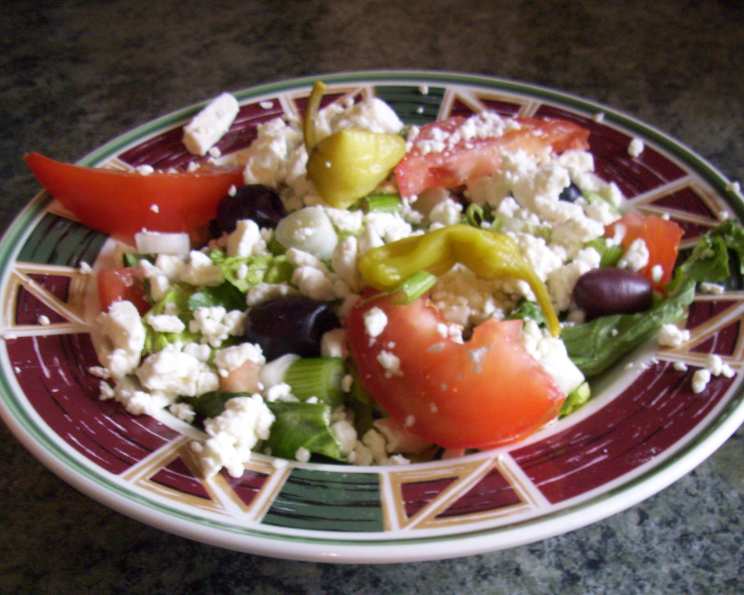
Classic Greek Salad: A Taste of the Islands
The memory is as clear as the Aegean Sea on a sunny day. I was a struggling college student, and “The Greek Place,” a tiny, unassuming restaurant near campus, was my sanctuary. The owner, a short, perpetually cheerful man named Dimitri, always greeted me with a warm smile and a generous serving of his classic Greek salad. The crisp lettuce, the juicy tomatoes, the salty feta, all tossed in his simple, yet perfect, vinaigrette—it was a taste of sunshine and comfort that nourished both my body and my soul. I practically lived on that salad for four years, and I’m thrilled to share a recipe inspired by Dimitri’s creation with you.
Recipe Overview
- Prep Time: 15 minutes
- Cook Time: 0 minutes
- Total Time: 15 minutes
- Servings: 4-6
- Yield: 1 large salad
- Dietary Type: Vegetarian, Gluten-Free
Ingredients
Salad:
- 4 cups romaine lettuce, torn
- 2 medium tomatoes, cut into wedges
- 5 green onions, chopped
- 8 ounces feta cheese, crumbled (for best results use sheep’s milk feta)
- 10 pepperoncini peppers
- 1⁄4 cup kalamata olives
- 2 pita bread rounds
Dressing:
- 1⁄3 cup white vinegar
- 2⁄3 cup olive oil
- 1 tablespoon oregano (or more to taste)
- 1⁄2 teaspoon black pepper (or more to taste)
- 1 teaspoon sea salt
Equipment Needed
- Large bowl
- Small bowl or jar for dressing
- Whisk or fork
- Cutting board
- Knife
- Toaster or skillet (for pita bread)
Instructions
-
First, prepare the dressing. In a small bowl or jar, combine the white vinegar, olive oil, oregano, black pepper, and sea salt. Whisk or shake vigorously until the dressing is well emulsified. Taste and adjust seasonings as needed. Some prefer a more pronounced oregano flavor, so don’t be afraid to add more.
-
Next, prepare the salad. In a large bowl, combine the torn romaine lettuce, tomato wedges, chopped green onions, crumbled feta cheese, pepperoncini peppers, and kalamata olives.
-
Now, pour the dressing over the salad ingredients. Gently toss the salad until all the ingredients are evenly coated with the vinaigrette. Be careful not to over-dress the salad, as it can become soggy. You may not need to use all of the dressing; reserve any extra for serving.
-
Finally, prepare the pita bread. You can toast the pita bread rounds in a toaster until golden brown and crispy. Alternatively, you can lightly brush the pita bread with olive oil and toast them in a skillet over medium heat until golden brown. Cut the toasted pita bread into wedges for serving.
-
Serve immediately with the toasted pita bread on the side.
Optional additions: You can include a cucumber, peeled leaving stripes of green, and then sliced for a visually appealing addition. Pimento-stuffed green olives can also be substituted for the Kalamata olives.
Expert Tips & Tricks
- Quality of Ingredients: The key to a truly exceptional Greek salad is using high-quality ingredients. Seek out ripe, flavorful tomatoes, fresh romaine lettuce, and authentic Greek feta cheese made from sheep’s milk. The feta will have a tangier and richer flavor than those made from cow’s milk.
- Dressing Emulsification: For a stable and creamy dressing, slowly drizzle the olive oil into the vinegar while whisking constantly. This helps to create an emulsion that won’t separate easily.
- Don’t Overdress: It’s always better to under-dress a salad than to over-dress it. Start with a small amount of dressing and add more as needed until the salad is lightly coated. Excess dressing can make the salad soggy.
- Chill the Ingredients: For an extra refreshing salad, chill the lettuce, tomatoes, and cucumbers (if using) in the refrigerator for about 30 minutes before assembling the salad.
- Make-Ahead Tip: You can prepare the dressing and chop the vegetables ahead of time. Store them separately in the refrigerator and combine them just before serving. This will prevent the lettuce from wilting.
Serving & Storage Suggestions
Serve the Greek salad immediately after assembling it to maintain its freshness and crispness. Arrange the toasted pita bread wedges around the salad for a beautiful presentation.
If you have any leftover salad, store it in an airtight container in the refrigerator. However, keep in mind that the lettuce may wilt and the tomatoes may soften over time. It is best to consume the leftover salad within 1-2 days. The dressing can be stored separately in the refrigerator for up to a week. The pita bread can be stored at room temperature in a bread bag or airtight container for up to 2-3 days.
This salad is best enjoyed fresh. Due to the nature of the ingredients, freezing is not recommended.
Nutritional Information
| Nutrient | Amount per Serving | % Daily Value |
|---|---|---|
| Calories | 638.2 kcal | N/A |
| Calories from Fat | 455 g | 71% |
| Total Fat | 50.6 g | 77% |
| Saturated Fat | 14.2 g | 71% |
| Cholesterol | 53.5 mg | 17% |
| Sodium | 3638.6 mg | 151% |
| Total Carbohydrate | 34.9 g | 11% |
| Dietary Fiber | 5.7 g | 22% |
| Sugars | 11.6 g | 46% |
| Protein | 14.5 g | 28% |
Note: Nutritional information is an estimate and may vary based on specific ingredients and portion sizes.
Variations & Substitutions
- Vegan Greek Salad: Substitute the feta cheese with a plant-based feta alternative. There are many delicious vegan feta options available that are made from ingredients like tofu or almonds.
- Add Protein: Grilled chicken, shrimp, or chickpeas can be added to the salad for a more substantial meal.
- Different Greens: While romaine is traditional, you can use a mix of greens, such as butter lettuce or spinach.
- Spice It Up: Add a pinch of red pepper flakes to the dressing for a little heat.
- Herb Variations: Experiment with different herbs, such as dill or mint, in the dressing.
- Cucumber Addition: As noted above, adding cucumber is a simple way to increase the salad’s nutritional value.
FAQs (Frequently Asked Questions)
Q: Can I make the dressing ahead of time?
A: Absolutely! The dressing can be made up to a week in advance and stored in the refrigerator. In fact, the flavors meld together even more as it sits.
Q: What is the best type of feta cheese to use?
A: Authentic Greek feta made from sheep’s milk is the most flavorful and traditional choice. However, if you can’t find it, you can use feta made from cow’s milk.
Q: How do I prevent the salad from getting soggy?
A: Don’t overdress the salad and serve it immediately after assembling it. You can also chop the vegetables ahead of time and store them separately from the dressing until you’re ready to serve.
Q: Can I add other vegetables to the salad?
A: Yes, feel free to add other vegetables, such as cucumbers, bell peppers, or red onions. Just be sure to chop them into bite-sized pieces.
Q: Is Greek salad healthy?
A: Yes, Greek salad is a very healthy and nutritious option. It’s packed with vitamins, minerals, and antioxidants from the vegetables, healthy fats from the olive oil, and protein from the feta cheese.
Final Thoughts
This classic Greek salad is more than just a recipe; it’s a taste of the Mediterranean, a reminder of sunny days and warm hospitality. It’s a simple, yet incredibly satisfying dish that can be enjoyed as a light lunch, a refreshing side dish, or a vibrant addition to any meal. I encourage you to try this recipe and experience the flavors of Greece in your own kitchen. Don’t be afraid to experiment with different ingredients and variations to create your own signature Greek salad. And if you’re feeling adventurous, pair it with a glass of crisp white wine and imagine yourself basking in the sun on a Greek island. Kali Orexi!