
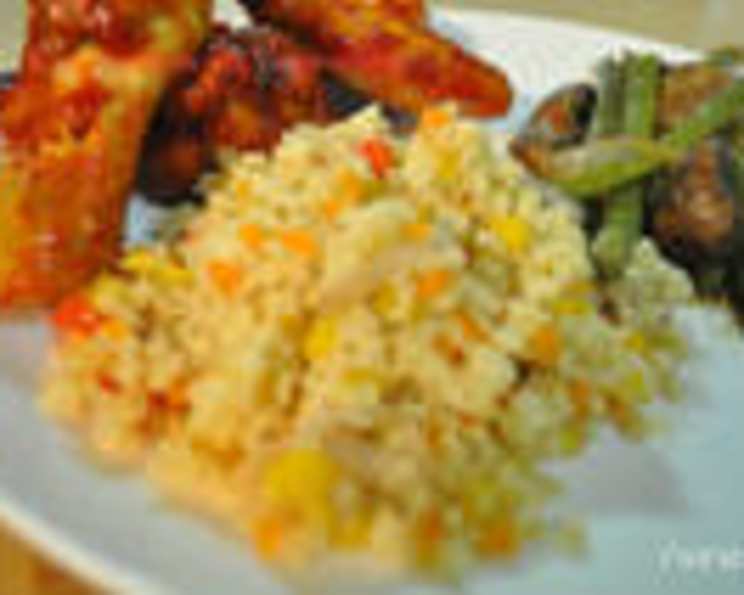
Couscous Primavera: A Burst of Sunshine on Your Plate
I have vivid memories of my grandmother preparing couscous on warm summer evenings. The aroma of simmering vegetables and the nutty scent of the couscous itself always filled her small kitchen. She would hum softly as she chopped the vegetables, each one a jewel of color – bright yellow peppers, vibrant green celery, and the deep orange of carrots. It wasn’t just a meal; it was a celebration of simple, fresh ingredients, transformed into something comforting and nourishing, and served with a generous helping of love. It’s a taste of home that I carry with me, and one I’m thrilled to share.
Recipe Overview
- Prep Time: 15 minutes
- Cook Time: 15 minutes
- Total Time: 30 minutes
- Servings: 6
- Dietary Type: Vegan
Ingredients
- 1 1⁄2 cups vegetable broth
- 1 cup uncooked couscous
- 8 ounces canned chickpeas, drained
- 1 garlic clove, minced
- 1⁄2 cup onion, minced
- 2⁄3 cup yellow pepper, chopped
- 1 celery rib, chopped
- 1 small carrot, finely chopped
- 1⁄4 cup water
- 2 tablespoons sherry wine
- 1⁄4 teaspoon pepper
- 1⁄4 teaspoon allspice
- 1⁄8 teaspoon ground mace
- 1⁄2 teaspoon salt
Equipment Needed
- Saucepan
- Frying Pan
- Fork
Instructions
-
In a saucepan, bring the vegetable broth to a boil. This initial boil is crucial for properly hydrating the couscous.
-
Once boiling, stir in the uncooked couscous. Immediately cover the saucepan, and then remove it from the heat entirely. It is important to remove the pan from the heat, as this allows the couscous to steam gently, leading to a perfectly fluffy texture.
-
Let the couscous sit, covered, for five minutes. This allows the couscous to absorb all the broth.
-
After five minutes, remove the lid and fluff the couscous gently with a fork. This separates the grains and prevents them from sticking together. Cover the saucepan again and set aside.
-
While the couscous is resting, combine the drained chickpeas, minced garlic, minced onion, chopped yellow pepper, chopped celery rib, and finely chopped carrot in a frying pan. Add the water and sherry wine. The water will help steam the vegetables, and the sherry wine adds a subtle depth of flavor.
-
Cover the frying pan and cook over medium heat for 10 minutes. Ensure the vegetables are tender but still have a slight bite. Stir occasionally to prevent sticking.
-
After 10 minutes, remove the lid and add the seasonings: pepper, allspice, ground mace, and salt. Stir well to distribute the seasonings evenly throughout the vegetable mixture. The allspice and mace add a warm, aromatic complexity to the dish.
-
To serve, arrange the couscous around the perimeter of a platter, creating a ring. Mound the vegetable mixture in the center of the couscous ring. This presentation is visually appealing and allows guests to easily serve themselves.
Expert Tips & Tricks
- Toast the Couscous: For an even nuttier flavor, lightly toast the dry couscous in a dry pan over medium heat for a few minutes before adding it to the boiling broth. Watch it carefully, as it can burn quickly.
- Vegetable Broth Enhancement: Elevate your vegetable broth by adding a bay leaf or a few sprigs of fresh thyme while it simmers. Remove them before adding the couscous.
- Adjusting the Liquid: If the couscous seems too dry after five minutes, add a tablespoon or two of hot water and let it sit for another minute. If it seems too wet, cook it uncovered over low heat for a minute or two to evaporate excess liquid.
- Sherry Wine Substitute: If you don’t have sherry wine on hand, a dry white wine or even a splash of apple cider vinegar can be used as a substitute.
Serving & Storage Suggestions
This Couscous Primavera is excellent served warm as a side dish or as a light vegetarian main course. Garnish with fresh herbs like parsley or cilantro for a pop of color and flavor. A drizzle of high-quality olive oil before serving adds a luxurious touch.
Leftovers can be stored in an airtight container in the refrigerator for up to 3 days. To reheat, gently warm in a skillet over low heat, adding a splash of water or broth if needed. You can also reheat it in the microwave, but be careful not to overcook it. While freezing is possible, the texture of the couscous may change slightly upon thawing, becoming a bit softer. If freezing, store in an airtight container for up to 2 months and thaw completely before reheating.
Nutritional Information
| Nutrient | Amount per Serving | % Daily Value |
|---|---|---|
| Calories | 194.1 kcal | N/A |
| Calories from Fat | 6 g | 4% |
| Total Fat | 0.8 g | 1% |
| Saturated Fat | 0.1 g | 0% |
| Cholesterol | 0 mg | 0% |
| Sodium | 334.7 mg | 13% |
| Total Carbohydrate | 36 g | 12% |
| Dietary Fiber | 4 g | 16% |
| Sugars | 1.3 g | 5% |
| Protein | 6.2 g | 12% |
Variations & Substitutions
- Gluten-Free: While traditional couscous is made from semolina (wheat), you can easily substitute it with quinoa or rice to make this dish gluten-free. Be sure to adjust the cooking time and liquid accordingly, following the package instructions for your chosen grain.
- Seasonal Vegetables: Adapt the vegetables to what’s fresh and in season. Asparagus and peas in the spring, zucchini and summer squash in the summer, and roasted root vegetables like sweet potatoes and parsnips in the fall and winter all work beautifully.
- Spice it Up: Add a pinch of red pepper flakes or a dash of hot sauce for a little heat. Harissa paste can also be stirred into the vegetable mixture for a more complex flavor.
- Add Protein: For a more substantial meal, add grilled chicken, shrimp, or tofu to the couscous and vegetable mixture.
- Herb Infusion: Stir in fresh herbs like chopped mint, dill, or basil after cooking for added flavor and freshness.
FAQs (Frequently Asked Questions)
Q: Can I use chicken broth instead of vegetable broth?
A: Yes, you can use chicken broth if you’re not following a vegan diet. However, vegetable broth keeps the dish vegetarian-friendly and allows the flavors of the vegetables to shine through.
Q: Can I prepare the couscous and vegetables ahead of time?
A: Yes, both components can be prepared separately and stored in the refrigerator for up to 24 hours. Combine them just before serving for the best texture.
Q: I don’t have sherry wine; what else can I use?
A: A dry white wine, apple cider vinegar, or even a squeeze of lemon juice can be used as a substitute for sherry wine.
Q: How do I prevent the couscous from becoming mushy?
A: Be sure to remove the saucepan from the heat after adding the couscous and avoid overcooking it. Fluffing it with a fork after five minutes helps prevent it from clumping and becoming mushy.
Q: Can I add other types of beans or legumes?
A: Absolutely! Kidney beans, black beans, or cannellini beans would be delicious additions to this dish. Just be sure to drain and rinse them before adding them to the vegetable mixture.
Final Thoughts
This Couscous Primavera is more than just a recipe; it’s a celebration of simple ingredients and vibrant flavors. It’s a dish that’s easy to adapt to your own preferences and dietary needs, and it’s perfect for a quick weeknight meal or a light and refreshing side dish. So, gather your favorite vegetables, get creative with your seasonings, and enjoy the process of creating something delicious and nourishing. I encourage you to try this recipe and make it your own. Feel free to share your variations and feedback – I’d love to hear how it turns out for you! Pair this dish with a crisp white wine or a refreshing iced tea for the perfect complement.