
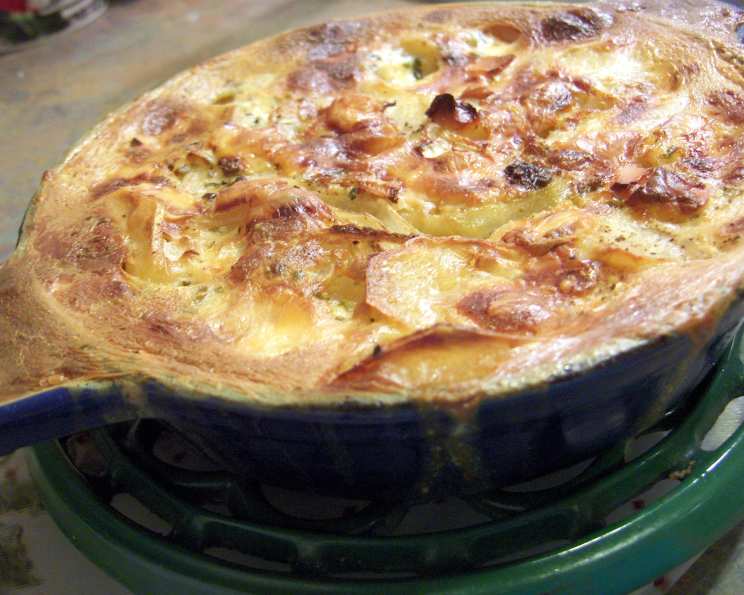
Crispy Scalloped Potatoes: A Timeless Comfort Food Classic
The memory is etched in my mind: my grandmother’s kitchen, filled with the warm, comforting aroma of baking potatoes. I remember standing on a stool, eager to help her layer thinly sliced potatoes into a buttered casserole dish. It wasn’t just a recipe; it was an act of love, a tradition passed down through generations. That first bite, the creamy interior yielding to a perfectly crisp, golden-brown top, remains one of my most cherished food memories. To this day, the simple elegance of scalloped potatoes evokes feelings of warmth, family, and home.
Recipe Overview
- Prep Time: 20 minutes
- Cook Time: 1 hour 10 minutes – 1 hour 20 minutes
- Total Time: 1 hour 30 minutes – 1 hour 40 minutes
- Servings: 8-10
- Yield: 1 casserole
- Dietary Type: Vegetarian (Can be made gluten-free)
Ingredients
- 2 lbs potatoes, peeled and sliced thinly (about 1/8 inch thick)
- 1/3 cup onion, chopped
- 3 tablespoons all-purpose flour (or gluten-free all-purpose blend)
- 1/2 teaspoon salt
- 1/4 teaspoon pepper
- 1 tablespoon butter, unsalted
- 3 cups milk, heated
Equipment Needed
- 2-quart casserole dish
- Large bowl
- Sharp knife or mandoline
- Measuring cups and spoons
- Vegetable spray
Instructions
-
Begin by preheating your oven to 400 degrees Fahrenheit (200 degrees Celsius). This initial high heat helps to kickstart the browning process and create that desirable crispy top.
-
Lightly spray a 2-quart casserole dish with vegetable spray. This will prevent the potatoes from sticking to the bottom and sides of the dish, making serving and cleanup much easier.
-
In a large bowl, gently toss the sliced potatoes with the chopped onion, flour, salt, and pepper. Ensure the potatoes are evenly coated with the flour mixture; this will help thicken the milk during baking and create a creamy sauce.
-
Now, begin layering the potato mixture into the prepared casserole dish. Arrange a layer of potato slices on the bottom, followed by a sprinkling of the onion and flour mixture. Continue layering until all the potatoes, onion, flour, salt, and pepper are used, distributing the onion evenly throughout. The layers don’t need to be perfectly uniform, but try to avoid large clumps of onion in one spot.
-
Dot the top layer of potatoes with the butter. This adds richness and flavor, and contributes to the crispy, golden-brown crust.
-
Carefully pour the heated milk over the layered potatoes. The milk should almost cover the top layer of potatoes; if needed, add a little more to reach that level. Heating the milk beforehand helps it cook more evenly and prevents it from curdling during baking.
-
Bake in the preheated oven for 20 minutes at 400 degrees Fahrenheit (200 degrees Celsius). Then, reduce the heat to 350 degrees Fahrenheit (175 degrees Celsius) and bake for an additional 50 to 60 minutes, or until the potatoes are tender and the top is golden brown and crispy.
-
To check for doneness, insert a fork or knife into the center of the casserole. The potatoes should be easily pierced with minimal resistance. If the top is browning too quickly, you can tent the casserole dish with aluminum foil for the last 15-20 minutes of baking.
-
Remove from the oven and let rest for 10-15 minutes before serving. This allows the sauce to thicken slightly and the potatoes to cool enough to handle.
Expert Tips & Tricks
- Potato Selection: Russet potatoes work well because of their high starch content, which helps to thicken the sauce. Yukon Gold potatoes are another good option for a slightly creamier result.
- Slicing Consistency: Uniformly thin potato slices are crucial for even cooking. A mandoline slicer can be a great time-saver and ensures consistent thickness.
- Milk Temperature: Heating the milk prevents curdling and ensures a smoother sauce. Microwaving the milk for a minute or two is sufficient.
- Flour Alternatives: For a gluten-free version, use a gluten-free all-purpose flour blend or cornstarch.
- Make-Ahead Option: You can assemble the casserole ahead of time and store it in the refrigerator for up to 24 hours before baking. Add about 15-20 minutes to the baking time if baking from cold.
Serving & Storage Suggestions
Serve the Crispy Scalloped Potatoes hot as a side dish. They pair wonderfully with roasted chicken, ham, beef, or pork. For a vegetarian meal, serve alongside a hearty salad or roasted vegetables.
Leftovers can be stored in an airtight container in the refrigerator for up to 3 days. To reheat, cover with foil and bake in a 350°F (175°C) oven until heated through, or microwave in short intervals. The texture may be slightly softer after reheating, but the flavor will still be delicious.
Freezing is not recommended as the texture of the potatoes and sauce may change significantly upon thawing.
Nutritional Information
| Nutrient | Amount per Serving | % Daily Value |
|---|---|---|
| Calories | 171.8 kcal | N/A |
| Calories from Fat | 44 g | 26% |
| Total Fat | 4.9 g | 7% |
| Saturated Fat | 3 g | 15% |
| Cholesterol | 16.6 mg | 5% |
| Sodium | 210 mg | 8% |
| Total Carbohydrate | 26.9 g | 8% |
| Dietary Fiber | 2.7 g | 10% |
| Sugars | 1.2 g | 4% |
| Protein | 5.7 g | 11% |
Note: Nutritional information is an estimate and may vary based on specific ingredients and portion sizes.
Variations & Substitutions
- Cheesy Scalloped Potatoes: Add a layer of shredded cheddar, Gruyere, or Parmesan cheese between the potato layers for extra flavor and richness.
- Garlic Scalloped Potatoes: Add 1-2 cloves of minced garlic to the onion when layering.
- Herbed Scalloped Potatoes: Sprinkle fresh or dried herbs, such as thyme, rosemary, or parsley, between the potato layers.
- Spicy Scalloped Potatoes: Add a pinch of red pepper flakes or a dash of hot sauce to the milk for a subtle kick.
- Creamy Scalloped Potatoes: Substitute half-and-half or heavy cream for some of the milk for an even richer and creamier sauce. However, be mindful of the increase in fat content.
- Dairy-Free Scalloped Potatoes: Substitute unsweetened almond or soy milk for the dairy milk. Use olive oil instead of butter. You can also add a tablespoon of nutritional yeast for a cheesy flavor.
FAQs (Frequently Asked Questions)
Q: Can I use a different type of potato?
A: Yes, Russet and Yukon Gold potatoes work best due to their starch content, but other varieties can be used. Keep in mind that waxy potatoes may not thicken the sauce as well.
Q: Why do I need to heat the milk?
A: Heating the milk helps prevent it from curdling during baking and promotes a smoother, more even sauce.
Q: How do I prevent the top from browning too quickly?
A: If the top is browning too fast, tent the casserole dish with aluminum foil during the last 15-20 minutes of baking.
Q: Can I add other vegetables to this dish?
A: Absolutely! Sliced mushrooms, cooked ham, or other root vegetables can be layered in with the potatoes.
Q: How can I make this dish vegan?
A: Substitute the dairy milk with unsweetened almond or soy milk, and replace the butter with olive oil or a vegan butter alternative.
Final Thoughts
Crispy Scalloped Potatoes are more than just a side dish; they are a symbol of comfort, warmth, and togetherness. I encourage you to try this recipe and create your own memories in the kitchen. Feel free to experiment with variations and substitutions to suit your taste preferences. And most importantly, share this delicious dish with those you love. I’d love to hear your feedback, so please let me know how it turns out! Perhaps serve it alongside a perfectly roasted chicken or a hearty lentil loaf for a complete and satisfying meal. Bon appétit!