
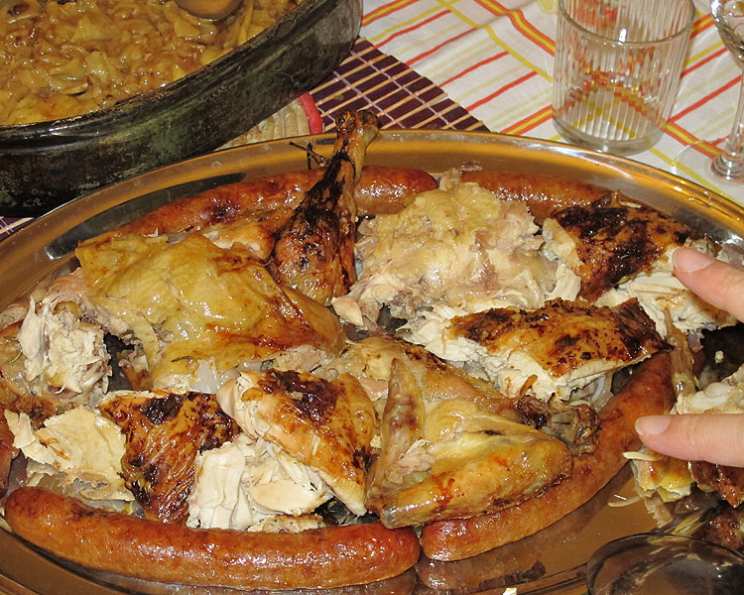
Dubrovnik Renaissance Time Roasted Capon
The aroma alone transports me. I remember helping my grandmother, Nonna Marija, prepare festive meals in her sun-drenched kitchen overlooking the Adriatic. She often spoke of dishes enjoyed by Dubrovnik’s nobility, tales woven with spices from distant lands and the bounty of our local farms. Though she never made this exact capon recipe, the rich scents of rosemary, orange, and slowly roasted meat evoke the same comforting warmth and a sense of culinary history that connected us to centuries past. This dish, redolent of the Renaissance, feels like a taste of that shared heritage, a reminder of the simple joy of good food and cherished memories.
Recipe Overview
- Prep Time: 20 minutes
- Cook Time: 130 minutes
- Total Time: 2 hours 30 minutes
- Servings: 6
- Yield: 1 Capon
- Dietary Type: Not Specified, Contains Meat
Ingredients
- 2000g capon
- 10g lard
- 15g salt
- 15g black peppercorns (roughly grounded)
- 15g capers
- 1 cinnamon stick (approximately 5g)
- 5g fresh rosemary
- 15g homemade smoked sausage (for cooking)
- 15g pancetta (smoked, one schnitzel of pancetta)
- 1 orange (approximately 10g)
- 1 cup orange juice (natural, from fresh oranges)
- 3 tablespoons honey (sage honey preferred)
- 40g homemade sausage (for BBQ)
Equipment Needed
- Baking pot (large enough to hold the capon)
- Fork
- Oven
Instructions
-
Begin by preparing the capon. Season it generously inside and out with salt and roughly grounded black peppercorns. Don’t be shy with the seasoning – this is a large bird and needs a good coating of flavor.
-
Next, stuff the cavity of the capon with the homemade smoked sausage (the type intended for cooking, not BBQ), the schnitzel of smoked pancetta, the fresh rosemary sprig, and the cinnamon stick. These ingredients will infuse the meat with a delicious smoky and aromatic flavor as it roasts.
-
Wash the orange thoroughly and then pierce it multiple times with a fork. This allows the orange’s citrusy aroma to permeate the bird from the inside out. Now, use the pricked orange to close the cavity opening of the capon. This acts as a natural plug, preventing the stuffing from spilling out during cooking and adding a subtle citrus note.
-
Grease the baking pot generously with lard. This will prevent the capon from sticking and help the skin to crisp up nicely during roasting. Place the stuffed capon into the greased pot.
-
Preheat your oven to 200°C (392°F). Place the pot with the capon into the preheated oven and bake for approximately 110 minutes. A general rule of thumb for roasting poultry is about 1 hour per kilogram, so adjust the cooking time accordingly based on the exact weight of your bird.
-
After the initial roasting time, remove the capon from the oven. Pour the fresh orange juice evenly over the capon, ensuring it coats the skin. Then, spread the honey liberally over the entire surface of the capon. The orange juice and honey will create a beautiful glaze as the bird finishes cooking.
-
Arrange the homemade BBQ sausages around the capon in the baking pot. Return the pot to the oven and bake for another 15 to 20 minutes, or until the sausages are fully cooked and the capon is beautifully browned and cooked through. The internal temperature of the capon should reach 165°F (74°C) when measured with a meat thermometer inserted into the thickest part of the thigh.
-
Remove the roasted capon and sausages from the oven. Let the capon rest for at least 10 minutes before carving and serving. This allows the juices to redistribute, resulting in a more tender and flavorful bird.
Expert Tips & Tricks
- Sage honey is indeed the preferred choice, as its earthy notes complement the other flavors beautifully. However, if you can’t find it, any good-quality honey will work well.
- For extra crispy skin, baste the capon with the pan juices every 20-30 minutes during the initial roasting period.
- If the capon starts to brown too quickly, loosely tent it with aluminum foil to prevent burning.
- Don’t discard the pan drippings! They make an excellent base for a flavorful gravy. Simply strain the drippings, skim off any excess fat, and whisk in a little flour or cornstarch to thicken.
- To ensure the capon is cooked through, use a meat thermometer. Insert it into the thickest part of the thigh, avoiding the bone. It should read 165°F (74°C).
Serving & Storage Suggestions
Serve the Dubrovnik Renaissance Time Roasted Capon hot, carved into portions, alongside the roasted sausages. The pan drippings (or gravy made from them) make a wonderful accompaniment. Consider serving it with roasted root vegetables, crusty bread for soaking up the juices, or a simple green salad to balance the richness of the dish.
Leftovers can be stored in an airtight container in the refrigerator for up to 3 days. To reheat, warm the capon in a preheated oven at 325°F (163°C) until heated through. You can also reheat it in the microwave, but be careful not to overcook it, as this can dry out the meat. The roasted sausages can also be reheated in the same way.
Nutritional Information
| Nutrient | Amount per Serving | % Daily Value |
|---|---|---|
| Calories | 950 kcal | 48% |
| Total Fat | 65g | 83% |
| Saturated Fat | 20g | 100% |
| Cholesterol | 270mg | 90% |
| Sodium | 1300mg | 54% |
| Total Carbohydrate | 15g | 5% |
| Dietary Fiber | 1g | 4% |
| Sugars | 13g | N/A |
| Protein | 70g | 140% |
Note: These are estimated values and can vary based on specific ingredients and portion sizes.
Variations & Substitutions
- If you cannot find a capon, a large, mature chicken will work as a substitute. The cooking time may need to be adjusted slightly depending on the size of the bird.
- For a slightly different flavor profile, try adding other herbs to the stuffing, such as thyme or sage.
- If you don’t have access to homemade smoked sausage, any good-quality smoked sausage will do.
- For a gluten-free version, ensure that the sausages you use are gluten-free.
- Consider adding some quartered apples or pears to the baking pot during the last 30 minutes of cooking for a touch of sweetness.
FAQs (Frequently Asked Questions)
Q: What is a capon?
A: A capon is a castrated male chicken that is raised for meat. Capons are known for their tenderness and rich flavor.
Q: Can I use dried rosemary instead of fresh?
A: While fresh rosemary is preferred, you can use dried rosemary in a pinch. Use about 1 teaspoon of dried rosemary for every tablespoon of fresh rosemary.
Q: How do I know when the capon is done?
A: The best way to check for doneness is to use a meat thermometer. Insert it into the thickest part of the thigh, avoiding the bone. The internal temperature should reach 165°F (74°C).
Q: Can I prepare the capon ahead of time?
A: You can prepare the stuffing and stuff the capon a few hours ahead of time. However, it’s best to cook the capon immediately after stuffing it to prevent bacterial growth.
Q: What wine pairs well with this dish?
A: A crisp, dry white wine such as a Croatian Malvazija or a Pinot Grigio would pair nicely with the Dubrovnik Renaissance Time Roasted Capon.
Final Thoughts
This Dubrovnik Renaissance Time Roasted Capon is more than just a recipe; it’s a journey back in time, a taste of history, and a celebration of simple, flavorful ingredients. I encourage you to try this dish and experience the rich culinary heritage of Croatia. Don’t be afraid to experiment with the recipe and make it your own. And most importantly, share your creations with loved ones and create memories that will last a lifetime. Pair it with a lovely glass of local wine and let the flavors transport you to the sun-kissed shores of the Adriatic. Dobar tek! (Bon appétit!)