
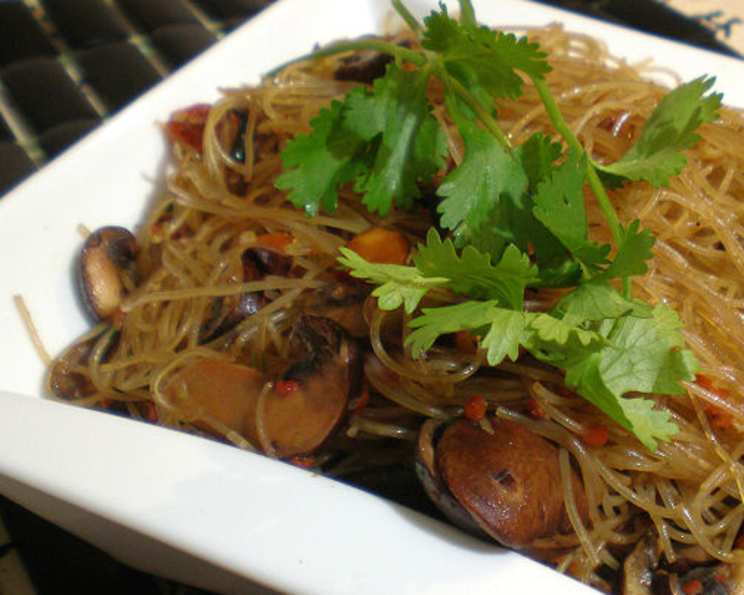
Vegan Pad Thai: A Flavorful Journey to Thailand
My first encounter with Pad Thai wasn’t in a bustling Bangkok street market, but rather a small, unassuming Thai restaurant tucked away in my hometown. The aroma of sweet tamarind, salty soy, and roasted peanuts hit me like a wave, instantly transporting me. That first bite – the perfect balance of textures, the chewy noodles, the crunchy peanuts, the vibrant vegetables – was an epiphany. It sparked a lifelong love affair with Thai cuisine and inspired me to recreate that magic in my own kitchen, culminating in this vibrant, satisfying vegan Pad Thai.
Recipe Overview
- Prep Time: 15 minutes
- Cook Time: 10 minutes
- Total Time: 25 minutes
- Servings: 2
- Dietary Type: Vegan
Ingredients
- 2 tablespoons coconut oil
- 5 ounces dry rice noodles
- 1 tablespoon tamari soy sauce
- ¼ teaspoon ginger
- ½ teaspoon curry powder
- ½ cup red peppers or ½ cup yellow pepper, sliced
- 1 tablespoon peanuts, chopped
- 10 pieces of gluten (such as seitan), cubed
- 2 green onions, chopped
- ½ teaspoon cayenne pepper
- 1 dash salt
- 1 dash black pepper
- ½ teaspoon cilantro, chopped
- 1 cup mushrooms, sliced
- 1 teaspoon tamarind paste
- ¼ teaspoon garlic, minced
- 1 dash crushed red pepper flakes
Equipment Needed
- Large frying pan or wok
Instructions
-
Begin by soaking the rice noodles in hot water for 10 minutes. This will soften them and make them pliable for stir-frying. While the noodles are soaking, prepare the rest of your ingredients.
-
While the noodles are soaking, heat up a large frying pan or wok over medium-high heat.
-
Once the pan is hot, melt the coconut oil in it. The oil should shimmer slightly, indicating it’s ready for the next step.
-
Add the cubed gluten and chopped peanuts to the pan.
-
Season with ¼ teaspoon of the curry powder and stir-fry until the gluten is lightly browned and the peanuts are fragrant. Be careful not to burn the peanuts; keep them moving in the pan.
-
Mix in the minced garlic, sliced peppers (red or yellow), and chopped green onion and continue to stir-fry on medium heat until the peppers are slightly softened, about 2-3 minutes.
-
By now, the noodles should be softened. Drain them thoroughly and add them to the stir-fry, making sure they get evenly coated in the oil.
-
The noodles will soak up the oil. When that happens, add the tamari soy sauce. This will provide a salty, umami-rich base for the Pad Thai.
-
Add the sliced mushrooms. Stir to incorporate.
-
Season with crushed red pepper flakes, ginger, curry powder, cilantro, black pepper, cayenne pepper, and salt. Continue to stir-fry on low heat until the noodles become slightly caramelized and the dish is evenly coated in its seasonings. This should take about 3-5 minutes. Taste and adjust seasonings as needed.
Expert Tips & Tricks
- Noodle Perfection: Don’t oversoak the noodles! They should be pliable but not mushy. Overcooked noodles will become sticky and clump together during stir-frying. Check them frequently after 8 minutes.
- Tamarind Tango: Tamarind paste is the key to that signature Pad Thai tang. If you can’t find tamarind paste, a mix of lime juice and brown sugar can be used as a substitute, but the flavor won’t be quite the same. Start with a small amount and adjust to taste.
- Wok Hei (Breath of the Wok): The hallmark of great stir-fries is “wok hei,” a slightly smoky flavor achieved by high heat and constant movement. If you’re using a regular pan, don’t overcrowd it. Cook in batches if necessary to maintain a high temperature.
- Gluten-Free Option: Ensure your tamari is certified gluten-free, and use rice noodles made from 100% rice flour to keep the recipe gluten-free.
- Spice Level Adjustment: Adjust the amount of cayenne pepper and crushed red pepper flakes to your desired level of spiciness. A little goes a long way!
Serving & Storage Suggestions
Serve your Vegan Pad Thai immediately while it’s hot and the noodles are perfectly textured. Garnish with extra chopped peanuts, fresh cilantro, and a wedge of lime for squeezing.
Leftovers can be stored in an airtight container in the refrigerator for up to 2 days. Reheat gently in a pan on the stovetop with a splash of water or vegetable broth to prevent the noodles from drying out. Microwaving is also an option, but the texture might be slightly less appealing. Freezing is not recommended as the noodles can become mushy upon thawing.
Nutritional Information
| Nutrient | Amount per Serving | % Daily Value |
|---|---|---|
| Calories | 440.6 kcal | N/A |
| Calories from Fat | N/A | N/A |
| Total Fat | 16.6 g | 25% |
| Saturated Fat | 12.3 g | 61% |
| Cholesterol | 0 mg | 0% |
| Sodium | 716.9 mg | 29% |
| Total Carbohydrate | 67.2 g | 22% |
| Dietary Fiber | 3.9 g | 15% |
| Sugars | 3.7 g | N/A |
| Protein | 6.6 g | 13% |
Variations & Substitutions
- Tofu Power: Replace the gluten with firm or extra-firm tofu, pressed to remove excess water and cubed. Pan-fry or bake the tofu until golden brown for added flavor and texture.
- Vegetable Medley: Add other vegetables such as bean sprouts, carrots, or broccoli florets for added nutrients and visual appeal.
- Nut-Free Option: Substitute sunflower seeds or pumpkin seeds for the peanuts if you have a nut allergy.
- Sweet and Sour Delight: Add a touch of maple syrup or agave nectar for a sweeter Pad Thai.
FAQs (Frequently Asked Questions)
Q: Can I make this Pad Thai ahead of time?
A: While it’s best served fresh, you can prep the ingredients (chop vegetables, cook gluten or tofu) ahead of time to speed up the cooking process.
Q: What if I don’t have tamarind paste?
A: You can substitute a mixture of lime juice and brown sugar, but the flavor won’t be exactly the same. Start with 1 teaspoon of lime juice and ½ teaspoon of brown sugar, and adjust to taste.
Q: Can I use different types of noodles?
A: While rice noodles are traditional, you can experiment with other types of noodles, such as soba or udon noodles, but the texture and flavor profile will be different.
Q: How do I prevent the noodles from sticking together?
A: Make sure not to oversoak the noodles and toss them with a little oil after draining to prevent them from clumping.
Q: Is this recipe easily customizable?
A: Absolutely! Feel free to adjust the vegetables, protein source, and spice level to your liking.
Final Thoughts
This Vegan Pad Thai is more than just a recipe; it’s an invitation to explore the vibrant flavors of Thailand from the comfort of your own kitchen. Don’t be afraid to experiment with different ingredients and seasonings to create a dish that truly reflects your personal taste. So, grab your wok, gather your ingredients, and embark on a culinary adventure! Share your creations and feedback – I can’t wait to hear about your delicious Vegan Pad Thai experiences. Pair it with a refreshing Thai iced tea for the complete experience!