
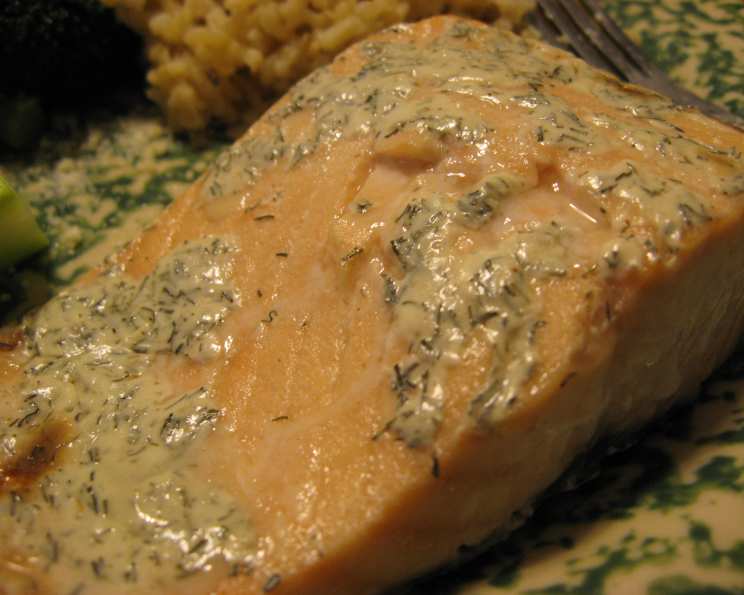
Easy Low-Fat Creamy Dill Salmon: A Taste of Summer
The scent of dill, mingling with the subtle tang of lemon, always transports me back to my grandmother’s garden. She had a knack for coaxing the most incredible flavors from simple ingredients. This creamy dill salmon recipe reminds me of her – unfussy, deeply satisfying, and bursting with fresh, vibrant flavors. She’d often prepare salmon this way for summer picnics, the flaky fish nestled among potato salad and juicy slices of watermelon. It was a taste of sunshine on a plate, and I’m thrilled to share this updated, lighter version with you.
Recipe Overview
- Prep Time: 5 minutes
- Cook Time: 15 minutes
- Total Time: 20 minutes
- Servings: 4-6
- Dietary Type: Low-Fat
Ingredients
- 1 salmon fillet (approximately 1.5 pounds), skin on or off, your preference
- Low-fat mayonnaise or Miracle Whip (enough to cover the fillet)
- Fresh dill, chopped (or dried dill, to taste)
- Lemon juice (freshly squeezed is best)
- Salt and pepper to taste
Equipment Needed
- Large sheet of aluminum foil
- BBQ grill (or oven)
- Small bowl (optional, for mixing mayo and dill)
Instructions
-
Preheat your BBQ grill to medium heat. Alternatively, preheat your oven to 375°F (190°C).
-
Lay the salmon fillet on a large piece of aluminum foil. Make sure the shiny side of the foil is facing up, as this helps to reflect heat and prevent sticking.
-
Squeeze lemon juice generously over the salmon fillet. The acidity of the lemon brightens the flavor of the salmon and helps to tenderize it.
-
Spread the low-fat mayonnaise or Miracle Whip evenly over the salmon fillet, ensuring it’s fully covered. This creates a moist and flavorful coating. You can mix the mayonnaise and dill in a small bowl first for more even distribution, if you prefer.
-
Season the salmon generously with salt and pepper. Don’t be shy with the seasoning – it will enhance the overall flavor of the dish.
-
Sprinkle a generous amount of chopped fresh dill (or dried dill) over the mayonnaise coating. The dill adds a fresh, herbaceous note that complements the richness of the salmon.
-
Create a “tent” around the salmon with the aluminum foil, sealing the edges tightly. This traps the moisture and helps the salmon cook evenly. Ensure there is enough space inside the foil tent to allow steam to circulate.
-
BBQ the salmon on medium heat for approximately 12-15 minutes, or until the salmon is cooked to your liking. The cooking time will vary depending on the thickness of the fillet and the temperature of your grill.
If using the oven, bake for 15-20 minutes. -
To check for doneness, gently flake the salmon with a fork. It should be opaque and easily flake apart. Be careful not to overcook the salmon, as it can become dry.
-
Once cooked, carefully remove the salmon from the grill (or oven). Open the foil tent carefully, as steam will escape.
Expert Tips & Tricks
- For a richer flavor, try using a smoked paprika along with the salt and pepper. A pinch of garlic powder also adds a nice depth.
- If you’re using frozen salmon, make sure it’s completely thawed before cooking. Pat it dry with paper towels to remove excess moisture.
- To prevent the salmon from sticking to the foil, you can lightly grease the foil with cooking spray before placing the fillet on it.
- The internal temperature of the salmon should reach 145°F (63°C) for optimal doneness, according to food safety guidelines. Use a meat thermometer to ensure accurate cooking.
- For a more pronounced dill flavor, add a tablespoon of chopped fresh dill directly to the mayonnaise before spreading it on the salmon.
- To make ahead, prepare the salmon up to the point of cooking, wrap tightly, and refrigerate for up to 24 hours. This allows the flavors to meld together.
Serving & Storage Suggestions
Serve the Easy Low-Fat Creamy Dill Salmon immediately after cooking, while it’s still warm and flaky. It pairs beautifully with a variety of sides, such as roasted vegetables, steamed asparagus, quinoa, or a simple green salad. A squeeze of fresh lemon juice just before serving brightens the flavors.
Leftovers can be stored in an airtight container in the refrigerator for up to 2-3 days. To reheat, gently warm the salmon in a skillet over low heat or in a microwave. Be careful not to overcook it, as it can become dry. You can also enjoy the leftover salmon cold in salads or sandwiches.
Nutritional Information
| Nutrient | Amount per Serving | % Daily Value |
|---|---|---|
| Calories | 250 kcal | 13% |
| Total Fat | 12g | 18% |
| Saturated Fat | 2g | 10% |
| Cholesterol | 75mg | 25% |
| Sodium | 200mg | 9% |
| Total Carbohydrate | 2g | 1% |
| Dietary Fiber | 0g | 0% |
| Sugars | 1g | 2% |
| Protein | 30g | 60% |
Nutritional information is an estimate and may vary based on specific ingredients and portion sizes.
Variations & Substitutions
- Spicy Dill Salmon: Add a pinch of red pepper flakes to the mayonnaise mixture for a touch of heat.
- Garlic Dill Salmon: Mix minced garlic into the mayonnaise for a bolder flavor.
- Herb Crusted Salmon: Combine chopped fresh herbs like parsley, chives, and basil with breadcrumbs and sprinkle over the salmon before baking.
- Mustard Dill Salmon: Substitute Dijon mustard for half of the mayonnaise for a tangy twist.
- Dairy-Free Option: Use a dairy-free mayonnaise alternative. Look for vegan mayonnaises made from avocado oil or other plant-based ingredients.
- Different Fish: While salmon is the star here, this recipe also works well with other fish like trout, cod, or halibut. Adjust the cooking time accordingly.
FAQs (Frequently Asked Questions)
Q: Can I use dried dill instead of fresh?
A: Yes, you can! Use about 1-2 teaspoons of dried dill for every tablespoon of fresh dill. Keep in mind that dried herbs have a more concentrated flavor, so adjust to your taste.
Q: Can I make this recipe in the oven instead of on the grill?
A: Absolutely! Preheat your oven to 375°F (190°C) and bake the salmon for 15-20 minutes, or until cooked through.
Q: Is it okay to use frozen salmon?
A: Yes, but make sure to thaw it completely before cooking. Pat it dry with paper towels to remove excess moisture for the best results.
Q: Can I use regular mayonnaise instead of low-fat?
A: Of course! While this recipe focuses on being low-fat, you can use regular mayonnaise if you prefer.
Q: How do I know when the salmon is cooked properly?
A: The salmon is done when it’s opaque and flakes easily with a fork. You can also use a meat thermometer to check for an internal temperature of 145°F (63°C).
Final Thoughts
This Easy Low-Fat Creamy Dill Salmon is more than just a recipe; it’s a celebration of simple ingredients and wholesome flavors. It’s a dish that’s perfect for a quick weeknight meal, a summer barbecue, or a special occasion. I encourage you to try it out and experience the delightful combination of creamy, tangy, and herbaceous flavors. Feel free to experiment with different herbs and spices to create your own unique variation. And if you do, be sure to share your feedback! Consider pairing this dish with a crisp Sauvignon Blanc or a light-bodied Pinot Grigio for a truly memorable culinary experience. Enjoy!