
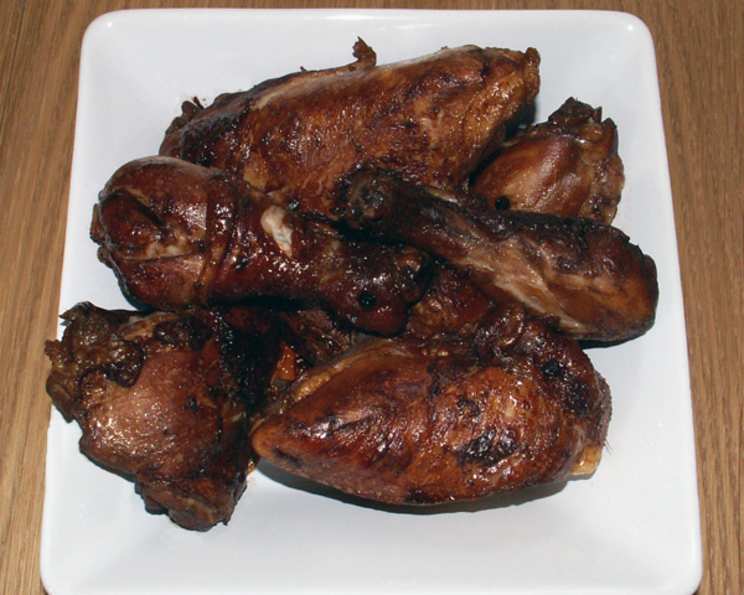
Adobong Manok: A Taste of Home
The aroma of Adobong Manok always transports me back to my Lola’s (grandmother’s) kitchen. I remember standing on a wobbly stool, mesmerized as she stirred the simmering pot, the tangy scent of vinegar and soy sauce filling the air. It wasn’t just a meal; it was a ritual, a story told through simmering flavors, a connection to our heritage that warmed me from the inside out. The taste of her adobo, rich and savory, is a memory I hold dear.
Recipe Overview
- Prep Time: 10 minutes
- Cook Time: 50 minutes
- Total Time: 1 hour
- Servings: 6
- Dietary Type: Omnivore
Ingredients
- 3 lbs chicken pieces, bone-in
- ½ cup soy sauce
- ⅔ cup vinegar
- 1-2 garlic cloves, crushed
- 2 bay leaves
- 1 teaspoon peppercorn
- Salt to taste
Equipment Needed
- Large pot or Dutch oven
Instructions
-
In a large pot or Dutch oven, combine the chicken pieces, soy sauce, vinegar, crushed garlic, bay leaves, and peppercorns.
-
Bring the mixture to a boil over medium-high heat. Once boiling, reduce the heat to low and simmer for approximately 50 minutes, or until the chicken is tender and the sauce has reduced by about half.
-
During the simmering process, you can cover the pot with a lid for the first 35 minutes to help tenderize the chicken. After 35 minutes, remove the lid for the remaining 15 minutes to allow the sauce to reduce and thicken to your desired consistency. This concentrates the flavors and creates a richer, more flavorful adobo. Be sure to monitor the liquid level, adjusting heat if necessary, to prevent burning.
-
Taste the sauce and add salt to taste. Remember that soy sauce is already salty, so add salt judiciously.
-
Serve hot with rice. The sauce is traditionally spooned generously over the rice for maximum flavor.
Expert Tips & Tricks
-
Achieving the perfect sauce consistency: The key to truly exceptional adobo lies in the sauce. For a thicker, glossier sauce, you can remove the chicken pieces after they’re cooked through, and then continue to simmer the sauce on medium-low heat until it reaches your desired consistency. A slurry of cornstarch and water (1 tablespoon cornstarch mixed with 2 tablespoons of cold water) can also be added towards the end of cooking to help thicken the sauce quickly. However, be careful not to add too much, as it can make the sauce overly thick and gluey.
-
Browning the Chicken: For an extra layer of flavor and visual appeal, consider browning the chicken before simmering it in the adobo sauce. Pat the chicken pieces dry with paper towels, then sear them in a hot pan with a little oil until golden brown on all sides. This step adds a delicious depth of flavor to the final dish.
-
Infusing with aromatics: To deepen the flavors of your adobo, infuse the oil with aromatics before cooking. Sauté minced garlic, ginger, and onions in oil until fragrant, then add the chicken and other ingredients. This technique adds complexity and depth to the adobo.
-
Marinating is Key: Marinating the chicken in the soy sauce, vinegar, garlic, peppercorns, and bay leaves for at least 30 minutes or even overnight, enhances the flavor and tenderness of the dish.
Serving & Storage Suggestions
Serve the Adobong Manok hot with steamed white rice. The rich, savory sauce is best enjoyed when soaked up by the rice. It also pairs well with simple side dishes like steamed vegetables (such as bok choy or green beans) or a fresh tomato salad.
Leftover Adobong Manok can be stored in an airtight container in the refrigerator for up to 3-4 days. It can also be frozen for up to 2-3 months. To reheat, gently warm the adobo in a pot on the stove over low heat, or microwave it in short intervals, stirring occasionally, until heated through. Adding a splash of water or chicken broth during reheating can help prevent the chicken from drying out.
Nutritional Information
| Nutrient | Amount per Serving | % Daily Value |
|---|---|---|
| Calories | 318 kcal | N/A |
| Total Fat | 20.8g | 32% |
| Saturated Fat | 6g | 29% |
| Cholesterol | 103.5mg | 34% |
| Sodium | 1438mg | 59% |
| Total Carbohydrate | 1.8g | 0% |
| Dietary Fiber | 0.3g | 1% |
| Sugars | 0.4g | 1% |
| Protein | 28.3g | 56% |
Note: Nutritional information is an estimate and can vary based on specific ingredients and cooking methods.
Variations & Substitutions
-
Adobo sa Gata (Adobo with Coconut Milk): For a richer and creamier version, add 1 can (13.5 oz) of coconut milk to the simmering pot along with the other ingredients. This variation is popular in the Bicol region of the Philippines.
-
Adobo with Potatoes: Add cubed potatoes (about 1-2 cups) to the pot during the last 20 minutes of cooking. The potatoes will absorb the flavorful adobo sauce and become tender.
-
Spicy Adobo: Add a chopped chili pepper (such as serrano or Thai chili) or a pinch of chili flakes to the pot along with the other ingredients. Adjust the amount of chili to your desired level of spiciness.
-
Chicken Thighs vs. Chicken Breast: While this recipe calls for bone-in chicken pieces, you can also use boneless, skinless chicken thighs or breasts. Chicken thighs tend to be more flavorful and stay moist during cooking. Adjust the cooking time accordingly, as boneless chicken will cook faster.
-
Vinegar Variation: Experiment with different types of vinegar. While white vinegar is most commonly used, apple cider vinegar or cane vinegar can add interesting flavor nuances.
-
Soy Sauce Variation: Use low sodium soy sauce to better control the saltiness.
FAQs (Frequently Asked Questions)
Q: Can I use chicken breast instead of bone-in chicken pieces?
A: Yes, you can use boneless, skinless chicken breasts. However, bone-in chicken typically provides more flavor and stays more moist during cooking. Adjust the cooking time accordingly, as chicken breast will cook faster.
Q: What kind of vinegar should I use?
A: White vinegar is the most traditional choice for Adobong Manok, but you can experiment with other vinegars like apple cider vinegar or cane vinegar for a slightly different flavor profile.
Q: How do I prevent the sauce from being too sour?
A: The vinegar’s acidity mellows during cooking. However, if you find the sauce too sour, you can add a teaspoon of brown sugar or honey to balance the flavors.
Q: Can I make Adobong Manok in a slow cooker?
A: Yes, you can adapt this recipe for a slow cooker. Combine all the ingredients in the slow cooker and cook on low for 6-8 hours, or on high for 3-4 hours, until the chicken is tender.
Q: How do I know when the chicken is cooked through?
A: The chicken is cooked through when the internal temperature reaches 165°F (74°C). You can use a meat thermometer to check. Additionally, the juices should run clear when the chicken is pierced with a fork.
Final Thoughts
Adobong Manok is more than just a recipe; it’s a culinary journey, a taste of Filipino heritage that’s both comforting and deeply satisfying. I encourage you to try this recipe and share it with your loved ones. Don’t be afraid to experiment with variations and substitutions to make it your own. Most importantly, enjoy the process of creating this delicious and time-honored dish, and savor the flavors that evoke memories of home and family. Share your creations and feedback! This adobo would be wonderful with a side of fresh spring rolls.