
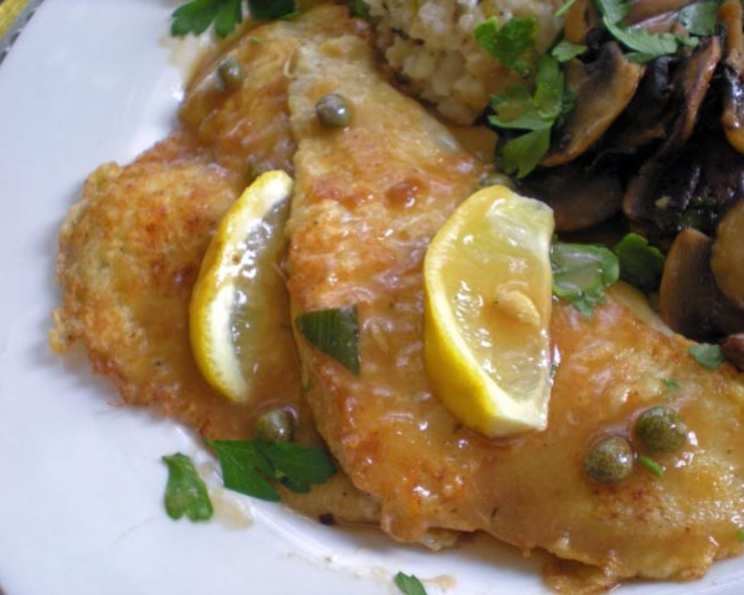
Flounder Francaise: A Taste of Sunshine on a Plate
The first time I tasted Flounder Francaise, I was a young line cook, terrified of messing up the delicate dance of the kitchen. The bright, lemony aroma wafted from the sauté station, cutting through the chaos and instantly calming my nerves. Chef Marco, a gruff but kind soul, slipped me a piece – the perfectly golden crust giving way to flaky, tender fish, all bathed in a vibrant sauce. It was a revelation, a simple yet elegant dish that tasted like sunshine and skill. It’s a recipe I’ve carried with me ever since, a reminder that even the most humble ingredients, when treated with care, can create something truly extraordinary.
Recipe Overview
- Prep Time: 15 minutes
- Cook Time: 15 minutes
- Total Time: 30 minutes
- Servings: 4
- Dietary Type: Pescatarian
Ingredients
- 2 eggs, beaten
- 1 tablespoon olive oil
- 1 tablespoon butter
- 1/2 cup flour
- 1/4 teaspoon salt
- 1/4 teaspoon onion powder
- 1/4 teaspoon garlic powder
- 1/8 teaspoon paprika
- 1/8 teaspoon black pepper
- 4 large flounder fillets (1 1/2 to 2 lbs)
For the Sauce:
- 4 tablespoons butter
- 1/4 cup white wine
- 1/4 cup water
- 1/4 cup lemon juice
- 1/2 teaspoon parsley, chopped
- Lemon slices and parsley (to garnish) (optional)
Equipment Needed
- Large skillet
- Shallow dish
- Plastic bag or container for dredging
- Whisk
Instructions
-
In a large skillet, heat the olive oil and 1 tablespoon of butter over medium heat. Ensure the pan is adequately sized to accommodate the flounder fillets without overcrowding.
-
In a plastic bag or container, combine the flour, salt, onion powder, garlic powder, paprika, and black pepper. Seal the bag or cover the container and shake well to thoroughly blend the dry ingredients. This mixture will be used to coat the flounder.
-
Pour the beaten eggs into a shallow dish. This will serve as the egg wash for the flounder fillets.
-
When the skillet is heated through and the oil shimmers, take each flounder fillet, one at a time, and place it into the bag or container with the flour mixture. Shake or toss to coat the fillet evenly with the seasoned flour.
-
Remove the flounder fillet from the flour mixture and immediately dip it into the beaten eggs, ensuring that it is completely coated on all sides.
-
Carefully place the egg-coated flounder fillet into the preheated skillet. The egg should sizzle immediately upon contact with the hot oil and butter. If it doesn’t, the oil isn’t hot enough; allow the skillet to heat up for a bit longer before adding the next fillet.
-
Reserve 1 tablespoon of the remaining flour mixture to use later in the sauce. Set it aside.
-
Fry the flounder fillets over medium heat until they are golden brown on both sides, approximately 3 to 4 minutes per side. Add extra butter to the skillet as needed to prevent sticking and ensure even browning. Avoid overcrowding the pan; cook in batches if necessary.
-
Once the flounder fillets are cooked through and golden brown, remove them from the skillet and place them on a plate or baking sheet. Cover loosely with foil to keep them warm while you prepare the sauce.
-
Discard any remaining oil left in the skillet. Add the 4 tablespoons of butter to the skillet and allow it to melt over medium heat.
-
Add the 1 tablespoon of seasoned flour that you reserved earlier to the melted butter. Whisk continuously until the flour and butter are well combined and form a smooth paste, known as a roux.
-
Gradually pour in the white wine, water, and lemon juice while whisking constantly to prevent lumps from forming. Continue whisking until all the ingredients are thoroughly blended.
-
Add the chopped parsley to the sauce and stir to incorporate it.
-
Bring the sauce to a gentle boil and cook for approximately 5 minutes, stirring frequently, until it has thickened to your desired consistency. If the sauce becomes too thick, add a small amount of water, just 1 teaspoon at a time, until you achieve the desired consistency.
-
To serve, place the flounder fillets over a bed of buttered rice, pasta, spaghetti squash, or zucchini noodles. Spoon a generous amount of the sauce over each fillet. Garnish with lemon slices and fresh parsley (optional).
Expert Tips & Tricks
- Patience is key: Don’t overcrowd the pan when frying the flounder. Overcrowding lowers the temperature and leads to steaming instead of searing, resulting in a less crispy crust.
- Temperature control: Medium heat is crucial. Too high and the outside will burn before the inside is cooked; too low and the fish will be greasy.
- Don’t skip the roux: The roux (butter and flour) is the base of the sauce and helps to thicken it. Make sure it’s smooth before adding the liquids.
- Lemon zest boost: Add a teaspoon of lemon zest to the flour mixture for an extra layer of lemon flavor.
- Dry the fillets: Pat the flounder fillets dry with paper towels before dredging. This helps the flour adhere better and creates a crispier crust.
Serving & Storage Suggestions
Flounder Francaise is best served immediately while the fish is still crispy and the sauce is warm and vibrant. Serve it over a bed of buttered rice, pasta, spaghetti squash, or zucchini noodles. It pairs well with a side of steamed asparagus or a simple green salad.
Leftovers can be stored in an airtight container in the refrigerator for up to 2 days. Reheat gently in a skillet over low heat or in the microwave. Note that the crust will lose some of its crispness upon reheating. The sauce can be reheated separately. Freezing is not recommended, as it will significantly affect the texture of the fish.
Nutritional Information
| Nutrient | Amount per Serving | % Daily Value |
|---|---|---|
| Calories | 392 kcal | N/A |
| Calories from Fat | 214 g | 55% |
| Total Fat | 23.8 g | 36% |
| Saturated Fat | 11.2 g | 55% |
| Cholesterol | 211.8 mg | 70% |
| Sodium | 840.4 mg | 35% |
| Total Carbohydrate | 13.9 g | 4% |
| Dietary Fiber | 0.6 g | 2% |
| Sugars | 0.7 g | 2% |
| Protein | 27.3 g | 54% |
Variations & Substitutions
- Chicken Francaise: Substitute 2 large chicken breasts, cut in half horizontally to make 4 thin fillets, for the flounder. Follow the same recipe instructions.
- Gluten-Free: Use a gluten-free all-purpose flour blend instead of regular flour.
- Dairy-Free: Use olive oil or a dairy-free butter substitute in place of the butter.
- Herb Variations: Experiment with different herbs in the sauce, such as tarragon or thyme, for a unique flavor profile.
- Wine Substitution: If you don’t have white wine on hand, you can use chicken broth or vegetable broth instead.
FAQs (Frequently Asked Questions)
Q: Can I use a different type of fish for this recipe?
A: Yes, you can substitute other delicate white fish fillets such as sole, tilapia, or cod for the flounder. Adjust cooking time as needed based on the thickness of the fillets.
Q: How do I prevent the egg from sliding off the fish when frying?
A: Make sure the fish fillets are patted dry before dipping them in the flour mixture and egg wash. This helps the egg adhere better to the surface of the fish.
Q: Can I make the sauce ahead of time?
A: Yes, you can prepare the sauce ahead of time and store it in the refrigerator for up to 2 days. Reheat gently before serving.
Q: My sauce is too thick. How can I thin it out?
A: Add a small amount of water, 1 teaspoon at a time, while stirring, until you reach your desired consistency.
Q: How do I know when the flounder is cooked through?
A: The flounder is cooked through when it is opaque and flakes easily with a fork. The internal temperature should reach 145°F (63°C).
Final Thoughts
Flounder Francaise is more than just a recipe; it’s a celebration of simple flavors and elegant execution. Don’t be intimidated by the name – this dish is surprisingly easy to master. I encourage you to try this recipe and experience the joy of creating a restaurant-worthy meal in your own kitchen. Feel free to experiment with different herbs and spices to personalize the dish to your liking. And most importantly, share your creation with loved ones and enjoy the delightful flavors of this classic dish!