
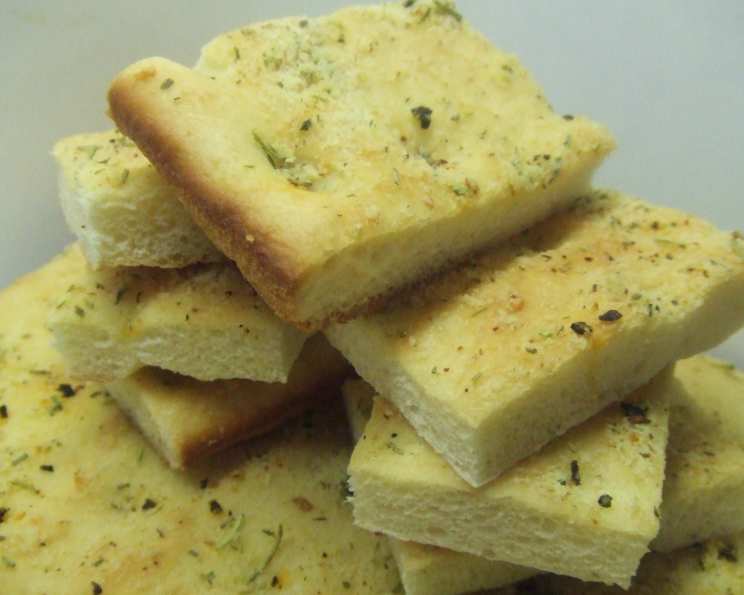
Focaccia Flat Bread (Bread Machine): A Taste of Italy at Home
The aroma of freshly baked focaccia transports me back to a tiny trattoria in Florence. The sun streamed through the window, illuminating dust motes dancing in the air, as I tore into a piece of the warm, olive oil-slicked bread. The salty tang of Parmesan and the herbaceous notes of Italian seasoning mingled with the subtle sweetness of the dough – a simple pleasure that elevated the entire meal. Recreating that magic at home, with the ease of a bread machine, has become one of my favorite ways to share a little piece of Italy with family and friends.
Recipe Overview
- Prep Time: 20 minutes
- Cook Time: 12 minutes
- Total Time: 1 hour 42 minutes (includes dough cycle and rising)
- Servings: 12-14
- Yield: 1 large focaccia
- Dietary Type: Vegetarian
Ingredients
- 3/4 cup plus 3 tablespoons water, 90-100°F
- 3 cups bread flour
- 2 tablespoons dry milk
- 3 1/2 tablespoons sugar
- 1 teaspoon salt
- 3 tablespoons butter or margarine
- 2 1/2 teaspoons bread machine yeast or fast-rise yeast
- 2 tablespoons olive oil
- 2 tablespoons grated Parmesan cheese
- 3 teaspoons Italian seasoning (grinder preferred for fresh flavor)
- 1 1/4 teaspoons garlic salt (or to taste)
Equipment Needed
- Bread Machine
- Measuring cups and spoons
- Large bowl (optional, for resting dough)
- 15×10 inch jelly roll pan or large cookie sheet
- Wooden spoon or similar tool for making indentations
Instructions
-
Begin by adding the lukewarm water to your bread machine pan. Ensuring the water is within the specified temperature range is crucial for activating the yeast properly.
-
Next, add the bread flour, dry milk, sugar, and salt to the bread machine pan. Gently tap the pan on the counter to settle the dry ingredients. Then, level the ingredients, carefully pushing some of the mixture into the corners to ensure even distribution.
-
Place the butter (or margarine) into the corners of the pan. This helps prevent it from interfering with the yeast activation.
-
Create a well in the center of the dry ingredients and add the yeast. Lock the pan securely into the bread machine.
-
Program the bread machine for the DOUGH cycle. Start the bread machine and allow it to run its course.
-
Once the dough cycle is complete, carefully remove the pan from the bread machine. Place the dough onto a lightly floured surface. Let the dough rest for 15 minutes. This resting period allows the gluten to relax, making it easier to knead and shape.
-
After resting, gently knead the dough for about 1 minute. This helps develop the gluten further and ensures a more even texture.
-
Roll the dough into a rectangle that fits a 15×10 inch jelly roll pan or a large cookie sheet. Place the dough onto a greased pan and press it evenly into the pan, carefully forming an edge.
-
Cover the dough and let it rise in a warm, draft-free place for 20-30 minutes, or until it has slightly risen. This second rise is essential for achieving a light and airy focaccia.
-
Using the handle or end of a wooden spoon, make indentations in the dough at roughly one-inch intervals. These indentations are characteristic of focaccia and help create pools for the olive oil and seasonings.
-
Brush the dough generously with olive oil. Then, sprinkle evenly with Parmesan cheese, Italian seasoning, and garlic salt.
-
Bake in a preheated 400°F oven for 12 minutes, or until the focaccia is nicely browned. Keep a close eye on it to prevent burning, as oven temperatures can vary.
-
Once baked, cool slightly on the pan before cutting into squares for serving. Focaccia can be served warm or cooled.
-
Sit back and enjoy the raves!
Expert Tips & Tricks
- For a richer flavor, try using high-quality extra virgin olive oil. The flavor will really shine through.
- If you don’t have a bread machine, you can make the dough by hand or in a stand mixer. Just be sure to allow enough time for the dough to rise properly.
- Don’t be afraid to experiment with different toppings. Sun-dried tomatoes, olives, rosemary, or red pepper flakes are all delicious additions.
- For a crispier bottom crust, preheat the baking sheet in the oven before placing the dough on it.
- If the top of the focaccia is browning too quickly, tent it with foil during the last few minutes of baking.
Serving & Storage Suggestions
Focaccia is incredibly versatile and can be served in many ways. It’s fantastic alongside soups, salads, or pasta dishes. Cut into squares and served as an appetizer with a selection of dips, such as hummus or baba ghanoush, is another great option. As mentioned in my intro, topping it with prosciutto and mozzarella then broiling it is divine.
Leftover focaccia can be stored at room temperature in an airtight container for up to 2 days. For longer storage, wrap it tightly in plastic wrap and freeze it for up to 2 months. To reheat, wrap the focaccia in foil and warm it in a 350°F oven for about 10-15 minutes, or until heated through. You can also reheat individual slices in a toaster oven or microwave.
Nutritional Information
| Nutrient | Amount per Serving | % Daily Value |
|---|---|---|
| Calories | 186.5 kcal | N/A |
| Calories from Fat | 54 g | 29% |
| Total Fat | 6.1 g | 9% |
| Saturated Fat | 2.5 g | 12% |
| Cholesterol | 9.6 mg | 3% |
| Sodium | 238.3 mg | 9% |
| Total Carbohydrate | 28.6 g | 9% |
| Dietary Fiber | 1.1 g | 4% |
| Sugars | 4.3 g | N/A |
| Protein | 4.2 g | 8% |
Variations & Substitutions
- Gluten-Free Focaccia: Substitute the bread flour with a gluten-free bread flour blend. Be sure to add a binder like xanthan gum to help with the texture.
- Dairy-Free Focaccia: Replace the dry milk with a plant-based milk powder and use olive oil instead of butter or margarine.
- Herbaceous Delight: Experiment with different herbs. Fresh rosemary, thyme, or oregano can be added to the dough or sprinkled on top.
- Sweet Focaccia: For a sweet treat, omit the garlic salt and Italian seasoning and sprinkle the dough with sugar and cinnamon before baking.
- Vegetable Focaccia: Top the dough with sliced vegetables like tomatoes, zucchini, or bell peppers before baking.
FAQs (Frequently Asked Questions)
Q: Can I use all-purpose flour instead of bread flour?
A: While you can use all-purpose flour, bread flour is recommended for its higher protein content, which results in a chewier and more structured focaccia.
Q: Can I make the dough ahead of time?
A: Yes, you can make the dough ahead of time and store it in the refrigerator for up to 24 hours. Allow it to come to room temperature before rolling and baking.
Q: My focaccia is too dense. What did I do wrong?
A: This could be due to several factors, such as not using enough yeast, not allowing the dough to rise properly, or using too much flour. Make sure to measure your ingredients accurately and follow the instructions carefully.
Q: Can I freeze the baked focaccia?
A: Yes, baked focaccia freezes well. Allow it to cool completely, then wrap it tightly in plastic wrap and freeze for up to 2 months. Reheat in a 350°F oven until warmed through.
Q: How can I prevent the bottom of the focaccia from burning?
A: Place a baking stone or pizza stone on the rack below the baking sheet to help distribute the heat evenly. You can also try lowering the oven temperature by 25 degrees.
Final Thoughts
Now armed with this simple yet rewarding recipe, I encourage you to embark on your own focaccia-making adventure. The ease of the bread machine combined with the simple ingredients makes this a very accessible bake, perfect for novices and experienced bakers alike. Don’t be afraid to experiment with different toppings and seasonings to create your own signature focaccia. Share your creations with loved ones, and let the aroma of freshly baked bread fill your home with warmth and joy. Let me know how it turns out – buon appetito!